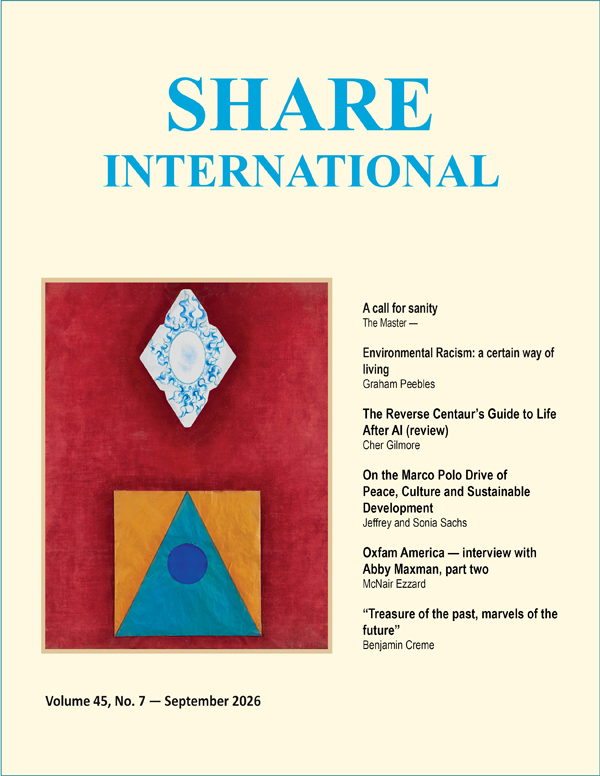
- The Master —: A call for sanity
- Graham Peebles: Environmental Racism: a certain way of living
- Cher Gilmore: The Reverse Centaur’s Guide to Life After AI — review
- Jeffrey and Sonia Sachs: On the Marco Polo Drive of Peace, Culture and Sustainable Development
- Elisa Graf: An Ordinary Insanity — review
- McNair Ezzard: Oxfam America — interview with Abby Maxman, part two
- Benjamin Creme: “Treasure of the past, marvels of the future”
- Doug Griffin: Dr Steven Greer’s “Unless Otherwise Directed” letter
- Charlie Chaplin: “You the people have the power to make this life free and beautiful”
Writing in mid-August we need to project forward into the coming months, imagining what the time ahead might bring. So let’s imagine what could happen if somehow the ideas, advice and inspiration from the pages of Share International magazine could reach every person on our planet. They would, for instance, read ‘A call for sanity’, written by a Master of Wisdom, and Americans would come to realize that the wellbeing of their fellow citizens and millions around the world depends on their choices — particularly, but not only, at the ballot box in November.* They would be counted among those “who treasure peace and right relationship”, to quote from the article. The hope would be that they could not fail to respond to the common sense guidance encouraging them to draw back from war, take a united, highly vocal and visible stand against conflict and aggression, and to recognize that only economic justice will create the conditions where trust and therefore peace can flourish.
Supposing that then, intrigued by the clarity and wisdom of the author of that article, they (the billions of readers we’re imagining) would turn quickly to a second article by Benjamin Creme’s Master — ‘The Earth in travail’ in which he calls for urgent attention to the problem of pollution of all kinds and appeals to us to restore the health of our ‘ailing planet’. Pollution is not only the destruction we can see, but he points out that the worst form is that of nuclear radiation “the most toxic and hazardous to man and the lower kingdoms. On all levels the problems of pollution must be overcome.” This can only be achieved by a complete reconstruction of the present political, economic and social structures. This same author throws down a challenge: “can planet Earth be saved and by what means?” He provides an immediate response: “The answer is a resounding Yes! And by means which involve the transformation of the present modes of living by the majority of men.”
‘Well,’ one of the nearly 8.4 billion imagined readers might think, ‘this presents a very different picture. It seems we have stewardship, responsibility, relationship where I didn’t know we had. But I like it — it means we’re all part of this amazing experience we call life. But, if that’s true, then I am, and we are all, responsible for everything that’s happening to our planet. I see the relevance and importance of this approach and this specific information.’
And so the reader, growing more inspired at every click of the mouse, would turn to the third article by Benjamin Creme’s Master as featured in the September issue — ‘The role of man’. She would read: “When the Earth is viewed as a living entity, complete in all its parts, each essential to the Whole, a new vision and a new sanity will prevail. Men will come to see themselves as stewards of a natural order, preordained to function in harmony and beauty, each kingdom related, above it and below it, according to the Plan.”
Our putative reader, and several billion with her, we hope, would be overjoyed that her intuition and inner longings were not foolish, but confirm her sense of oneness with all life as they open up vistas of possible service.
The hope of this publication is that we touch minds, that we reach out to hearts and hope to so move them that their relationship to all life is transformed for ever. “In time, men will come to understand the true nature of their relationship with the lower kingdoms, and accept gladly the role of steward for their evolution. This will lead to a transformation in all aspects of farming and agriculture, in forestry and fishing.”
Imagine that one day a great deal more than half of humanity could be changed by experiencing the love, wisdom and will of Maitreya the Christ as he lays out the plan and ways to the future. Just think what a world we could create bound by an extraordinary sense of the interconnectedness of all life and the livingness of Planet Earth.
From this magazine’s real aims and our imagined great outcomes, the reason for the choice of these three articles at this point in the world’s history is surely evident. In sympathy with the readers, we focus on the plight and needs of the natural world just as we express our outrage, horror and absolute opposition to war. Experts, historians, the man and woman on the street all agree: stop war, curb the power of oligarchs and the out-of-control politicians, boycott the merchants of merciless cruelty, uphold the rule of law, reinstate respect for human rights laws and international courts, recognize the urgency of climate change, and take immediate action to save our planet and our future.
For the sake of argument, and for the sake of the world, let us be bold and imaginative in our approach to the challenges we face. They may seem insuperable, too numerous and entangled. How to tackle them? The good news is that precisely because they are all closely interconnected, just one fundamental solution, if applied universally, could be the key.
If we accept the view of the Masters and Maitreya, who all indicate that this is indeed the case, then we could be on the threshold of taking a bold step into our divinity — a shared divinity — with our fellow men but also with all kingdoms on our precious planet. We could start by accepting the wisdom offered by those who know — the Masters.
In an article titled ‘The search for peace’ (Share International, July/August 2010) Benjamin Creme’s Master writes: “From Our viewpoint, these problems are real and pressing, and stem from one single condition: the separatism which sits like a heavy yoke on the shoulders of humanity and prevents all action in unison.” And he goes on to state: “There is but one way to grapple with these problems, one which has never been tried but which, at a stroke, would ease the lot of countless millions and bring, at long, long last, true and lasting peace to a world in agony. Men must realize that they are not separate, never were and never shall be; that they are part of a divine and seamless whole which enfolds us all, to which, in our own way, we give the name of God. Men must realize that God is peace, is justice, sharing and trust, and that their fear is also the fear of their brothers. Maitreya’s task is to show men this truth, and to remind them that at the core of their yearning lies the peace they all desire, waiting to be made manifest.”
* ‘A call for sanity’ was written soon after the US invasion of Iraq in 2003. Today, unfortunately, we can simply substitute ‘Iran’ for ‘Iraq’.
From the inception of Share International magazine, Benjamin Creme’s Master provided an article every month for nearly 35 years. These were intended to be published not only at the time they were written, but also whenever appropriate according to world circumstances.
The citizens of the United States of America are approaching a time of critical decision. On their decision, in November, this year, may depend the future happiness of many millions, not alone American, but of many other countries. One would have thought that this decision would not be difficult to make, that the choice was surely obvious to all who treasure peace and right relationship.
However, it appears that there are those who think otherwise, who reserve for themselves the right to invade other countries on the pretext that they might be plotting harm for them. Such pre-emptive action, one would have assumed, was long ago abandoned by modern, civilized states, and relegated to man’s illegal past.
Not so, sadly, we are assured. The present American administration, far from showing remorse for their unjust and cruel invasion of Iraq, proudly assert, if reelected, their firm resolve to continue their programme of pillage in their ‘war on terror’.
To fight a ‘war on terror’ is to fight a phantom, a useless, costly and dangerous exercise. Terror is the Hydra, a many-headed monster: each head severed, as Hercules discovered, is replaced by two. This US administration, in its arrogance and ignorance, has fallen blindly into the trap. Those who suffer are the American people, their victims, and the world as a whole.
There is but one way to deal with terror, to end, forever, this canker in our midst: to seek its cause.
There are, of course, several causes of terrorism, but above all in importance is the unbalanced distribution of the world’s resources. This creates the dangerous gulf between the nations which drives men to use terror to realize their dreams. They are desperate men, who feel they have nothing to lose. There is an immense, untapped army of such desperate people ready to die, if necessary, for the justice they long for which, rightly, they see as theirs.
No ‘war on terror’ can defeat such an army. No arrogant posturing can drive them away from the bastions of the Western world.
No nation, however strong, can by itself defeat terrorism. It is born of the injustice which disfigures this world.
Only when men learn to share will we see the end of terrorism. Only through sharing can the goal of justice and freedom be realized. Our appeal to you, citizens of the great and blessed United States of America, is to think carefully, and from the heart, as is your wont, when you deliver your vote. Cast your vote for peace, justice and the rule of Law.
(Share International, October 2004)
It may be said that at last some men are beginning to take seriously the dangers posed by global warming and the consequent climate changes that this is bringing about. It is true that there is much disagreement over the reality and extent of the dangers, and of the best means of approaching the problems which are agreed to exist. However, there is no doubt that some men, at least, are recognizing that men face a formidable task in halting the progress of destruction and in stabilizing the environment. It is also true that even the most aware and concerned of men know little of the extent and complexity of the problems.
The problem of pollution is such a case. Pollution takes many forms, some obvious and easily dealt with, if the will to do so exists. Some, however, require a science and a remedy as yet unknown to man; they are so toxic and destructive that they must be given high priority to overcome. The effect of pollution on the quality of air, food, on animals, and on fish, in rivers and the oceans, is known but largely ignored. The most destructive of all, that caused by nuclear radiation, awaits discovery by Earth scientists. The upper levels of nuclear radiation are beyond the present atomic technology. They are also the most toxic and hazardous to man and the lower kingdoms. On all those levels the problems of pollution must be overcome. This can be achieved only by a complete reconstruction of the present political, economic and social structures.
Man has ravaged and polluted the Earth, and severely damaged his own environment. Now man must see it as a top priority to remedy what he has hurt and so restore to health his ailing planet. He must learn to simplify his demands on the planet and learn the beauty of simplicity and the joy of sharing.
Man has but little choice: the urgency of the task demands immediate action; few indeed realize the true scale of damage already done. The question may be asked: can planet Earth be saved and by what means?
The answer is a resounding YES! and by means which involve the transformation of the present modes of living by the majority of men.
The paramount ambition of all so-called ‘developed’ countries is to achieve an ever higher percentage of growth of their economies to become, thereby, richer; and, in an economic world based on competition, to attain dominance and power, and so enjoy a higher standard of life. This being so, the pillaging of the Earth, the cavalier waste of resources, is seen as only natural and necessary. This irresponsible action has at last brought planet Earth almost to its knees.
Maitreya, you can be sure, will not be long in addressing this urgent problem and in presenting His solutions. The first step, He will advocate, is the acceptance of the urgency which many today deny. Sharing, He will say, is the beginning of the process of change which will provide the answers to our woes and the rehabilitation of Earth.
(Share International, November 2007)
In time, men will come to understand the true nature of their relationship with the lower kingdoms, and accept gladly the role of steward for their evolution. This will lead to a transformation in all aspects of farming and agriculture, in forestry and fishing. Gone for ever will be the present methods: despoliation of forest and soil; over-cultivation of impoverished land; greedy and reckless pursuit of many species of animal and fish.
A halt must soon be called to this unholy war on nature’s bounty. No longer must men allow the poisoning of the earth and waters, which threatens the lives of man and beast alike. No longer is it fitting to engage in farming methods which prohibit the basic rights of movement and access to air and light. The cruel exploitation, for experiment, of countless creatures must give way to saner means of research and knowledge.
Many, today, are concerning themselves with these issues and calling for change. Men’s minds are moving in the right direction and naught can halt this momentum. Nevertheless, vast changes are needed forthwith to maintain the ecological balance in the world.
When the Earth is viewed as a living entity, complete in all its parts, each essential to the Whole, a new vision and a new sanity will prevail. Men will come to see themselves as stewards of a natural order, preordained to function in harmony and beauty, each kingdom related, above it and below it, according to the Plan.
Today, vast sums are spent on research into nature’s laws. At the same time, enormous resources are wasted and misused. Were these resources directed to stabilizing the natural balance, a new world would emerge. Man would find himself the possessor of secrets long hidden from him. He would enter areas of knowledge until now closed to his enquiring mind. Nature would yield up her mysteries and man would begin a partnership with the creating Logos, taking his rightful place as custodian of the Plan.
Man has the power to make all things new or to destroy his world; never before has such omnipotence been his. To ensure the correct use of this power requires the expression of a wisdom seldom seen today, but one that man must find within himself or die.
Fortunately for the race, man is not alone. From behind the scenes of life is now emerging a group of Knowers; men endowed with all the attributes of God. From Them will flow the wisdom of the ages to guide and shepherd man along the way.
Under Their inspiration, man will retrace his steps and begin anew. Under Their wise tutelage will he begin the ascent into divinity, to demonstrate that divinity, potential, but unexpressed.
Thus will men in time become the Knowers, servants alike of the Purposes of God. From them, then, will flow a stream of universal wisdom to nurture all together in the furtherance of the Plan.
(Share International, December 1985)
These articles are by a senior member of the Hierarchy of Masters of Wisdom. His name, well-known in esoteric circles, is not yet being revealed. Benjamin Creme, a principal spokesman about the emergence of Maitreya, was in constant telepathic contact with this Master who dictated his articles to him.
The planet is on fire — literally, across continents — and yet the drilling continues, the deforestation accelerates, wars rage, and the wheels of death, the military-industrial complex, keep turning. Year on year, the number of people dying from climate-change-related causes is increasing; and whilst there have been deaths in the West, the vast majority of victims are poor, black, and from the Global South. The ‘wrong people’ are dying.
Cake and eat it
For decades, climate scientists and environmental activists have been calling for policy changes and urgent reductions in greenhouse gas (GHG) emissions. But despite repeated warnings and sustained public protest throughout the world, the response from governments and corporations has been totally inadequate.
‘Net-Zero’ (GHG emissions) targets have been agreed by governments of 137 countries (plus some corporations); policies to transition away from fossil fuels have been designed and in some cases instigated. But the fossil fuel economy, materialistic lifestyles, and animal-based diets that are enflaming the crisis remain untouched. These governments, however, are neither autonomous nor principled; they are controlled, more or less, by money: by corporations and ‘the markets’, by people with vested interests — in the fossil fuel economy, the military-industrial complex, big tech, digital technology, and more.
And it is here, in The Shiny World of The Oligarchs, a parallel universe of insatiability and clawing luxury, that action and change are most fervently resisted. The greed of this small but incredibly powerful group of insulated men is limitless, their GHG emissions staggering, their complacency criminal.
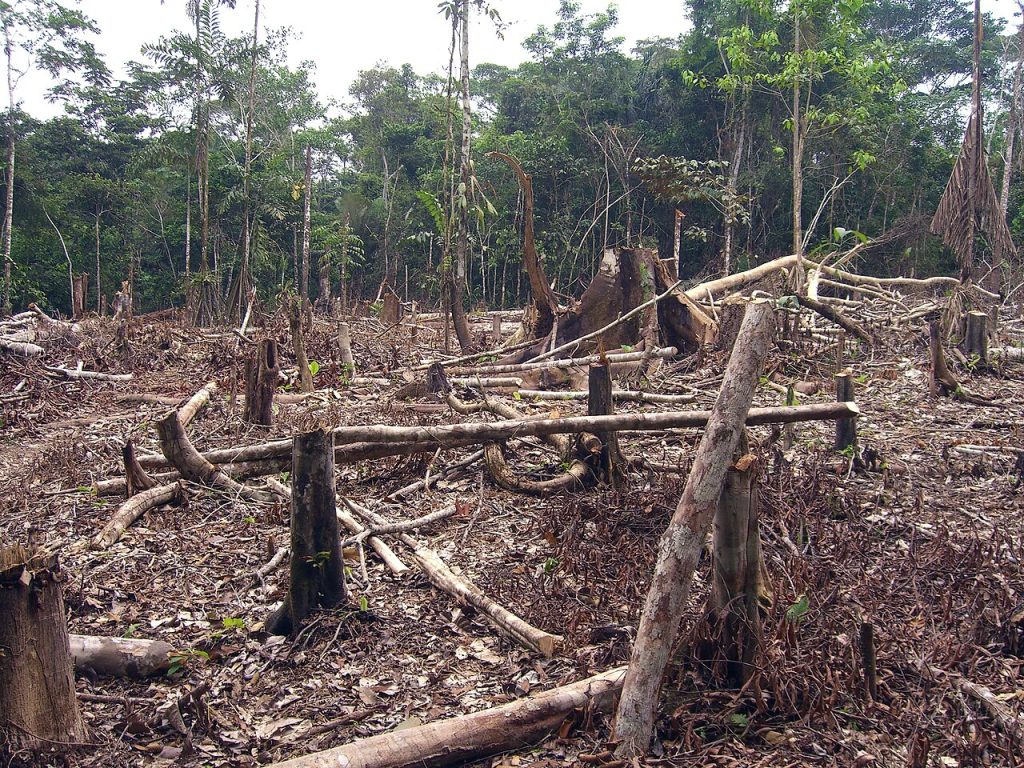
In its groundbreaking report ‘Carbon Inequality Kills’, Oxfam states that “fifty of the world’s richest billionaires on average produce more carbon through their investments, private jets, and yachts in just over an hour and a half than the average person does in their entire lifetime… [and] they tend to favour investments in heavily polluting industries, like fossil fuels… If everyone’s emissions matched those of the richest 1 percent, the carbon budget [CO2 that can be added to the atmosphere without pushing temperatures above 1.5°C] would be used up in under five months.”
Global warming has already reached 1.5°C (above pre-industrial levels), and according to British global-systems researcher Tim Lenton of Exeter University, “we are rapidly approaching multiple Earth system tipping points that could transform our world with devastating consequences for people and nature.”
None of which matters to the industrial polluters; they are wedded to the fossil fuel economy and the military-industrial complex — poisons that are fuelling climate change, as well as war, of course, which is regarded as a business opportunity to the oligarchs. Peace is of no interest to such men, and without peace, GHG emissions will continue to increase, climate change will accelerate, and more and more people will die as a result.
Climate deaths
As temperatures rise and extreme weather conditions increase, every year more and more people are dying from climate-related causes.
The Lancet Countdown 2025 report, produced in conjunction with the World Health Organization (WHO), makes clear that complacency and climate inaction “are resulting in millions of avoidable deaths every year.”
Their findings are stark: heat-related mortality has increased by 63% since the 1990s, to an annual average of 546,000 deaths in 2012–2021; exposure to wildfire smoke led to an estimated 154,000 deaths in 2024; and air pollution from fossil fuels and household sources was responsible for a combined 4.8 million deaths.
Shocking as the current figures are, the numbers of climate-related deaths are set to increase dramatically. A 2024 report from the World Economic Forum, using a methodology that includes floods, droughts, wildfires, and tropical storms, forecasts that by 2050 — a mere 24 years away — ”climate change could cause an additional 14.5 million deaths.” The true figure will likely be even higher.
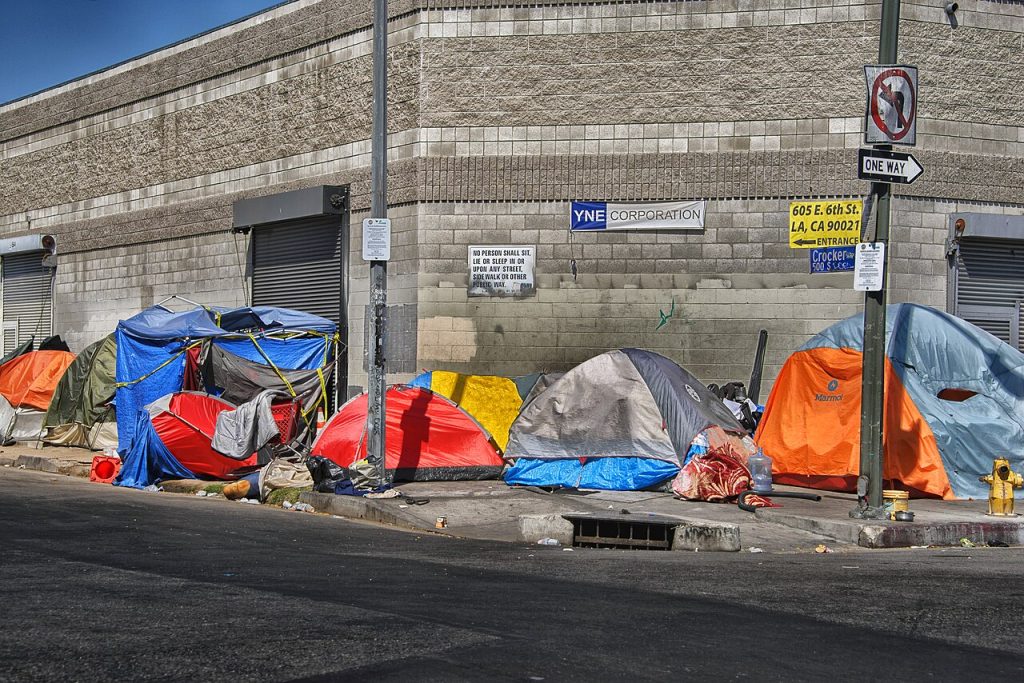
Overwhelmingly, the victims are from the Global South — Africa, South Asia, and Latin America — regions that have contributed next to nothing to the crisis. They are poor, black/brown: men, women, and children who are regarded as dispensable by a disconnected global elite, concerned with nothing but itself and the perpetuation of its privilege.
This is environmental racism, and it applies throughout the world. It is one of the many consequences of extreme inequality — of income, wealth, influence, opportunity, and education.
The fact that it is mostly poor, black, and brown people, living thousands of miles away from Silicon Valley or Wall Street, who are dying, is a major reason behind the complacency and inaction around the environmental catastrophe. But it is not the only reason — for even as the impact of climate change spreads to middle-class white people in Europe and America, governments are still refusing to take the radical action needed.
This damning failure highlights the need for not just fundamental systemic reform, but changes in values and attitudes — the fuel of behaviour. Both need to change in parallel — a symbiotic shift. At the heart of which must sit the realisation that humanity is one — and therefore anything that creates and maintains divisions should be rejected, and inclusive cooperative modes of living enabled.
Like all crises facing humanity, the destruction of the natural world is a consequence of a divisive materialistic way of living — rooted in desire, pleasure, and selfishness. Only in such a shallow self-centred world could the shame of environmental racism and the blasphemy of oligarchy occur.
(Source: counterpunch.org)
The quotations featured below are drawn from various Share International publications.
Economic system
The world can no longer afford the vast discrepancies between the living standards of the rich and those of the poor nations. That imbalance is at the heart of our political/economic problems today. Basically it is a spiritual problem: a choice between materialism and separation on the one hand and spiritual sharing, justice and brotherhood on the other. Our choice will decide the fate of humanity. (Benjamin Creme, Maitreya’s Mission Volume Two)Climate change
Man’s problem today, as always, is of his own making; it is not inherent in the Plan of God. By the misuse of his divine freewill, man has placed his future, and that of all the kingdoms, in jeopardy. Many today are beginning to realize this and are taking such steps as they can to avert catastrophe. This is good.But not all men see the danger which faces mankind in increasing potency. Time is short indeed for the reconstruction of our world along lines more befitting man’s true role and purpose.
My task is to show you the way, outline the possibilities only, for by man himself must the New World be forged. (Maitreya, from Message No. 12)

We, your Elder Brothers, can say with full conviction that the actions of men are responsible for eighty per cent of global warming.
Maitreya, you will find, will not be long in bringing this urgent problem to man’s attention. He will face men with the alternatives: the beneficial results of action now, on the one hand, and the destruction which would ensue from doing nothing, or too little, on the other. Thus, the decision is man’s alone. (Benjamin Creme’s Master, from ‘Saving the planet’)
Nationalism and Refugees
Whenever men sense the onslaught of change, the tendency is to ‘dig-in’, to return to origins, to re-establish and strengthen the links with the past. Thus it is today as men, in all areas, religious, political and economic, feel the impact of the energies which challenge their assumptions and prejudices and threaten the continuance of their much-loved way of life. …We shall see the resurgence of a new spirit of common sense, practicality and proportion in the affairs of those nations hitherto enshackled by the snares of a dogmatic ideology, unrelated, for the most part, to the real world. A new spirit of compromise, enterprise and goodwill will overcome the isolationism of the past. (Benjamin Creme’s Master, from ‘The wane of fundamentalism’)
Whenever such a situation arises, men grow fearful, and when in fear they strike out in anger. Thus it is today in many parts of the world. A growing intolerance, of refugees, of foreigners, discolours the democratic process, as living standards fall and security is threatened. Political extremists, waiting in the wings, seize their opportunity, and emerge to lead unthinking youth in imitation of the past. …
Into the centre of the storm this group of Elder Brothers is returning. One by one, They take Their places in your midst, ready when called upon to offer Their advice and help. (Benjamin Creme’s Master, from ‘Waiting for the new’)
Poverty
What is required is a reassessment of who and what we are in our relationship to each other. Maitreya says the first step we have to take to address these problems is to see ourselves as one, brothers and sisters of one humanity. We have to get that sense of globality, that we are one people, one group — and therefore the food, raw materials, energy, scientific know-how and educational facilities of the world belong to everyone. These resources are given so that all people may evolve correctly according to the Plan which underlies our evolutionary process. As a result, we must share these resources more equitably. When we share, Maitreya says, we will create justice in the world, and when we create justice, and only then, will we have peace. (Benjamin Creme, Maitreya’s Mission Volume Three)The achievement of balance requires the recognition that all are interdependent, peoples and nations, and that the needs of all can be met by just sharing. Until that realization dawns and is followed by action we shall know an unstable world. While half the world goes hungry and millions yearly starve true peace remains a dream. (Benjamin Creme’s Master, from ‘The need for action’)
War
When the time comes to count the cost, men will be amazed at, and ashamed of, the waste of war. More than any other activity of men, war eats greedily into resources and lives. Nothing is spared in the effort to overcome the ‘enemy’; everything is sacrificed to the attainment of victory. Thus has man waged relentless strife against his neighbour, and not always in self-defence. …Today, we have reached a time when men must take seriously the task of ending war. Men must understand that there is no problem or situation which needs war to solve or cure. This being so the nations must together act and end for ever that destructive aptitude of men. (Benjamin Creme’s Master, from ‘The ending of war’)
Brotherhood
Never before, in the history of the world, has such an opportunity as now exists been presented to men. From the chaos of the past can order be created; into the darkest ignorance can new light shine. Together, for the first time as brothers, can men establish the rule of divine law, and enter into right relation with their Source.Now, as we enter the time of renewal, men should understand the principles on which a correct advance can be made. Brotherhood, itself a fact in nature, must more and more determine the nature of the new forms. All that is awakened to the fact of brotherhood will find itself in the centre of the path to the future. All that pertains to brotherhood will find the quickening energy of Hierarchy flowing to its cause. Peace will be established on the idea of brotherhood, ridding the world forever of the canker of war. (Benjamin Creme’s Master, from ‘The future’)
Oneness
Without recognizing it as such, humanity is undergoing a great spiritual crisis that is focused through the political and economic field. That spiritual crisis can only be resolved by the resolution of our political and economic problems, which are based on the false sense of separation. If we would evolve, develop as a race, we must realize our Oneness, realize that we are brothers and sisters of one family, under the one Divine Source, and identical with that Source. What happens in a normal family? They share whatever they have. A mother will not feed one child better than another, give one child 17 per cent and another 83 per cent of the food. We have to realize that we are one family, and therefore must share the resources of the world more equitably around the world. (Benjamin Creme, Maitreya’s Mission Volume Three)“See your brother as yourself,” says Maitreya. Create an International Storehouse from which all can take. Only thus, by Sharing, can the world be renewed, is His Teaching. Only by Sharing, He will affirm, will men find the happiness they seek. Sharing alone will bring Justice and Peace. (Benjamin Creme’s Master, from ‘The Oneness of Humanity’)
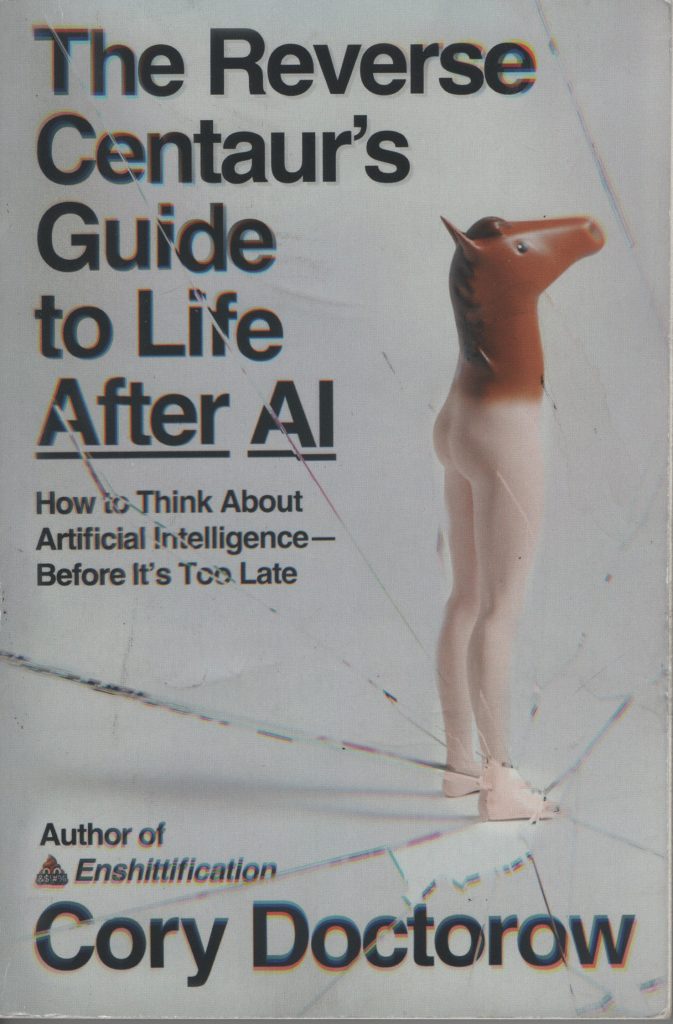
Most evaluations of Artificial Intelligence (AI) seem to fall into one or the other of two extremes: either it’s the most significant invention for society since the wheel, or superintelligent AI-based robots will make slaves of humans and take over the world. Both views are rooted in an emotional reaction to the technology rather than a clear-headed examination of what AI can and cannot do, its over-hyped promotion, and the responsibility for how it’s used.
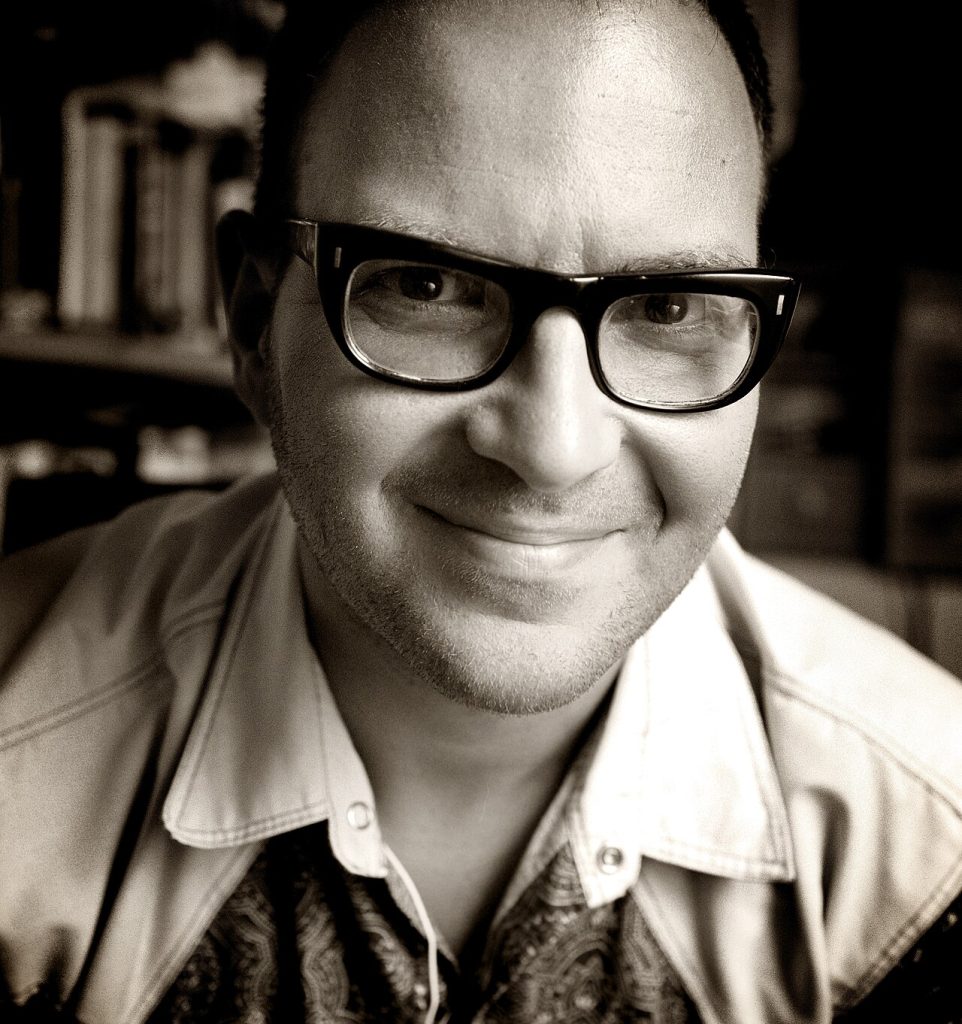
Cory Doctorow, a journalist, science-fiction writer, and author of more than thirty books, provides a much-needed, realistic appraisal of AI, cutting through the emotional garbage and showing how we can make use of it for the betterment of our work lives and society in general. The technology is not going away — at least until the bubble bursts, which he says is inevitable — so in the meantime, we have to figure out how best to apply it, contain its excesses, and respond to the challenges it presents.
First, definitions of ‘centaur’ and ‘reverse centaur’ are in order. In Greek mythology, a centaur was a creature with the upper body of a human and the lower body and legs of a horse. In the academic study of automation, a centaur is a person who’s assisted by a machine. For example, wearing hearing aids, using a calculator, or riding a bicycle makes you a centaur.
A reverse centaur, on the other hand, is a human who acts as an assistant to a machine. Amazon warehouse workers can be considered reverse centaurs because their every movement is timed and monitored by AI-equipped cameras, and they are penalized if they fail to meet unreasonable quotas. As Doctorow says, “They aren’t merely used by those machines — they are used up.” The difference between a centaur and a reverse centaur is whether the worker or the machine is in control.
One crucial point Doctorow makes repeatedly is that the social arrangements of technology are not inevitable; they’re a choice. Bosses, he says, love AI because of the promise (whether accurate or not) that it can replace workers, creating less expense and more profit for them. Bosses are easy marks for AI hype because they want to believe it, but the probability is actually low that AI will be able to do most jobs.
Take, for example, radiologists. AI may be able to catch tumors that human radiologists miss, but it may also create false positives and negatives. In a centaur-type arrangement, radiologists could provide a diagnosis and get a second opinion from AI. Where they disagree, the radiologist could check the X-ray again to confirm the diagnosis.
In a reverse centaur scenario — the growth version — nearly all the radiologists would be fired and replaced with AI at a fraction of the cost. The remaining human radiologists’ job would become reviewing AI output rather than X-rays. They would be confirming the judgments the AIs make at superhuman speed, which is virtually impossible due to ‘automation blindness,’ a nearly universal human cognitive limitation.
The human in the loop will eventually be lulled into clicking ‘OK’ every time they’re shown a diagnosis, and the likelihood of this happening increases as the volume and flow of the assessment tasks increase. Placing a radiologist between the AI and the patient allows a reduction in the wage bill for the hospital without taking responsibility for the AI failures to spot tumors. That falls on the radiologist.
The strategy behind the AI hype
It’s all about wooing investors. Doctorow reports that every AI company is losing money, and the bigger the company, the more money it’s losing. The hype is necessary to convince investors that the company is destined to grow, which would give it a higher stock valuation (technically a P/E, or price-to-earnings ratio) than a ‘mature’ stock that’s profitable but not necessarily growing. A higher stock valuation would allow it to use stock to buy other companies and hire key personnel with most of their compensation coming from stock — and keep growing.
However, Stein’s Law in finance holds that “If something cannot go on forever, it will stop.” Therefore, firms are always negotiating the delicate balance between the perception of growth versus stagnation in the eyes of investors — because the minute the market decides the company is no longer growing, there will be a massive sell-off. For example, in 2022, Meta warned investors that it had experienced less growth among US users than projected, and within 24 hours, a panicked sell-off totaling $230 billion occurred.
Numerous questionable tactics and tricks are used by companies to give the impression of growth or projected growth, and those create bubbles. Companies promise things they can’t possibly produce. This is easy, according to Doctorow, because of the “Byzantine premium” — the extra value investors place on an asset they don’t understand. Many of the stories about AI’s explosive growth potential rely on this principle — from generative AI to the new ‘agentic AI.’ When the novelty of one flashy tool wears off, another is substituted, which keeps inflating the AI bubble.
The bubble
The AI bubble is being driven by the large tech firms’ need to tell a growth story to investors. However, the possibility that the technology on its own merits will become hugely profitable is remote, because of the problems with existing AI. Doctorow writes that a recent MIT study found that “95% of commercial AI deployments fail, with no measurable impact on profit,” and gives examples of spectacular failures — for example, when used to replace customer service staff.
He also discusses the inescapable bias in training AI models, which results in extremely biased responses: ‘garbage in, garbage out’ (GIGO). Further harms are deepfake porn, election disinformation, and surveillance pricing. That is, when a company uses personal information it knows about you to demand a price or offer a wage that exploits your unique situation.
Amazon is a prime (pardon the pun) example. Amazon has been shown to quote prices for Prime customers (who have already paid for a year’s shipping in advance and normally make their purchases on Amazon) that are much higher than prices quoted for non-Prime customers.
Even regional staffing agencies for relief nurses have gotten in on the pricing scam. The digital hiring apps buy nurses’ credit histories from data brokers before offering them a shift and then reduce the wage they offer those with high credit-card debt, judging that they’re more economically desperate and likely to accept a lower wage.
After the bubble pops
Every generation of AI foundation models has been enormously more expensive to train and run than the previous generation, and even more expensive every time a user or feature is added. This is not a winning growth formula. Most, if not all, AI companies will ultimately fail, Doctorow assures us, and the bubble will burst.
This will not be a good day, since the seven gigantic AI companies account for 35% of the US stock market. Innocent people will be devastated, including those who have invested their life savings in index funds, considered the safest of all investments. What will be left are the data centers, hardware, and trained programmers, plus some positive residues that will fortunately be useful for many: stand-alone, open-source models that can run on personal computers, such as high-quality transcription software and on-device image processing tools.
Doctorow calls these benefits trivial, though, since they will have cost hundreds of billions of dollars and gigatons of planet-killing carbon. The environmental damage will be borne by every living thing on the planet for years to come, and much of the harm is already baked in. Likewise, the economic costs of the AI crash will be felt around the world for a generation or more and are also locked in. This may be the long-predicted global crash.
The key takeaways from this eminently readable — often humorous — guide are:
- there’s nothing inevitable about the mythical future of AI,
- investors are the intended audience for AI hype designed to ‘prove’ it’s a growth industry,
- AI technology does not and cannot live up to the claims about what it can do,
- the current technology is being used for some detrimental — even evil — purposes,
- AI is not and has never been profitable,
- it is therefore a bubble that, as all bubbles do, will ultimately pop,
- in the meantime, it will create tragic environmental damage followed by economic disaster when it pops, and
- we can choose how and when to use AI technology beneficially rather than working as its assistant.
We can choose to be centaurs rather than reverse centaurs.
Khiva, Uzbekistan, 7 July 2026 — Transoxania, the ancient Greek name for today’s Uzbekistan, has hosted many of the great turnings of history. The name signifies the lands beyond the Oxus River, which we now call the Amu Darya, the river which for millennia has given life to the oases of this desert region and made it a central node of the Silk Road. It was in Transoxania that Alexander the Great fought some of his hardest campaigns, against the Eastern Persian people known as the Sogdians.
The battles ended when Alexander took as his Sogdian bride, Roxana — “Little Star” in the old Iranian tongue — and thereby drew the Sogdians to his side. Our local driver, a cheerful man, is also named Iskander (Alexander). The same name has been carried with pride across twenty-three centuries in the land the Macedonians wooed to their side.
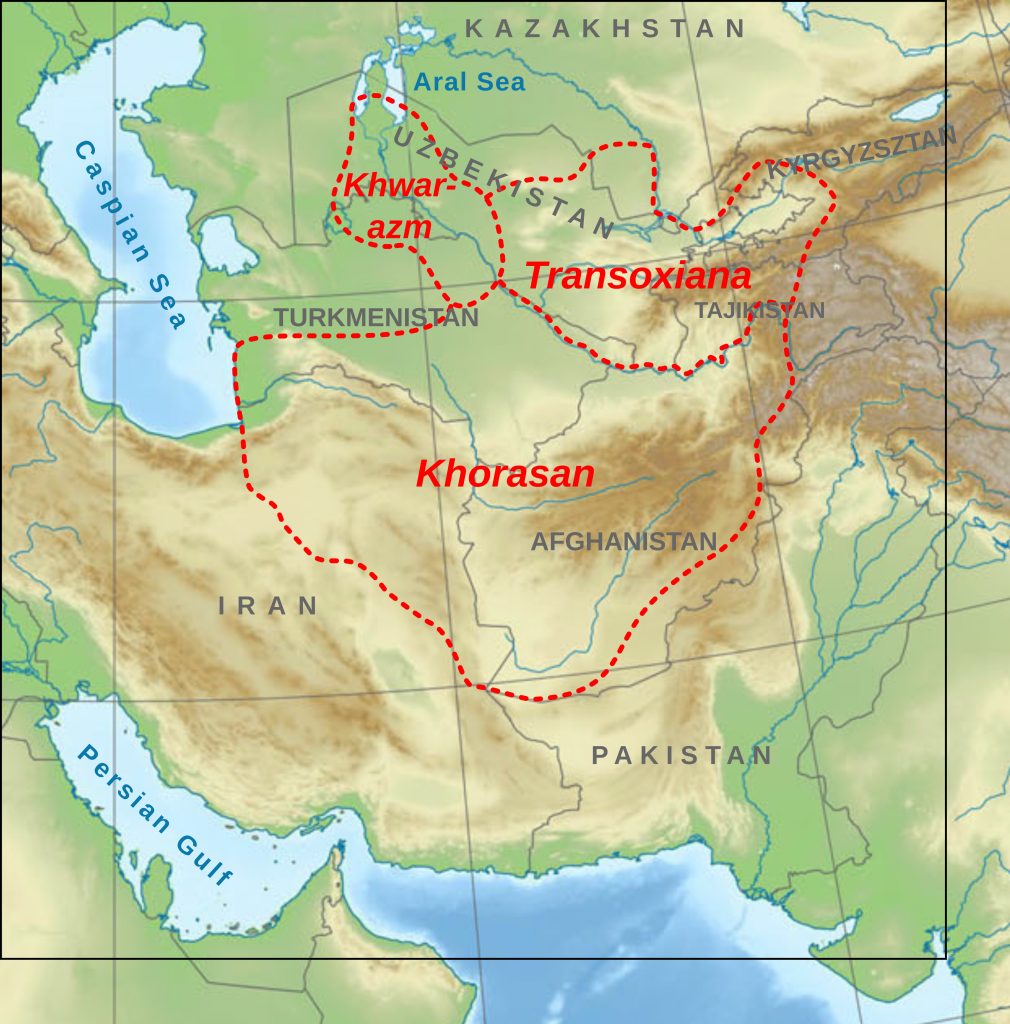
The Sogdians were here well before Alexander, before Rome, and more than two millennia before the Western-dominated world of recent centuries. The Polo brothers passed this way some 750 years ago. And into this ancient and enchanting region our small caravan of electric cars rolled in today.
We have arrived at the center of the world as the ancient and medieval world knew it. This is the hinge between China and Persia, India and the steppe, the place where silk, paper, faiths, and the numerals we count with all changed hands. It is now becoming a 21st century destination for tourism, trade, and culture along the new ‘middle corridor’ once again connecting Europe and China.
America marked its 250th birthday while we were on this road. Two hundred and fifty years is a blink of the eye in Transoxania. I feel a great sorrow at how the toddler US empire has been behaving — lashing out at ancient civilizations, the Iranians above all, a people whose statecraft and poetry and science reach back some ten times longer than America’s own short national life. As we know, America’s war of whim against Iran this year did not go well.
There is a wisdom in the old city walls and ancient madrassahs of Khiva that Washington would do well to relearn: that great and ancient nations are not to be bullied into submission but should be met in trade as equals. Peace, the first aim in our Marco Polo journey, starts with humility before the dignity of other peoples.
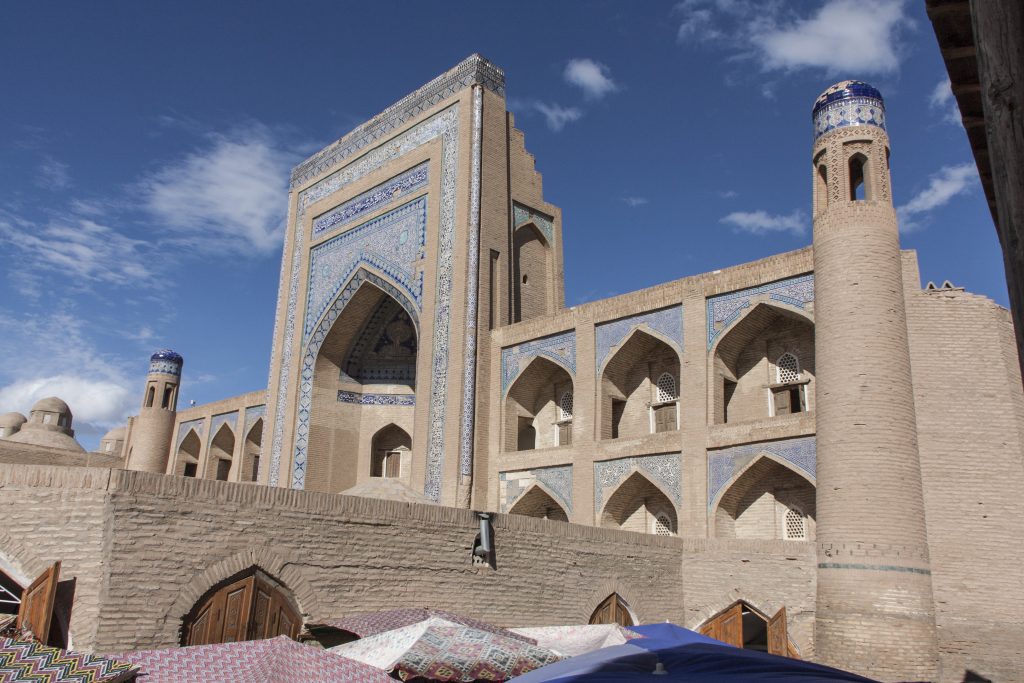
The walled inner city of Khiva — the Itchan Kala — is a wondrously preserved medieval town, its mud-brick ramparts glowing amber at dusk, its minarets and madrassahs and the stout turquoise stump of the unfinished Kalta Minor rising within. I am spellbound. Yet this walled city is no mere museum piece. Some two thousand people still live inside the ancient walls, sending their children to school along lanes worn smooth by a thousand years of tradesmen and artisans. Layer upon layer of civilization is stacked here — Khwarezmian, Persian, Turkic, Mongol, Timurid, Uzbek, Russian — and the whole of it is still a living, working part of the city today. That is a marvel: a place that carries its whole past forward without ceasing to be a home.
This region, Transoxania to the ancient Greeks and Uzbekistan for us, remains a crossroads of many great civilizations, all inter-mixed rather than replaced. The Persian world gave the land its poetry and its administrative genius. The Greek world left its Iskanders and cities today such as Khujand, Tajikistan (once known as Alexandria Eschate, or Alexandria the Furthest). The Turkic peoples gave the Uzbek language and part of the population that fills these streets today. Christianity was here too, especially in the form of the Nestorian churches that once dotted the Silk Road as far as China. In Bukhara, where we go today, there survives the remnants of an ancient Jewish community, the Bukhara Jews, who have prayed and traded and sung here for millennia. All of these civilizational threads are still visible in the weave of this remarkable region.
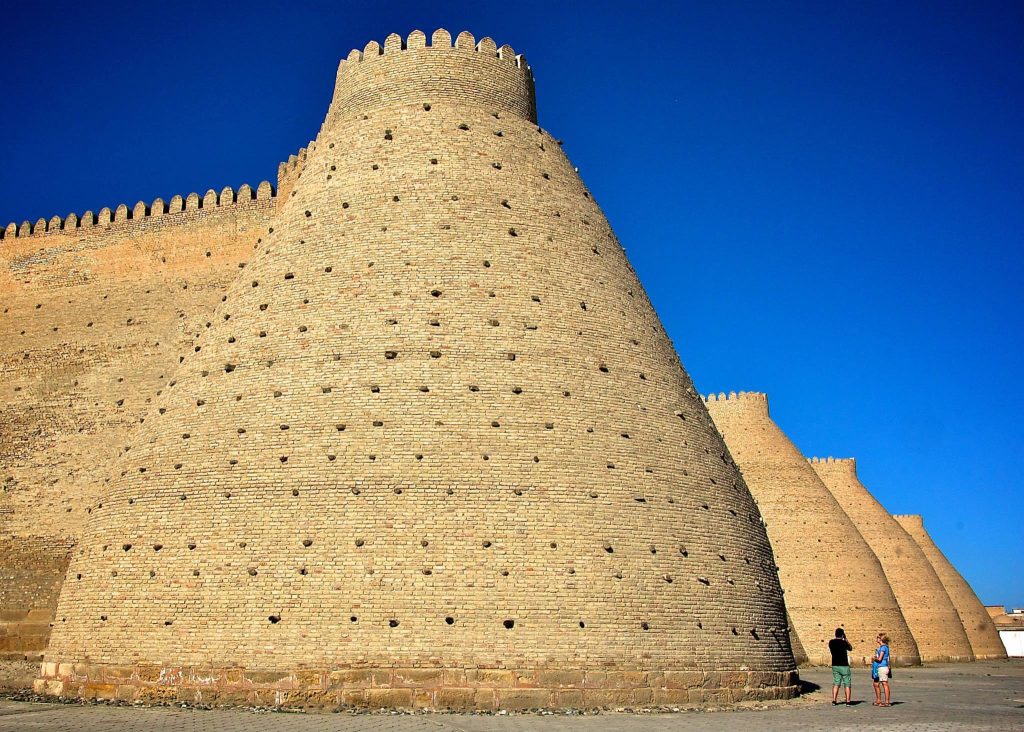
After Bukhara — city of pilgrims, scholars and saints — we will reach Samarkand, the jewel at the center of Transoxania. Samarkand was the capital of the vast empire of Timur, whom Europe came to know as Tamerlane: a conqueror as brutal as any in history, and yet also the founder of a dynasty that made this city a beacon of art and learning. It is his grandson I most long to honor there. Ulugh Beg — prince, sultan, and, most gloriously, astronomer — built on the hill of Samarkand one of the great observatories of the pre-modern world, with a sextant so vast its arc was sunk deep into the bedrock. There, over seventeen years, he and his team of mathematicians measured the heavens with a precision Europe could not then match.
Their great star catalogue, the Zīj-i Sultānī of 1437, fixed the positions of more than a thousand stars anew — the first such catalogue built on fresh observation since Ptolemy, thirteen centuries before — and it was not surpassed in accuracy until Tycho Brahe, a century and a half later. Ulugh Beg’s measurement of the length of the year, and of the tilt of the Earth’s axis, were finer than the values Copernicus himself would use. And the knowledge traveled: his tables reached Europe, were printed at Oxford by Thomas Hyde in 1665, and were studied by astronomers such as Hevelius, feeding the very stream of observation from which the Copernican revolution and modern astronomy would rise. That a Timurid prince on this Silk Road hill helped light the way for Kepler and Newton is the kind of connection our Marco Polo drive was made to celebrate — the long, patient, borderless collaboration of human minds across every frontier of nations, faiths, and languages.
From the heart of the Silk Road, with the dust of Khiva on our sandals and Samarkand’s blue domes still ahead — warmest greetings, and our fondest yearnings for peace among the old and young nations alike.
Jeff and Sonia
(Source: jeffsachs.org)
To follow the Marco Polo Drive of Peace on social media:
YouTube Facebook INS TikTok X Linkedin website
It’s 85 seconds to midnight on the Doomsday clock — the closest humanity has ever been to worldwide catastrophe. ‘The Bulletin of the Atomic Scientists’ notes this peril is driven by a breakdown in global co-operation, leaving humanity increasingly vulnerable to unmanaged existential threats like nuclear war, climate change, and AI.
Despite remaining our greatest threat, nuclear war is largely absent from public discourse, a peril now compounded by the ongoing integration of AI into nuclear weapons systems. Addressing this, the Vatican hosted the Global Nobel Laureates Assembly on Artificial Intelligence and Nuclear War in July. Over 30 laureates drafted the ‘Rome Declaration’ (see this issue of Share International), demanding strict human oversight and global disarmament.

The new short film An Ordinary Insanity refocuses attention on this crisis, It features whistleblower and longtime anti-nuclear activist Daniel Ellsberg, who had helped to draft the US nuclear war plans while at the Rand Corporation in the early 1960s. Ellsberg’s mission was to improve upon the last plan left by the Eisenhower administration — simply to strike first against the Soviet Union and China, estimated to kill 600 million people. It has been known for decades that following such a strike, nuclear firestorms would send massive amounts of soot into the stratosphere, blocking sunlight and triggering a global nuclear winter which would kill 98 percent of the world’s population within one year. Despite the unimaginable consequences, he says, superpowers like the US, Russia, and China are actively preparing for a catastrophic war that should never even be a prospect.
He explains that inter-continental ballistic missiles or ICBMs, are the only weapons in the US arsenal that force a president to make a rushed, split-second decision on whether to initiate a nuclear war. Because these fixed silos are highly vulnerable to pre-emptive enemy attacks, they create a perilous ‘use them or lose them’ scenario. The US currently keeps 400 ICBMs on a hair-trigger alert, meaning they can be launched within minutes of receiving a command. Once fired, these missiles cannot be recalled and will inevitably strike their targets in Russia and China in roughly half an hour. Ellsberg suggests that the total elimination of land-based ICBMs would go a long way to making the world safer, as it would significantly reduce the risk of an accidental nuclear war.
The film shares two examples of hair-raising real-life close calls: one in 1979, where the North American Aerospace Defense Command or NORAD’s command centre accidentally displayed a simulation tape making it appear that a series of first-strike missiles had been launched by Russia. Another near disaster in 1983 was averted by Russian Colonel, Stanislav Petrov, who had no way of confirming if his country was actually under attack by five American missiles or not. Taking a risk, he lied to his superiors, calling it a false alarm. “It’s the ICBMs alone that create this 3am 10-minute warning situation — which is, of course, absurd, to think that a human can deal rationally or reasonably with such circumstances,” he says.

Ellsberg advises that a mass public effort is required to confront the industries and lobbies behind the continued proliferation of nuclear weapons. He asks, “Why are we thinking of spending a quarter of a trillion dollars over the next 30 years, a hundred billion in the next 10 years, to produce a replacement for the Minuteman III, when we should eliminate the Minuteman III, the current ICBMs, altogether? … Mainly because it’s profitable to Northrop Grumman, or its rivals Boeing or Lockheed, to have channels of influence — who have, in effect, bought influence, let’s be frank, bought Congressmen. They have carefully distributed the earnings from that in the jobs, and the votes, across 35 states. So it’s votes, it’s campaign donations to the congresspeople, it’s revolving-door jobs between the highest-level military and these corporations.”
In a recently published statement, Elbegdorj Tsakhia, one of the Elders and former Prime Minister of Mongolia, reminds us that public pressure has driven change on this issue before, and it can again: “We all have a responsibility to speak up, engage, and demand greater restraint from decision-makers. Every voice adds to the pressure for change.”
An Ordinary Insanity is available to watch for free on YouTube.
(Sources: globalnobelassembly.org; www.anordinaryinsanity.com; theelders.org)
“…our main purpose in coming to you [the Earth] at this time is to warn you of the grave danger which threatens men of Earth today. … Even though the power and radiation from the test explosions have not yet gone out beyond your Earth’s sphere of influence, these radiations are endangering the life of men on Earth. A decomposition will set in that, in time, will fill your atmosphere with the deadly elements which your scientists and your military men have confined into what you term ‘bombs’. If … mankind on Earth should release such power against one another in full warfare, a large part of Earth’s population could be annihilated, your soil rendered sterile, your water poisoned and barren to life for many years to come.”
— the Great Teacher, as quoted in Inside the Spaceships by George Adamski
Adopted by the participants of the Global Nobel Laureates Assembly
Borgo Laudato Si’, Vatican — July 2026
Preamble
Humanity stands at a defining moment in its history.
More than eighty years after the dawn of the nuclear age, and at the threshold of the age of artificial intelligence, we are presented with an unprecedented challenge. Never before has scientific progress offered such extraordinary opportunities while simultaneously creating such profound risks to our common future.
When nuclear weapons were first being developed, the world had a chance to avoid living in a permanent dynamic of fear. We failed, and as a result, humanity has lived at the edge of nuclear annihilation.
With AI, a similar danger presents itself. AI built into nuclear systems leaves little time for, or even replaces, human judgement in a crisis. This technology changes the context in which nuclear-armed states compete with each other. AI will likely cause mass job loss and sharpen economic competition between nuclear-armed states. AI uplifts cyber attacks that can fracture critical civilian and strategic infrastructure. AI enables information warfare: Peace depends on a shared reality. Without facts there can be no truth; without truth there can be no trust; and without trust, no dialogue, no verification, and no restraint among nations.
The most advanced AI capabilities, computing resources, and data infrastructures are becoming increasingly concentrated in a small number of countries and corporations, creating significant asymmetries of power and limited incentives for cooperation. AI is a technology that causes economic, military, and social disruption, and is developing at a pace unprecedented in human history.
In the midst of a worsening nuclear arms race, we are embarking on an equally dangerous AI race.
Pope Leo XIV, invoking values shared across religious traditions, has called humanity toward an “unarmed and disarming peace.” We reject the belief that lasting security can be built on fear, domination, or the permanent threat of mutual destruction. Security cannot rest indefinitely upon the reality of mutual destruction.
Conscious of our shared responsibility toward present and future generations, we adopt the following principles:
1. DISARMING THE NEXT ARMS RACE
We recognize that AI is an arena of strategic competition, like nuclear weapons before it. We call on governments, frontier AI developers, researchers and the international community to act now, through governance arrangements such as benefit-sharing mechanisms, the promotion of AI applications that serve human wellbeing, and restraint in its most destabilizing applications, to reduce these risks while the choice remains ours. We must disarm the next arms race, both AI and nuclear, before they define the next century as well.
2. RESPONSIBLE DEVELOPMENT
AI developers should transparently publish the principles that guide the behavior of their models and be held responsible and liable for those models’ adherence to such principles. AI should be developed and monitored to be in alignment with humanity’s interests, including international law and respect for human rights.
Furthermore, no organisation should initiate, and no government should permit, fully-automated recursive self-improvement in artificial intelligence systems without the means to monitor, and if needed, to halt such systems.
3. RESPONSIBLE USE OF AI
An automated system should never make the final decision to launch a nuclear weapon. We call for the adoption of an international treaty prohibiting the reckless integration of artificial intelligence into nuclear command, control, and launch systems so that meaningful human control is maintained.
We must prevent the malicious use of artificial intelligence in cyber operations and attacks against critical nuclear infrastructure. Nuclear states must engage in fail-safe reviews to reduce the vulnerability of their nuclear forces to unauthorized control or manipulation by AI.
We promote the responsible development and use of artificial intelligence to improve human well-being, accelerate scientific and medical progress, protect the environment, strengthen resilience, and advance peace, sustainable development, and the common good.
4. RESPONSIBLE GOVERNANCE
We call on governments, corporations, and international organizations to enable coordinated slowdown of frontier AI development by establishing shared mechanisms, such as verification and robust internal and external evaluations.
We support the United Nations Independent International Scientific Panel on AI, and promotion of other efforts in the spirit of Magnifica Humanitas.
We call for expanded research and dialogue to propose new institutional pathways for international governance of AI and future implementation of global governance initiatives.
5. RESPONSIBLE LEADERSHIP
We recognize that the challenges we face will likely be solved by the next generation of leaders. Young people must be empowered to engage with nuclear, AI, and other potentially catastrophic threats, through education, mentorship, intergenerational partnership, and inclusive participation across all regions, cultures, and communities. We must advance education initiatives that foster ethical responsibility, critical thinking, media and AI literacy, and a culture of peace.
We acknowledge that humanity faces numerous connected threats, the unintended consequences of which often impact those who do not have access or control over such technologies. We call for a digital commons which grows data to advance understanding and action for nuclear weapons, ungoverned AI, and other existential threats.
6. NUCLEAR DISARMAMENT
We call for urgent, sustained, and good-faith negotiations leading, within an agreed and time-bound framework, to the verifiable and irreversible elimination of nuclear weapons. The international community must reject the normalization of nuclear weapons as permanent instruments of security and strengthen the humanitarian and legal norms embodied in the Treaty on the Non-Proliferation of Nuclear Weapons and the Treaty on the Prohibition of Nuclear Weapons.
We call on nuclear-armed states to halt renewed arms racing and the expansion of their arsenals, resume bilateral and multilateral negotiations on arms control and disarmament, and fulfill their obligations and commitments under international law. States should pursue verifiable restraints and reductions; lower alert levels; extend decision time; move away from launch-on-warning and prompt-retaliatory postures; reduce the role of nuclear weapons in security doctrines; strengthen crisis communications; prevent cyber operations against nuclear command, control, and communications; and build cooperation to prevent misunderstanding, miscalculation, and unintended escalation.
Nuclear nations must promote policies and doctrines that diminish the role of nuclear weapons, and reduce the likelihood of first use and catastrophic war.
Source: the Rome Declaration
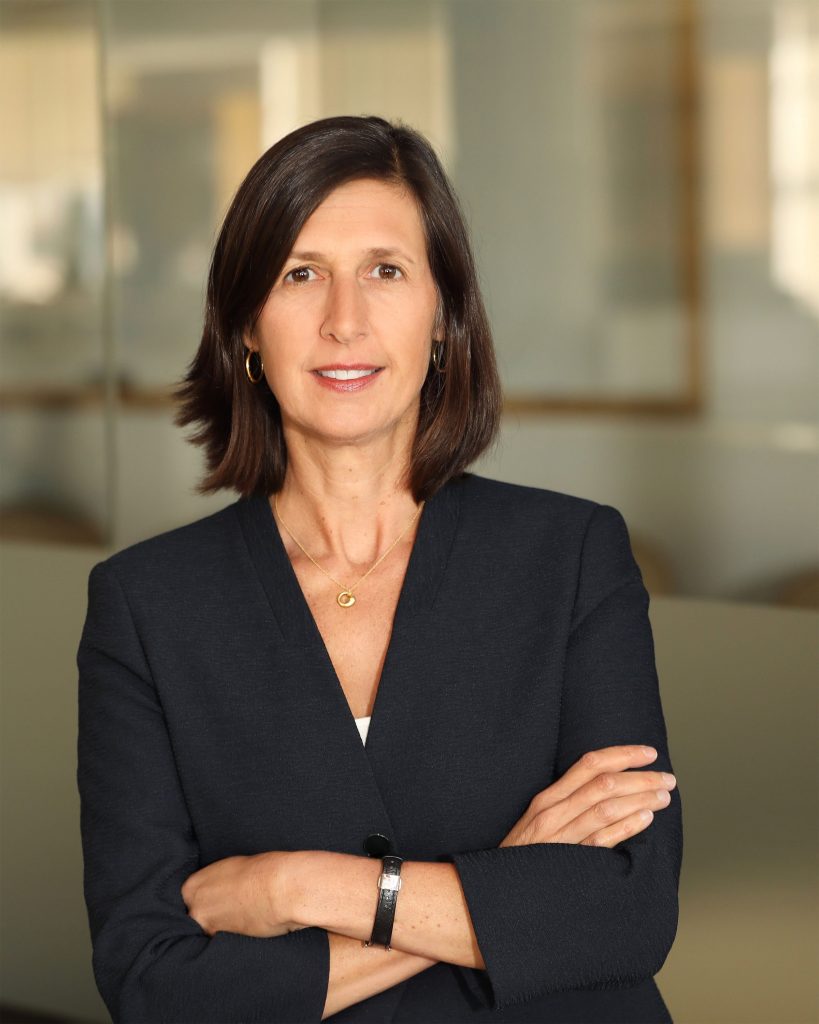
Abby Maxman is the president and CEO of Oxfam America. Her work has taken her to more than 70 countries and spans critical global challenges from the apartheid era in South Africa to the HIV AIDS and Ebola epidemics in Sub Saharan Africa and chronic food insecurity in Ethiopia. She has been involved in post genocide relief and recovery efforts in Rwanda and led large scale humanitarian responses in Haiti and Ethiopia. She has been instrumental in advancing gender and climate justice, fighting inequality and driving Oxfam America’s ambitious 2030 strategy.
She was interviewed for Share International magazine by McNair Ezzard.
Share International: In addition to Gaza, what would you say are a few of the most critical hot spots in the world right now in terms of hunger and poverty.
Abby Maxman: Some of those hot spots are where the confluence of conflict, climate and other factors have come together. The devastating Ebola outbreak, that originated in Democratic Republic of Congo (DRC) and is now spreading, is one crisis we’re watching closely and responding to with partners. Our focus on water and sanitation, community health and more — this work is so vital to save lives, build trust with communities, and stop it from spreading. Without a vaccine, this is really one of the best tools we have to address the crisis.

A year ago, I was there. It was a week after President Trump had the ministers of foreign affairs from the DRC and Rwanda in the Oval Office signing a peace agreement. Fantastic. We are all for that. I met with that Minister of Foreign Affairs while I was there. We all know that peace will be the pathway for development and self-sufficiency for people. People want peace. Nobody wants to be reliant on aid. On the one hand, there was the signing of a piece of paper in the Oval Office, but then a pulling out of aid that would have helped people at their time of need. It undermines the prospects the administration claims they want. We would love to be celebrating a peace deal that could stick. But you have to invest in people and their development, their dignity and security to enable that to happen.
We are seeing the results in the Ebola outbreak now — it is costing lives. Seventy percent of the humanitarian work in the east of the Democratic Republic of Congo was pulled out overnight, creating chaos. The Ebola response has been delayed and stymied because of aid cuts from the US and others — with deadly results.
People are still hearing about the conflict in Sudan. And across the border in South Sudan, the combination of conflict, climate shocks, economic instability, and people who are displaced, creates a perfect storm of suffering for families without enough access to food. So we see these risks in South Sudan and in Somalia.
I know it can feel dispiriting to people. Why aren’t we fixing the problem? We know that humanitarian assistance on its own was never designed as the permanent fix for poverty and inequality. But the work of principled humanitarian action, to save lives and then invest in people’s future, helping them get on their feet and to rebuild, is part of how development happens. We did see progress over decades until recent years. We must continue to show up and do everything in our power to respond, and to push our leaders to let them know these people’s lives matter to us — and that we know they have the power to make a difference.

SI: Does it reflect a certain level of ignorance to ask, where is the UN in all of this?
AM: It’s not ignorance at all. It’s a vital part of an ecosystem. The United Nations is funded by member states. The US Government has been pulling out funding to organizations. That includes the United Nations. It has pledged money to the UN, but with strings attached that supports their political agenda.
We have all worked, over decades, to establish important, fundamental ways of co-ordinating humanitarian response, peace-building, development work in countries that are in crisis, or in need of aid. Right now we’re all in a similar ecosystem of how we have delivered aid and development, and support has been upended. The chaotic way aid was dismantled has forced everybody to figure out how to realign. At Oxfam, the pressures are enormous on the funding and activities and the work we do. We are now forced to make impossible choices about who gets aid and who doesn’t.
SI: There are a number of areas of concern that Oxfam is involved with, such as economic and racial justice, promoting a fair tax structure, educating people about what oligarchy means, climate crisis, women’s rights, gender justice. Why are these areas important for Oxfam to focus on?
AM: We have more than an eighty-year history. We pride ourselves on being an evidence- research-learning-based organization. Up until when we launched our current strategy we focused on poverty and hunger. Those still remain, but we specifically added inequality. We fight inequality to end poverty and injustice. You can’t do one without the other. Growing inequality, income inequality, issues of gender and climate justice, are all intertwined.
We look at rights and dignity, the humanitarian implications, and know there’s a direct correlation to the issue of growing inequality policies and fair tax systems. We’ve seen over the years a political capture by the ultra-wealthy, where decisions are made to give tax breaks to the wealthy while taking away basic social support infrastructure for the poor and marginalized people in the world. So we are looking at a systems approach to tackling inequality and poverty while also helping people where they are. This dual approach of addressing the causes and consequences is fundamental to what we do and how we do our work. We provide research evidence and issue reports to influence policymakers in global policy and governments around the world.
For us, the United States Government is important. But part of our efforts in seventy-five countries around the world includes work in global north and south governments, where we can influence policy and fair tax policies. We found that nobody thinks the ultra-wealthy should pay a lesser amount of tax than your ordinary worker. Funding government to provide basic services to its people is fundamental to prosperity and development and a more equal world.
SI: With all that’s going on in the world, in Gaza and Africa, the hunger and poverty around the world, do you have faith in humanity’s ability to solve the hunger and poverty issue?
AM: You know, I’m an optimist. I’ve been doing this work for nearly forty years, not because I have blind belief, but I’ve seen how it helps people. I’ve seen the resilience of women, families and communities living through terrible times and unspeakable tragedy, who are both generous and taking in other people into their families. They are helping people and surviving, wanting to rebuild and thrive.
I know change is possible. I know that our local to global work can make a real difference. We have a responsibility to fight for what we know and believe is right, to invest in our common humanity, invest in communities that deserve better.
We want to be able to create a better world. I believe and know it’s possible. I know there are so many people who do not agree with what is happening, with what the Trump administration is doing like dismantling USAID, destroying long relationships. But I think we can create a groundswell of resistance that turns the tide. We can’t feel dispirited and need to keep doing the work. We need to show up, raise our voices and use whatever power, resources and influence we have.
SI: What do you personally get out of the effort that you put forth with Oxfam and in your years of experience?
AM: I feel deeply blessed to lead this incredible organization. It is so fulfilling to get up each day, looking at some of the most complex issues of our time, and try to help people. When I was in the eastern DRC I met with a twenty-four year old woman named Francine, an incredible woman. She had just been forcibly displaced from a displacement camp. Throughout her whole life all she has known is displacement, movement and conflict. She had come back to her village that was not deemed safe. It was pillaged. There were dead neighbors who had been killed in the community. She didn’t want to depend on aid. She wanted to avoid the fate of some other young women who felt they had no choice but to sell themselves for sex to be able to feed their families. She just wanted to start a life, start a small business, so she could sell food and provisions to members in her community. She wanted to start a life of dignity and security.
I know there are people that survive things I can’t even imagine being able to survive, getting up each day, wanting to do better for themselves, their families and their communities. I feel a sense of duty, given that I live in the richest country in the world, have the ability to do good and do the right thing, and doing things right means so much. It’s a very rewarding opportunity I’ve been afforded.
An edited version of answers given by Benjamin Creme to questions asked at the 1995 Transmission Meditation Conferences, US and The Netherlands.
“Many today cannot really tolerate the modern world. Everything that happens — politically, economically, religiously, socially, scientifically, culturally — is abhorrent to them. Either they are longing for the far-distant past, or for some as-yet-unrealized future. They are not living in the present.”
For these and other reasons, says Benjamin Creme, some people would love to get rid of the world as it is. They would like to see most of the old and the present world swept away leaving a purified world and its resources to them once they return from ‘rapture’.
“If we were to get rid of everything in the world,” he continues, “we would get rid of 18-and-a-half million years of evolution. What is the sense in that? There is an enormous inheritance from the past, and, were we to reject it, we would lose immeasurably. Maitreya calls it the treasure of the past — ‘Consolidate the treasure of the past, inspire the marvels of the future.’ It is not as if everything in life today is wrong or corrupt or basically at variance to future needs — on the contrary. Our educational systems are inadequate, but millions of children go to school.
“The Master DK writes, through Alice A.Bailey, that an average educated child of 14 today has the equivalent consciousness of a scholar of the Middle Ages. A scholar in the Middle Ages had the PhD of the time. He could speak Latin and Greek, interpret the philosophies, and probably do all sorts of alchemical and so-called scientific experiments. A scholar of the Middle Ages had the consciousness of a 14-year-old educated child today. That is phenomenal progress.
“Are we going to get rid of the educational system, throw everything out, so that we do not have any books, teachers, any inherited knowledge and wisdom? Are we going to get rid of all the scientific laboratories of the world? Is there going to be no more technology, no more transport systems in the future? Of course there will be. There is an enormous need in the world for the things we have, but we overdo it. We have too many of the same things. Or some of us have.
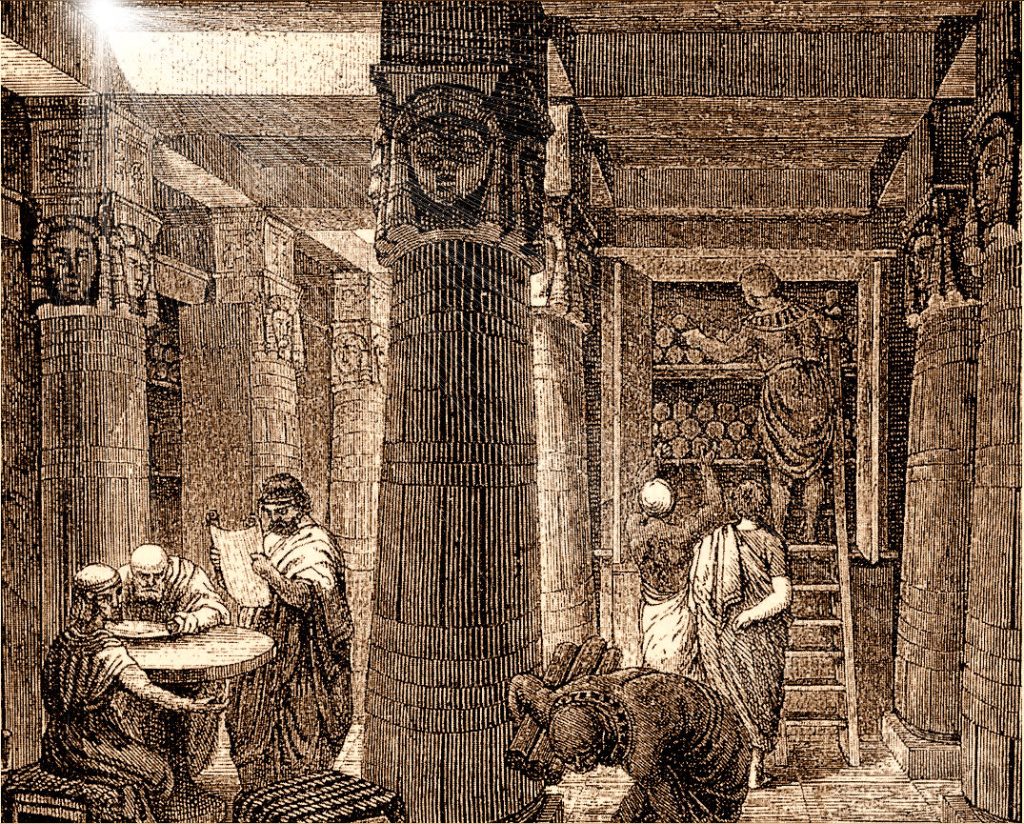
“The treasure of the past is always of use. The great universities, the great libraries, surely must continue? How much richer this world would be if the library of Alexandria had not been destroyed. Can you imagine the teaching, the esoteric lore, the philosophical experience, which, along with probably a lot of rubbish, stood in the library of Alexandria and which is now lost to the world? If people had access to the library of the Vatican, you would be surprised at the teaching which could be revealed. What is it doing in the Vatican? Why is it not made available to humanity? We need the past. We do not come from nowhere. This present incarnation, with our present ray structure, present ideas, hopes and fears is a result of our past. No one has no past. Almost everyone has a past so long, so distant, that we cannot even remember it. Because we cannot remember it, we do not believe that it existed.
“We must retain the present treasures — the best aspects of life today, the things that we have built up, like our educational process (not the present educational ideas, but the educational process), transport systems, communication systems like radio and television but advanced to a degree that you would hardly call it the same invention. Everything comes out of something. Before electricity we had gas; before gas, candles; before candles, rush tapers, and we had to keep a fire going all the time otherwise we had no light. Following electricity will be another form, using energy directly from the sun. We will have all the power we need. That is only possible on the basis of what we already have. Technology stems from technology which stems from previous technology. Science is knowing. You do not throw away what you know until you have acquired something new.
“We will come to understand the power of psychic energy, inherent in every human being. Consider a photograph of Maitreya in Nairobi. A second before that was taken, he was not there. Suddenly, he is there. That is a marvel. Then he disappears again. That is another marvel. It is not a one-off marvel but a capacity, a way of being able to act, totally within the laws of life, and demonstrable on a wide scale.
“If we want to go to Australia, we will just think ourselves there — and think ourselves back again. We will move around the world in this marvellous fashion, saving time and energy.
“We have a big, heavy suitcase and we want to move it from A to B. We just remove gravity from it and we can bounce it like a ball.
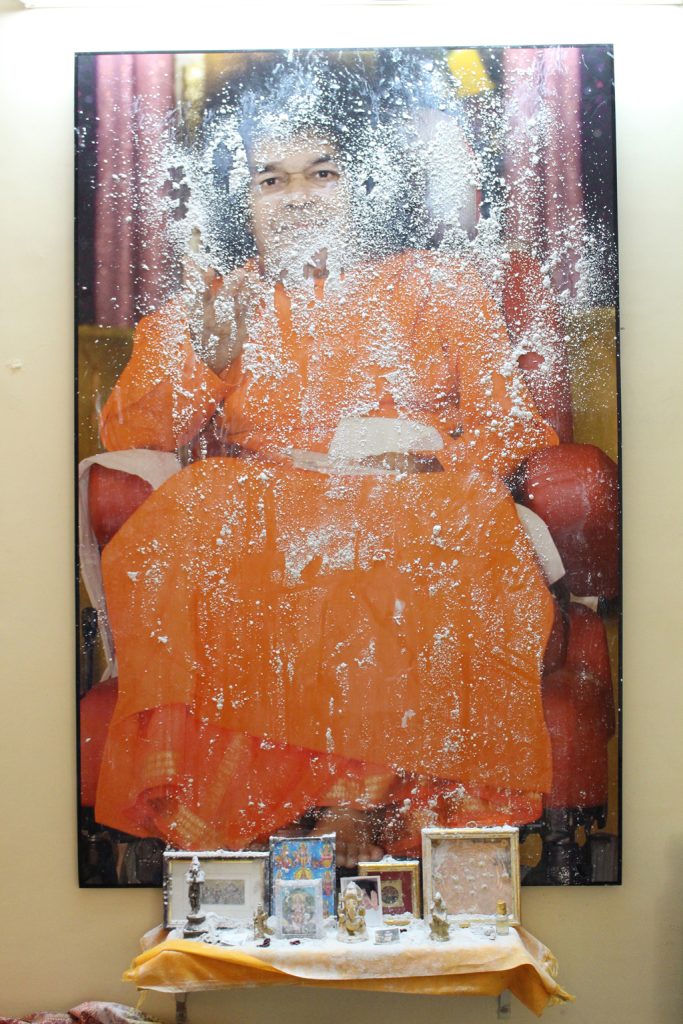
“Everything that is imaginable in the world is possible. We will demonstrate abilities like that. These are divine powers, not tricks. When Sai Baba makes vibhuti, or a ring or bracelet, it is not a trick. People who do not believe in this quality of human life say it is a trick. But he does it because he is demonstrating the divine powers. He is not divine in any different way from you and me; we all have these same powers. They are potential in every human being and will one day be demonstrated by everyone.
“The quality of our lives will depend on our adaptability to the necessity to change, and the direction that change takes. Our idea of science will broaden. You cannot have science without religion, for example. By religion, I do not mean a set of beliefs but an understanding of the laws of life and love. That is what religion is. It is not taught by the churches because they do not understand it. They think that religion is to do with belief but it is the science of the human spirit. Science means knowing, and it is the knowledge of the qualities of the divine life in humanity that creates what we call science and religion. They are one and the same.
“The new science will depend on the religious understanding of the laws of life and love. The new religion will depend on what we would more exoterically call science. The split between the two is artificial, and was in fact brought about by the religious groups because the growing science seemed to question the validity of the religious outlook on life. It only questions religion in so far as the religion is based on belief. But it should not be based on belief but on knowing the laws of life and love. Science is to do with the implementation of the laws of life and love. When these two come together, we will have the marvels of the future.”
In the January/February 2026 issue of this publication we presented parts of Benjamin Creme’s article on ‘Spirituality‘, since Share International’s definitions and understanding may differ widely from conventional ideas. Since then, we have focused on what most people would not include in their definition of divinity: the existence of a group of highly evolved ‘Entities’ working to oversee the evolution of our planet and guide it towards fulfilling, eventually, the Plan of God. Similarly, the writings of Aart Jurriaanse provide a broad and very different view of deity.
Previous chapters and sections in Bridges by Aart Jurriaanse, from which these articles are taken, have covered a vast range of topics explaining: the nature of Cosmos, various planes of existence, the Constitution of Man including the Spirit, the Soul, the Etheric planes of matter, life, death, the process of death, the continuity of consciousness after death, and providing both a broad overview of the Ageless Wisdom Teachings while also giving fascinating details relating to the individual. Indeed, a treatise and a tour de force from the Macrocosm to the microcosm.
Over the past several months we have chosen to begin slightly ‘closer to home’, in other words, to begin with the next kingdom, that realm immediately above the human — the Spiritual Kingdom, otherwise known as the Spiritual Hierarchy of our planet. What is it? Who is it? In the process, we journeyed with Aart Jurriaanse from definitions of the Supreme Being, then to God and how God is understood within esotericism, which led on to an explanation of what or who is meant by terms such as the ‘Solar Logos’, the ‘Planetary Logos’ — also described as the ‘Silent Watcher’. That wonderful journey through Cosmos brought us to the Lord of the World — Sanat Kumara, the Light of the World, The God of Love. This great being, we are told, resides on an etheric centre known as Shamballa — the ‘Father’s House’ or the “Centre where the Will of God is known”, as it is referred to in The Great Invocation (see Share International May 2026).
Aart Jurriaanse then explains for the reader the Energy — the Shamballa force — which streams from that Centre and embodies the Will or Purpose or Plan of God. That is followed by a description of the Divine Plan which the Masters, initiates and disciples of the world serve, according to their insight and capacity. Now, in this the September issue, we have arrived at how humanity — the Masters and their disciples — work to implement the divine Plan in all fields of human endeavour.
In the coming issues we will continue on this journey — a journey or description of the interconnected chain of lives, from the Supreme, through all life and lives on our planet. In the months ahead, readers will discover more about the Masters, who they are, how they come to be, their roles as inspirers and guides as Elder Brothers of humanity. “A disciple learns to work with the Plan by practical service and experience.” And through trial and error. For many this may be an eye-opener, for others, a confirmation of their own hopes or convictions, their personal experience and aspiration. However one sees this body of information, it must surely be a source of comfort and inspiration: there is purpose and meaning to life; there is guidance, help and healing.
“The whole Universe is co-ordinated and activated according to a Universal Plan”
A disciple learns to work with the Plan by practical service and experience. Mistakes will of course be made, and the less evolved he is the greater the number and extent of these errors. But it is only through trial and error that the aspirant will learn, and in accordance with the lessons learned and experience gained will his consciousness expand, and will sensitivity to new facets of the Plan increase, with a corresponding growth in his responsibilities.
It is therefore important that man should realize that the whole Universe is co-ordinated and activated according to a Universal Plan, under the direction of the Supreme Being. And as above so below. Our Planet Earth, with all its creation, including the human kingdom, has been manifested and evolved in accordance with such a Plan, is at present still functioning according to its blueprint, and will continue to do so into the interminable future. Those aspects of the Plan which directly concern humanity therefore consist of a relatively small part of the greater scheme but, to the average man who still sees mankind as the focal point of the Universe, this human subdivision remains of decisive importance. Man should also realize that the Plan does not in the first instance provide for his material ease, comfort and happiness — on the contrary, the purpose is that man should gain every possible experience in all phases of existence, and that this experience should lead to expansion in consciousness, thus enabling each individual to discover for himself the values of spiritual life, and to use his own free will to effect the needed changes. Nothing of true value to the individual will be gained by arbitrary and autocratic action on the part of the Hierarchy, and man must be given the opportunity for self-determination through the expression of free will. It is towards such freedom of expression, of loving understanding, and the will-to-good for all humanity, that the Hierarchical Plan is progressively guiding its supporters. Man is being led towards the recognition and acceptance of the functions of the Hierarchy in its guidance of humanity, and this will eventually lead to the founding of the Kingdom of God on earth. Although the greater Plan lies far beyond human conception, certain of its practical applications might perhaps be broadly indicated under three objectives:
- Political: To develop and establish an international consciousness, by making all men aware that they collectively form part of the One Humanity, irrespective of nation, race, colour, language, or the stage occupied on the evolutionary path. A spirit of international interdependence, inter-relation and co-operation should be promoted. In this respect the ruling tendency towards nationalism, racial superiority and antagonism, class hatred with its many facets, and international competition for world resources, still constitute active barriers. This should make way for a brotherhood of nations based on mutual need, support, understanding, tolerance, helpfulness, goodwill and a sharing of the resources so generously provided by nature.
That there already exists a movement in this direction, and that such an international spirit is awakening, is being demonstrated in several respects, of which the establishment of the United Nations is the most obvious. Although this elementary organization has so far proved to be something of a fiasco, and has in many instances been serving as a forum for the propagation of hate and rivalry rather than of goodwill and improved human relations, it is nevertheless an indication of an underlying spirit aiming at synthesis.
- Religious: To establish a better worldwide understanding and consciousness of the nature of the subjective realms; of the duality of human existence; of the spiritual life, and the immortality of the soul; of the presence on higher levels of the Great Ones, ranged in their many Hierarchical orders. The ultimate objective is a fellowship of religions, and the gradual appearance of a world-faith, which in its broader concepts will be able to encompass all humanity.
- Scientific: The workers in this field have as their objective the coordination of those working on the many aspects of the exact sciences, and, simultaneously, a close collaboration with the rapidly expanding science of psychology. These should be further united by a joint educational programme to awaken awareness of the new concepts in process of unfoldment. At long last science has made the breakthrough and is becoming aware of the existence of the etheric world. There are still conservatives trying to hold back, but they will find it impossible to resist the flood of evidence which is opening up new fields of research and discovery in both etheric and other spheres of science. It is expected that this will temporarily lead to a period of imbalance, with researchers vying with each other in publishing ever more fantastic claims, which will not always be substantiated by factual experiment and observation. But this will only be a passing phase, and what matters is that science is now entering the New Era, and that both the subjective and exact sciences will become more intimately related.
The result of these tendencies is a general movement towards better human relations and consequently greater synthesis. According to the Sages, all this is leading to a wonderful new revelation, which is to bring about radical and beneficial changes in human existence. New Light will be accorded to mankind, altering its outlook and living conditions, and inaugurating the new Age.
Part One of the three-part report on Pope Leo XIV’s Encyclical Letter, Magnifica Humanitas: on Safeguarding the Human Person in the Time of Artificial Intelligence, reviewed his analysis of our cultural choice point and the Social Doctrine of the Church. Part Two focuses on his recommendations to safeguard humanity in this time of transformation.
Technology and dominance
Leo likens our current relationship with AI to a building project. He asks whether we will choose a plan where our collective effort dominates and ultimately dehumanizes — as in the Tower of Babel — or where shared responsibility creates a project built piece by piece, showcasing the grandeur of humanity, as in rebuilding Jerusalem. He decries the spread of the technocratic paradigm globally, in which efficiency, control and profit alone shape personal, social and economic decisions, and further, that control over this digital power is concentrated in the hands of a few economic and technological actors.
While he recognizes AI as a valuable tool, he warns that on a personal level it can result in excessive reliance on ready-made answers and weaken creativity and judgment. On a societal level, its use places extraordinary demands on water and energy resources that threaten our common home.
Furthermore, when AI is used in processes that affect people’s lives — such as employment, credit, or access to public services — it can lead to new forms of exclusion, as the systems themselves reflect and reinforce the stereotypes or ideological bias of their designers. Injustice goes unnoticed when “cloaked in a veneer of neutrality and objectivity, against which it becomes difficult to raise objections.”
To guard against these abuses, he says robust legal frameworks, independent oversight, informed users and a political system that does not abdicate its responsibility are required. Otherwise, those who control AI will impose their own moral vision, which will become the invisible infrastructure of those systems.
Further, he states that AI must be freed from the race for ever more powerful algorithms and larger datasets to achieve geopolitical or commercial dominance. And the view that technical power automatically confers the right to govern must be discredited — to free AI from monopolistic control and prevent it from dominating humanity.
Diving deep into the threats to our humanity posed by AI, Leo discusses the underlying narratives of transhumanism and posthumanism, which at their most radical envision a hybridization of human beings, machines and the environment — even anticipating a new, perfected, evolutionary stage brought about by technology. He takes issue with the view that if human beings are to be perfected or surpassed, some lives are less useful or worthy, justifying “necessary sacrifices” toward a supposed optimization of the species.
Humanity, in all its grandeur and woundedness, must never be replaced or surpassed, he says. “If power grows while the heart withers and human bonds fray, then we are faced with a new form of Babel — a construction that is grandiose, yet fundamentally dehumanizing.”
Safeguarding humanity in a time of transformation
An entire chapter is devoted to practical ways we can counteract the negative influences of the technological paradigm. At root is the importance of truth as a common good and an essential element of democracy. Leo warns that those who control digital platforms can easily affect the collective imagination, and he emphasizes that this power should be guided by the pursuit of truth and respect for human dignity.
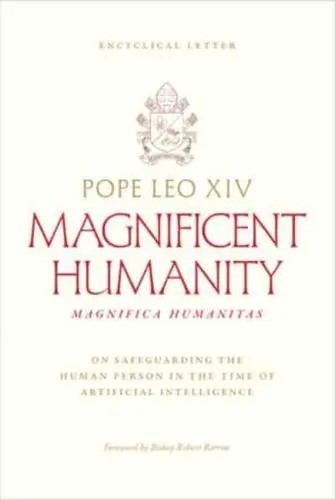
He calls for an ecology of communication, whereby on the public policy level norms are established so decision-making on content becomes more transparent and protects personal data. On the social and cultural level, intermediary organizations and forums for debate should be strengthened. In families and schools, the need is for new educational awareness concerning the proper and critical use of digital tools.
Schools, in fact, have a central role to play. What is needed is an integral education that addresses every dimension of the person, so students can connect information with deeper knowledge and maintain a sense of purpose.
Since work is a fundamental dimension of the human experience, employment, too, becomes a critical element in maintaining our humanity. Not providing useful work for much of the population would result in human and cultural impoverishment. Leo recommends proactive policies that make continuous training and professional transitions accessible to all and a corporate commitment to measure quality and dignity of work among its indicators of success.
Protecting human freedom
The digital revolution brings risks to the mental health of individuals as well as broader social challenges. One is addiction linked to the “digital attention economy,” where services are often designed to capture users’ time and attention, exploiting their vulnerabilities. Another is social control made possible by the massive collection of data and use of algorithms with the power to profile, predict and influence behavior. At the root of these risks is a post-humanist mentality that regards the human person as an object to be manipulated, with no safeguards against the unchecked pursuit of profit.
Various new forms of servitude are directly linked to the digital economy as well. For example, its functioning depends on the work of millions of people working for minimal wages in unseen activities such as data labeling, model training, and content moderation. In some regions, children work in dangerous conditions, extracting rare earth elements for microprocessors. Moreover, criminal networks use online platforms to recruit, control, and transport victims of trafficking.
Colonialism, too, has assumed new forms using digital technology, appropriating data that can be used for domination. For example, those who control the health data of entire peoples — often collected under the pretext of aid, research or innovation — can shape markets and decide to whom medicines, investments and protections will be allocated.
To protect our humanity in the face of these challenges — the search for truth in public life, education in the digital environment, the transformation of work, and new forms of slavery — the Social Doctrine of the Church calls for a shared responsibility. “It asks that these processes be guided with foresight: by institutions capable of regulating without stifling, and protecting without taking over; by businesses that recognize work and dignity as measures of success; by intermediary organizations and educational communities that rebuild trust and relationships; and by citizens who cultivate responsibility, moderation, discernment and a sense of truth. Only in this way can innovation genuinely serve integral human development, rather than becoming a source of exclusion and dominance.”
Eight of the world’s biggest oil companies amassed over $90bn in profits in just three months, despite the war in Iran causing soaring energy prices, and fossil fuel-driven heatwaves being experienced in Europe and elsewhere. Analysis published by The Guardian indicates that eight oil companies — Aramco, BP, Shell, Equinor, TotalEnergies, Eni, Chevron and ExxonMobil — made more than $700,000 of profit every minute over the three months to end of June.
The windfall profits have reignited calls for the largest oil and gas companies to pay for the environmental damage resulting from their products, and to fund a rapid transition to renewable energy.
The head of campaigns at Friends of the Earth, Rosie Downes, said: “While BP banks another round of enormous profits, millions of households are paying the price through sky-high energy bills and a climate crisis accelerating rapidly out of control.”
This summer has been Europe’s worst ever heatwave, categorised by scientists as “impossible” without human-caused global heating. In May and June alone, around 20,000 people are estimated to have died due to the extreme temperatures. The series of heatwaves has led to extreme drought, affecting food supplies — including 9m tonnes of grain expected to be lost in the UK — its worst harvest ever recorded.
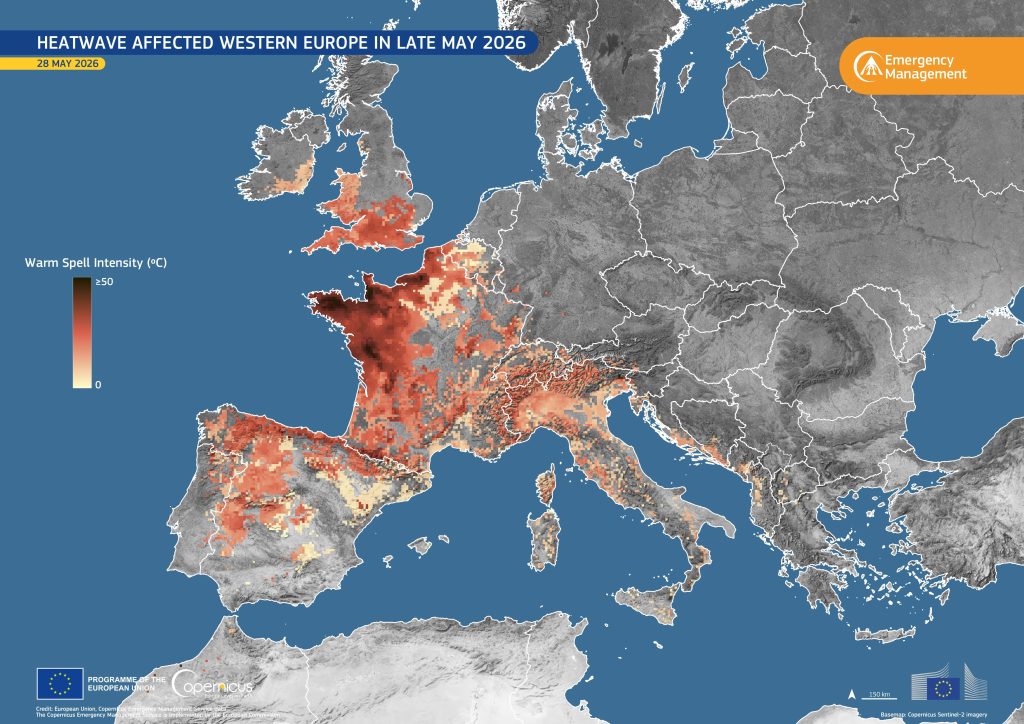
The extremely dry conditions have also enabled huge wildfires in France, Spain, Portugal and Greece, causing toxic air pollution, and billions of euros in damage. It’s estimated that around 4,000 deaths were caused within a week of exposure in the US and Canada from 9 days of wildfires, and that a further approx. 1.5 million people a year have their lives shortened due to exposure to wildfire smoke.
Simon Stiell, the UN climate chief, said: “… climate-driven disasters are reaching nightmare proportions. What needs to be done is clear: leave coal, oil and gas behind faster, scale up renewables, and protect people where the impacts are already hitting hardest.”
(Source: theguardian.com)
Installation of solar panels in Great Britain at 15-year high
More new solar power installations occurred in the first half of 2026 in Great Britain, than in any six-month period since 2011, as households look at ways to help cut their energy bills.
The government’s official figures, which include ground-mounted solar farms and rooftop panels, show that 142,536 solar installations were added, second only to the second half of 2011, when the first large-scale solar farm was built in Cornwall.
The US-Israel war against Iran has caused fossil fuels bills to rocket, motivating households to install rooftop solar panels and generate their own low-cost electricity.
UK energy retailer, E.ON Next, said it recorded a 151% rise in the number of homes installing solar panels in the first half of 2026 compared with the same period last year, with some of its customers saving up to £600 a year on their annual energy bill.
According to new legislation, by the end of August, UK bill payers in flats or rented properties will be able to start using balcony solar panels to decrease their power bills.
(Source: theguardian.com)
In mid August, hundreds of Albanian diaspora joined rallies in Tirana at the Boulevard of the Martyrs of the Nation, marking 76 days of peaceful protest against proposed luxury resort projects by Jared Kushner and Ivanka Trump on protected nature reserves in Albania.
Although one of the Mediterranean’s last untouched coastal ecosystems, in 2024 the government passed a law which allowed the awarding of permits for tourist resorts, including within protected landscapes.
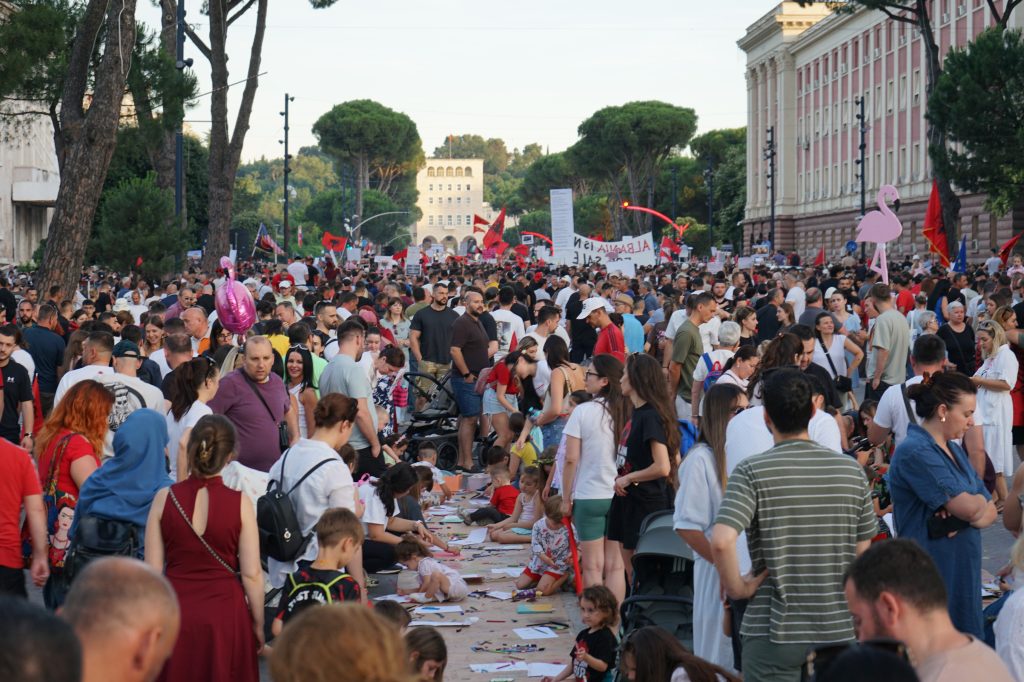
Denisa Kasa, Project Manager at Protection and Preservation of Natural Environment in Albania, said “The proposed resort development in Zvërnec is particularly concerning. Located in an area of exceptional ecological and landscape value…, the infamous Kushner-Rama-Al-Khayyat project illustrates how the development of a single large-scale tourism facility can put important habitats for many species at risk of being annihilated.”
Now in its third month of nightly protests, the issues have grown to include the immediate goal of resignation of the prime minister Edi Rama and his government, and the nullification of legislation related to foreign investment.
This movement has united people across the political spectrum, including youth, pensioners and young families, and is decentralized, with no clear leaders. The rallies at the Boulevard of Martyrs are family-friendly, with a “people’s podium” where people can voice their discontent, and a children’s drawing area set up by local artists and volunteers.
(Source: www.pressenza.com)
Pink Floyd classic reimagined as a Gaza fundraiser
“Comfortably Numb Re-Imagined” is the title of a nine-minute bilingual collaboration between Pink Floyd co-founder Roger Waters and Palestinian singer Mona Miari. The 1979 rock classic has been reframed as a humanitarian appeal — acting as a fundraiser for the Palestine Children’s Relief Fund (PCRF).
The original track was written by Waters and guitarist David Gilmour for Pink Floyd’s double album ‘The Wall’, and is one of rock’s most distinctive anthems — depicting personal isolation and trauma, anchored by the chorus line, “I have become comfortably numb.”
Where the original accepted emotional shutdown in the face of suffering, the re-imagined version frames it into a pledge of solidarity. Throughout the track, the newly written English verses and Arabic vocal arrangements pivot around a central vow: “I will never become comfortably numb”.
The black and white music video contrasts studio recording sessions with field footage in Gaza, and multilingual lyrics are made accessible through subtitles. Roger, who has been outspoken on Palestinian liberation for more than two decades, said “It doesn’t matter whether you speak Arabic or English, you get it, and that’s why it’s very moving and cool,”.
Mona Miari says “At the end, we’re not looking for praise or for people to tell us, oh, beautiful … we know it’s beautiful… but that’s not our goal, you know, it’s a call to action… basically forcing everyone to confront and to understand, to even sit with their discomfort about this truth.”
Miari continues: ” We end on a peak, on a musical and ethical climax. Palestine must be free. We remain free.”
The music video can be watched here.
(Sources: www.cnbctv18.com; www.newarab.com)
Paris grants honorary citizenship to Palestinian citizens and journalists
On 17 June 2026, the City Council of Paris awarded honorary citizenship to the civilian populations of Gaza and the West Bank, and to Palestinian journalists working in the conflict zones of the Middle East, describing it as “Honorary citizenship as ‘an act of peace’.”
This is as the security and humanitarian situation worsens in Gaza and the West Bank, and the daily threat to journalists deployed in the region grows.
Paris City Hall (Hôtel de Ville) also points out that in February 2024, honorary citizenship was awarded to the Israeli hostages held by Hamas. Their portraits were displayed outside the Hôtel de Ville.
Israel’s genocidal war has reduced much of the Palestinian territory of Gaza to rubble, with an estimated death toll of more than 73,000 people; the majority of them civilians, according to the Gaza Health Ministry.
In June, Paris also hosted a meeting of Israeli and Palestinian civil society groups, urging G7 support for a two-state solution.
“Israelis and Palestinians alike remain trapped in fear, insecurity, and trauma,” they said. “The window for a solution remains open; but it is narrowing. This moment requires urgent diplomacy, grounded in partnership with civil society.”
France, as well as Britain, Canada and several other countries, recognized the State of Palestine last year.
(Sources: newarab.com; paris.fr)
The release of a fourth tranche of UAP (Unidentified Anomalous Phenomena) files at the beginning of July by the US administration has many in the disclosure movement feeling increasingly frustrated with the quality of material that is being shared with the public. On Friday 10 July 2026, a combination of videos, documents, audio clips and photo images were published on the war.gov website, originating from a selection of government agencies — Pentagon, NASA, CIA, FBI and the Department of Energy.
American investigative journalist and author Dick Russell who has covered the UFO phenomenon for many years, wrote in an article (13 July 2026) of his disappointment at the latest release of previously undisclosed information and evidence:
Dr Steven Greer, founder and Director of the Disclosure Project, has also weighed in on the issue, suggesting that what we are in fact witnessing is “catastrophic disclosure”, as he describes it. He is sounding the alarm on the government-led UAP panels which appear to be repeating the same deceptive methodology employed in the 1950s and 1960s, redirecting public attention into dead-end investigations in order to hide the full truth. One of the key figures in this process of managed obfuscation is Avi Loeb from Harvard, in charge of the new government-appointed UAP Scientific Advisory Council, who has been particularly vocal and enthusiastic about the current release of files.
Greer warns that a partial or manipulated disclosure could portray UAP/NHI (Non-Human Intelligence) as an “extraterrestrial threat” (what he refers to as catastrophic disclosure), with even, as he puts it, the possibility of a “fake alien invasion” being staged. The goal is to justify the continuing secrecy around man-made advanced technology based on ET spacecraft, ‘black-budget’ programmes and illegal covert operations. He argues the greatest danger is not extraterrestrial life itself, but rather a secretive and transnational organization operating without legal oversight, public accountability or constitutional authority: “A shadow, secret government is actually running the UFO programme. That is not a conspiracy theory.” This shadow government is in possession of advanced technologies that appear to be well beyond the capabilities of conventional governments and military forces, the very thing President Eisenhower warned about in his now famous 1961 farewell speech, pointing to the growing threat of a military-industrial complex. And, as Greer has previously said:
With this in mind, Dr Greer on 29 June 2026 issued a four-page letter addressed to President Trump, members of Congress, intelligence officials, military leadership and other senior government officials. The aim of the letter is to make it clear the Disclosure Project is intent on releasing its own evidence relating to UAPs, reverse-engineering programmes and illegal covert operations unless the government, which as he says has made “a mockery of disclosure”, responds to the requests made in the letter.
Entitled, “Re: Planned Release of Further UAP/UFO Evidence”, the letter, amongst other things, states that,
“In order to protect the Constitutional government of the United States this information must be disclosed to the public fully and truthfully, including the existence of manmade UAPs based on reverse-engineered Extraterrestrial vehicles. These man-made craft have been and are being used in a wide range of domestic and international criminal operations including drug running, human-trafficking, arms trade and other criminal behavior.”
The letter concludes: “All projects and operations governmental and private associated with the UAP/UFO issue have been run illegally and unconstitutionally since the mid to late 1950s. Since it is an ongoing criminal conspiracy there is no statute of limitation and all evidence and information related to these projects can and will be released unless we are otherwise directed explicitly and in writing.”
He followed this up with a number of interviews, and in one of those — regarding catastrophic disclosure and the ongoing campaign to crank up the idea of an imminent extraterrestrial threat — pointed to Vice President JD Vance’s “horrific” appearance (15 July 2026) on The Joe Rogan Experience, widely considered to be the world’s No. 1 podcast. The discussion, which included UFOs, has so far been viewed over 3 million times. In the back and forth with Rogan, Vance depicted ETs as demons, further anchoring in the public psyche this fearful sense of an extraterrestrial evil. Apparently, the Vice President is a member of Opus Dei, which is a small but powerful ultra-conservative organization within the Catholic Church, and seemingly no stranger to this kind of misinformed, extremist view.
According to Greer, he is scheduled to meet with the US Secretary of War, Pete Hegseth, presumably before the 29 August deadline, in order to further push for full disclosure. His concern is that the Trump administration is going to delay any future action on the release of more significant UAP files to the final months of its term of office in 2028. He sees that as a strategic mistake, as it would allow this so-called shadow government, unofficially running the UFO programme, more time to reorganize and avoid any unnecessary exposure beyond the partial/manipulated disclosure currently being served up to the public.
It is clear from the letter and the various interviews he has given since, that the Director of the Disclosure Project believes action is needed now and in fact claims there are people within the government who have discussed with him possible operations to bring these alleged programmes under legitimate control as soon as is feasibly possible: “These are people who know what they’re doing, in military and intelligence circles who are working with us very closely. We have provided them a roadmap to where the evidence is, which corporations are holding it, but also where the specific black sites and underground facilities are. Ultimately, it’s going to take a decisive action that’ll have to come from the top… to get those assets under control of the legal and constitutional government.”
This latest development and in particular regarding the UNOD letter, that comes on the back of these disappointing UAP file releases, represents a significant key change. The Disclosure Project’s website explains that, “The ‘UNOD’ format is used in government and military situations and states that Unless Otherwise Directed, one’s position and actions described are implicitly approved.” The aim appears to be to convince the current US administration of the urgency of the situation and for it to expose and finally confront this 80-year-long “ongoing criminal conspiracy”, operating parasitically from the shadows of a conventional, constitutional government which has inadvertently provided it cover and funding for all those years.
Charlie Chaplin’s film The Great Dictator (1940) is both a comedy and a bitter condemnation of fascism. The central character is a humble barber who, because of a physical likeness and a case of mistaken identity, finds himself being forced to pose as the dictator of the film’s title. In the closing scene, he is invited to speak to the people via the radio. The ensuing monologue must be one of the most inspired and moving speeches in the history of cinema. Because of its apposite nature for our time, we reproduce a shortened version of it here.
I’m sorry but I don’t want to be an Emperor — that’s not my business — I don’t want to rule or conquer anyone. I should like to help everyone if possible, Jew, gentile, black man, white. We all want to help one another, human beings are like that.
We want to live by each other’s happiness, not by each other’s misery. We don’t want to hate and despise one another. In this world there is room for everyone and the good earth is rich and can provide for everyone.
The way of life can be free and beautiful. But we have lost the way. Greed has poisoned men’s souls — has barricaded the world with hate; has goose-stepped us into misery and bloodshed.
We have developed speed but we have shut ourselves in: machinery that gives abundance has left us in want. Our knowledge has made us cynical, our cleverness hard and unkind.
We think too much and feel too little: More than machinery we need humanity; more than cleverness we need kindness and gentleness. Without these qualities, life will be violent and all will be lost.
The aeroplane and the radio have brought us closer together. The very nature of these inventions cries out for the goodness in men, cries out for universal brotherhood, for the unity of us all.

Even now my voice is reaching millions throughout the world, millions of despairing men, women and little children, victims of a system that makes men torture, and imprison innocent people. To those who can hear me I say “Do not despair”.
The misery that is now upon us is but the passing of greed, the bitterness of men who fear the way of human progress: the hate of men will pass, and dictators die and the power they took from the people will return to the people, and so long as men die, liberty will never perish. …
Soldiers — don’t give yourselves to brutes, men who despise you and enslave you — who regiment your lives, tell you what to do, what to think and what to feel, who drill you, diet you, treat you like cattle, as cannon fodder. Don’t give yourselves to these unnatural men, machine men, with machine minds and machine hearts. You are not machines. You are not cattle. You are men. You have the love of humanity in your hearts. You don’t hate — only the unloved hate. The unloved and the unnatural. Soldiers — don’t fight for slavery, fight for liberty.
In the seventeenth chapter of Saint Luke it is written “the kingdom of God is within man” — not one man, nor a group of men — but in all men, in you. You the people have the power, the power to create machines, the power to create happiness. You the people have the power to make this life free and beautiful, to make this life a wonderful adventure.
Then in the name of democracy let us use that power — let us all unite. Let us fight for a new world, a decent world that will give men a chance to work, that will give youth a future, an old age and a security. By the promise of these things, brutes have risen to power, but they lie. They do not fulfil their promise, they never will. Dictators free themselves but they enslave the people. Now let us fight to fulfil that promise. Let us fight to free the world, to do away with national barriers, to do away with greed, with hate and intolerance.
Let us fight for a world of reason, a world where science and progress will lead to all men’s happiness.
Soldiers — in the name of democracy, let us all unite! …
Look up! The clouds are lifting — the sun is breaking through. We are coming out of the darkness into the light. We are coming into a new world. A kindlier world where men will rise above their hate, their greed and brutality.
Look up! The soul of man has been given wings — and at last he is beginning to fly. He is flying into the rainbow — into the light of hope — into the future, the glorious future that belongs to you, to me and to all of us. Look up! Look up!
Benjamin Creme replies to a question about the source of Chaplin’s speech
Q. Chaplin’s film, The Great Dictator, 1940, is inspiring and moving; and seems as apt today as it was then: it warns against war and division and looks forward to a bright new future.
Was that speech written under the inspiration of a Master? If so, which Master?
BC: No. It was inspired by Charlie Chaplin’s own soul.
At every lecture he gave around the world, and virtually every day of his life, Benjamin Creme was asked numerous questions covering a vast range of topics. We present here a selection of answers on various subjects.
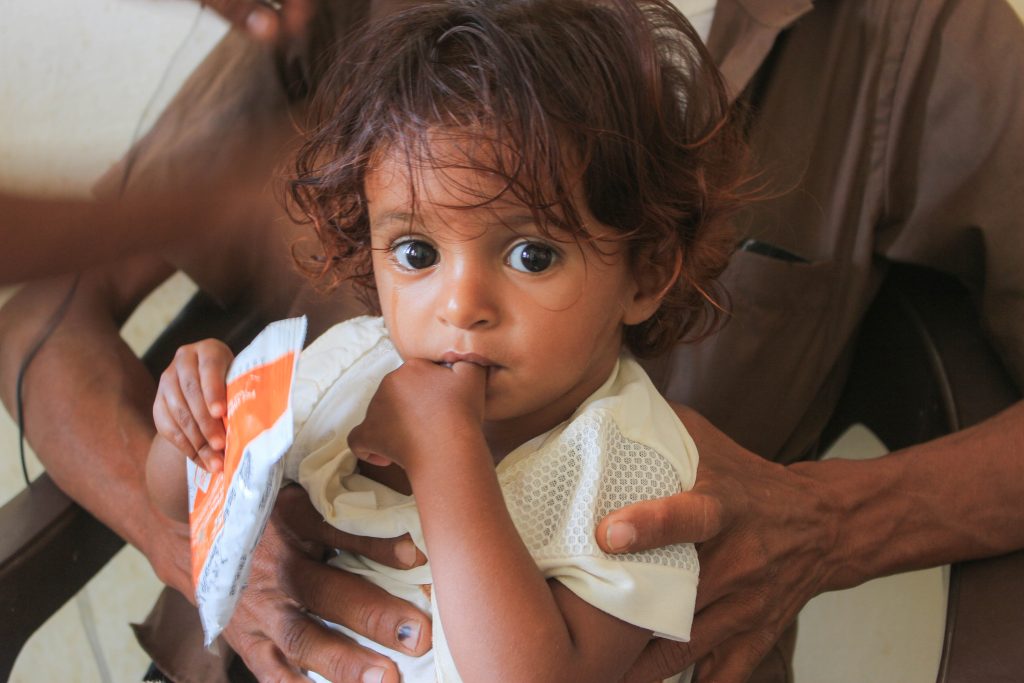
Firstly, men must see themselves as brothers, sons of the One Father.
This is essential if they would progress one step nearer the Godhead.
Throughout the world there are men, women and little children who have not even the essentials to stay alive; they crowd the cities of many of the poorest countries in the world.
This crime fills Me with shame.
My brothers, how can you watch these people die before your eyes and call yourselves men?
My plan is to save these, My little ones, from certain starvation and needless death.
My plan is to show you that the way out of your problems is to listen again to the true voice of God within your hearts, to share the produce of this most bountiful of worlds among your brothers and sisters everywhere.
(from Maitreya’s Message No. 11, January 1978)
“While we cannot end the genocide on our own, we can decide whether our silence will become another weapon and we can examine every tool we have to defend the humanity and dignity of all people.”
(Zoran Mamdani, Mayor of New York, 21 July 2026)
