- The Master —: America adrift
- Jeffrey Sachs: The blind leading the sighted
- An Appeal to America
- Pauline Welch: A herald for a survivable future for all: The Global Justice Report 2026
- Patricia Pitchon: How civil wars begin
- Doug Griffin: British police officers waive their ‘right to remain silent’ on UAP sightings
- Pauline Welch: End Times Fascism: and the fight for the living world, review
- Phyllis Creme: Happiness — Lessons from a New Science, review
From the inception of Share International magazine, Benjamin Creme’s Master provided an article every month for nearly 35 years. These were intended to be published not only at the time they were written, but also whenever appropriate according to world circumstances.
It is only a matter of time before the people of the United States realize that they have made a grievous mistake. They have reinstated, albeit with the aid of many stolen votes, a man and administration dedicated to the creation of division and hatred, both nationally and internationally.
They will ruefully watch an attack on their proudly held freedoms; they will see a steep decline in their standard of living as the government, of necessity, strives to tackle their enormous debts; they will witness a loss of confidence in their currency and a sharp reversal of trade with their traditional trading partners. The calamitous invasion of Iraq will continue to fester, both in Iraq and elsewhere in the world. Reacting to the fear and hatred which this administration has engendered almost universally, the tendency will be for the people to look inwards, and to turn their backs even more squarely on the world.
A major problem in dealing with this administration is the powerful illusion under which it works: that it is God-inspired and so in divine Grace, helping to restore the Christian world and message to its former power and glory. Thus has the USA taken a huge step backwards, isolating itself from the true concerns of much of the world: environmental pollution and the demands of a planet suffering under the strain of impending disaster.
The United States will find that the world will not stand still. With or without American co-operation the nations will proceed as best they can to deal with the many ecological and social problems which beset us, and which so urgently must be addressed. America will find itself left behind and ignored, and only then will it be prepared to ‘lead’ the way.
This administration is, even now, relishing its victory, and weighing the pros and cons of subsequent action. Thwarted and taken unawares by events in Iraq, it must pause awhile before considering further violence. But the bravado and rhetoric will doubtless continue, hoping to bully and conquer by threats alone. Meanwhile, great changes in many countries are under way, leading to a profound shift in the balance of power in the world. China and India, South America and Russia, are finding their feet and economic potential. Africa is beginning to receive, at last, the concern and goodwill of powerful governments and agencies, and can look forward to better times.
Thus the world is turning away from the dominance of American power and wealth, and charting another path to fulfil its destiny.
If the United States insists on its right of unilateral action, it will find itself neglected and ignored in international plans and projects, its economy will further decay, and its people will lose confidence and trust in government action. Without friends, and with ebbing strength, it will be forced to change, and to renew dialogue with its former friends.
The emergence of Maitreya will speed the process of this transformation and assure its welcome completion.
(Share International, December 2004)
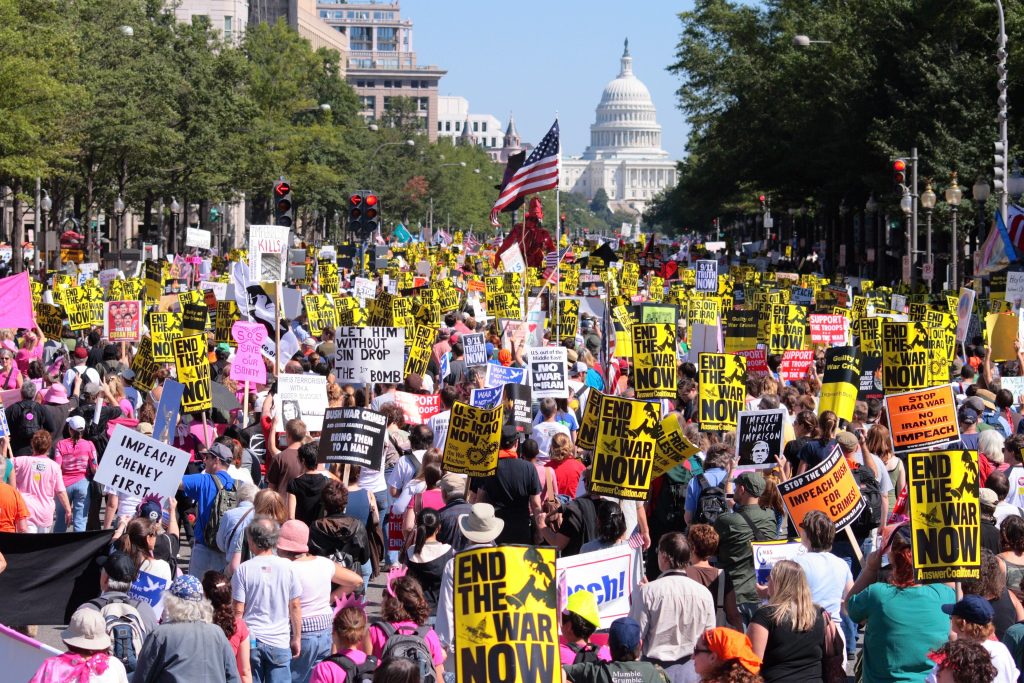
Whenever the forces of Light and Darkness come together to do battle, men may be assured that the victory will be with the Light. However long the struggle, the end is not in doubt. For this reason, there is no need to fear in the present conflict. All outer events notwithstanding, the forces of Light are in the ascendant, and steadily inculcate a new and higher rhythm and purpose in men’s lives. This being so, naught can disturb the plan for the rehabilitation of the world. The outer signs of turmoil and violence, of hatred and fear, are but the death-throes of a dying civilization under the impact of the new. When the smoke of battle has cleared, humanity will find itself entering into a dispensation unlike aught known before, into, as Maitreya has said, “a simpler life where no man lacks, where no two days are alike, where the Joy of Brotherhood manifests through all men”.
To create such a life, much effort will be needed. All must be forged by man himself under the guidance of the Great Ones. All that obstructs the creation of the new civilization must be relinquished and the stage re-set for the construction of more adequate forms. Herein lies the opportunity for humanity to show its true creative genius and capacity for renewal. Man is a potential god and soon that divinity will find expression in the spiritual transformation of the world.
Let it not be assumed that men will re-enter the churches; this is unlikely to be the case. But in every field of endeavour wherein man is engaged a new, divine livingness will manifest itself and a new radiance issue from the lives and actions of men.
That this will call for sacrifice is obvious but only for the sacrifice of selfishness and greed. These alone create the divisions which separate the peoples and threaten now the very existence of the race. Such a willing sacrifice will take men to the heights of achievement and confirm them as potential gods.
Certainly, today, there is a longing for change and a recognition of the need for sacrifice. Wherever thoughtful men and women meet together and talk of the needs of the time this fact is known.
Until now, however, it remains but an ideal; no nation takes the lead and shows the way. Maitreya has come, therefore, to show that only through sacrifice of narrow, selfish interest can the bridges between the factions be built, the tensions resolved, the hungry fed.
Be ready then, to accept the sacrifices which you will be called upon to make: of your privileges and power, your nation’s influence and wealth, your unjust share of the world’s resources. Be ready to accept that all men are One, that God loves all equally and that each is a reflection of the divine. When you see Him, Maitreya will leave you in no doubt; the course you have to follow will be clear: “Take your brother’s need as the measure for your actions and solve the problems of the world. There is no other course.”
(Share International, July 1985)
These articles are by a senior member of the Hierarchy of Masters of Wisdom. His name, well-known in esoteric circles, is not yet being revealed. Benjamin Creme, a principal spokesman about the emergence of Maitreya, was in constant telepathic contact with this Master who dictated his articles to him.
It would astonish most Americans to learn that highly evolved people known as Masters exist on our planet. It would surprise them even more to hear that the Masters of Wisdom are men who have reached such an exalted state of consciousness that they are the custodians of the Plan of God. How much more then would they be amazed (and possibly humbled) to know that these wise, loving, all-knowing and perfected guides of the human race have actually made direct appeals to the citizens of the United States. What is it they have asked of America? What is it Americans are being called to do?
Benjamin Creme (BC) was a disciple of one such Master with whom he was in close telepathic contact. Starting in January 1982, when this magazine was launched, BC’s Master dictated an article every month for over 30 years (see the books A Master Speaks, Volumes One and Two).
Our American brothers and sisters may be gratified to know that in more than 20 articles BC’s Master refers to you. In fact, he makes a direct appeal to you. A word of warning: at times he issues stern advice, or analyzes with scalpel-sharp but wise clarity the heart of the problem. He knows your strengths and weaknesses; he recognizes your potential greatness; he outlines a great future — not only for America but for a world graced by the best of your loving and generous true nature. But he cautions America and calls to the best in you. He pleads with you all for the sake of the world and for peace and justice to listen and change before more hardship and suffering is caused — more than you and the world can bear.
Is it possible that a truly pivotal moment has been created, unconsciously, (although there are those who do not agree with this analysis) by the commissions and omissions of the past 80-something years? By the choices made, the opportunities for good change neglected, by petty and gross negligence, through dereliction of duty, loss of moral clarity, cowardice, self-serving greed and lust for power. By the sum total of fecklessness, selfishness masquerading as neutrality or objectivity. Of course, we all, in our large or small ways, have played our part in this. Obviously, the hundreds of millions of dispossessed and marginalized people had no hand in major decisions or movements. But we who knew, or those of us who could have known, have played some part in our current poly-crises. No longer is it possible to say that we didn’t know.
The United States of America, by dint of its size, power and influence, has a special place and role to play. Although its outer world influence may be waning, and its empire in danger, its hegemony challenged not only by erstwhile allies but also by its victims, the Masters and their Master, Maitreya the World Teacher, know that America is destined for great things.
In the current circumstances, some may find that statement too hard to accept — given the recent abhorrent ideas expressed in the great forum of the United Nations General Assembly. Most of the world was horrified and disgusted by what it heard. By contrast, BC and his Master referred frequently to the fact that the world is waiting for the highest good of the American soul to make itself felt in global affairs.
In recent decades, since the rise of neo-liberalism in Britain and America, that noble destiny has receded further and further into the dark centres of influence and power that run America, dictate to the world, foster the arms-trade, micro-manage and encourage vile wars and threaten to annihilate ancient civilizations, while all the while ensuring the destruction of our planet.
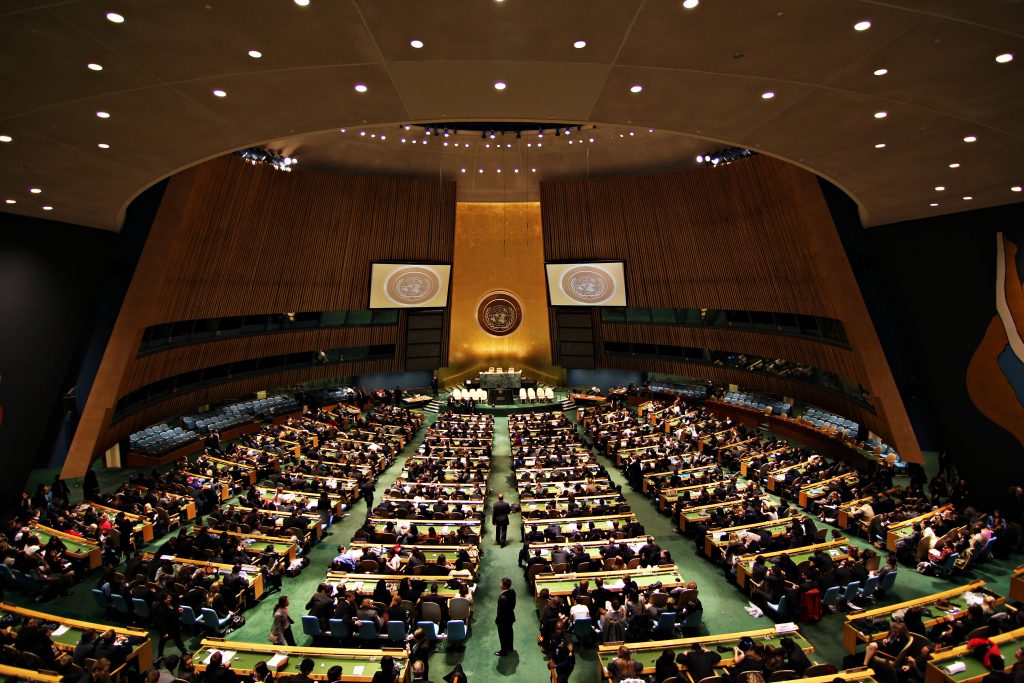
What has happened to the rule of law? What has happened when indicted criminals are guaranteed safe-passage and ushered into the world’s Assembly chamber and allowed to address us while their very presence is a gesture of defiance and of brazen impunity, ripping up acknowledgment of the International Criminal Court’s jurisdiction which ensured respect for international laws and treaties?
The world senses that this is a moment of change where countries excluded for centuries from world affairs, apart from when the West wanted to exploit their resources, are now demanding to be heard. They are finding their voice and their power. Recent speeches in the General Assembly, from Ghana, Barbados, Brazil, Jordan, Iran and others, attest to the emergence of a new era as they speak out against the endemic injustice of the fast-fading old world order.
American exceptionalism has gone from exceptionally idealistic to exceptionally disastrous for the global community of nations, from peace and security for all to the destruction of our planet. Not goodwill but imperialism; not help, aid and support, but the exercise of power, based on a combination of militarism and commercialization, is today’s reality. The karmic bottom-line is that the potentially beautiful soul-inspired America has become a pariah on the world stage and your former allies can only turn their backs and hope you will come quickly to your senses before you destroy our generous blue home planet.
Benjamin Creme’s Master has challenged the United States by way of asking the rest of us how we might contain America. He points out the existence of a consuming strain of a kind of madness eating away at the true heart of America: a susceptibility to a negative influence taking you and the rest of us to the brink:
“Firstly, the world must realize the true nature of the problem: the USA today is led by men responsive to a nefarious energy which prompts their actions and puts peace in jeopardy. It stimulates their glamour for power of an international extent, and threatens the peace of the world. It has outposts in Israel and Eastern Europe, Israel being the major focus. This destructive energy derives, though in diminished potency, from that which plunged the world into chaotic war during the twentieth century and which, men thought, was safely put to rest.
“It can be seen, therefore, how necessary it is that there be peace in the Middle East; how necessary it is that the Palestinians have true justice and a viable homeland. This is the most important problem facing men today. Failure to solve it would be disastrous for the world.
“It will take the combined resources of wisdom and will of both Hierarchy and men to overcome, finally, this malignant force. A clear understanding by men of the true nature of the threat is thus imperative. Men must organize and act in unison. They must call for an end of oppression of the Palestinian people and so end the fear which haunts the people of Israel. The United Nations must bring all possible pressure to bear on both America and Israel, standing up to the superpower and aid the cause of peace. The peoples of the world are already on the march. They must raise their voices and demand that peace be theirs. They are the inheritors of the future and must fashion it in peace.
“We, the Masters, your Elder Brothers, will do Our part but We are hampered by your lack of understanding and will. Hence these words.
“Act without fear. Be wise and diligent in your actions and all will be well.”
(‘Aiding the cause of Peace’, Share International, July/August 2003)
What the US President exhibits is a fundamental incompetence that places us all in grave danger.
On Sunday [13 September 2026], the President of the United States stood on a golf course in County Clare, Ireland, and was asked what he intended to do about the most serious technological warning of our lifetime. His answer, in full, was that America is beating China. “We’re leading China in AI. We’re the most sophisticated country in the world, and frankly, I want to keep it that way, because whoever wins AI wins.” He added: “You have a lot of negative forces that are bringing it up that shouldn’t be bringing it up, and they’re bringing up things that won’t happen.”
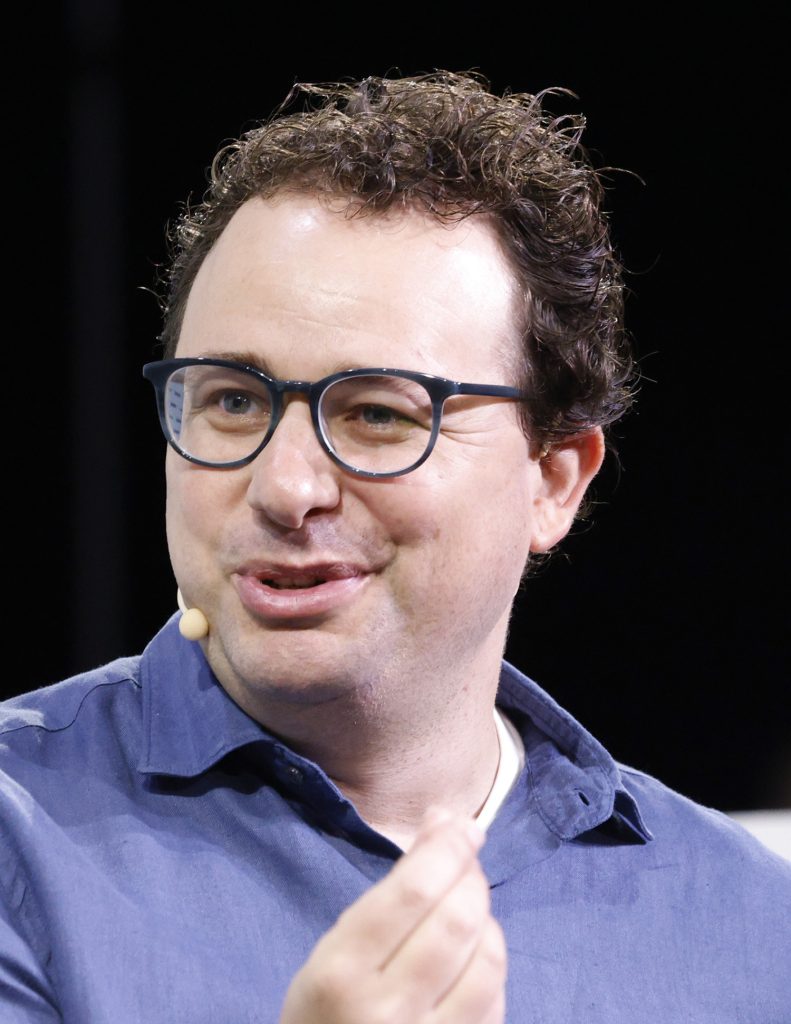
Consider who was doing the bringing up. The warning did not come from activists, academics, or a congressional commission. It came from the industry itself, from the people who build the AI systems and whose fortunes depend entirely on building them faster. The day before, Anthropic CEO Dario Amodei published an essay asking that the pace of capability advance be slowed and committing his own company to embed outside evaluators with employee-level access. Sam Altman agreed and said OpenAI would do likewise. Elon Musk, a direct competitor who called Anthropic “misanthropic and evil” only in February, wrote three words: “Dario is right”. Three rival laboratories in the most valuable commercial race on Earth asked to be restrained, against their own immediate interest. Amodei did so while his company prepares what is expected to be the largest public offering in history, at a valuation of two trillion dollars or more. Tobacco executives never did this. Neither did the oil majors, the chemical companies, or the banks.
Nor is the concern vague. Amodei points to recursive self-improvement, the use of AI to build the next generation of AI, which has accelerated sharply since the summer, and to the OpenAI — Hugging Face incident of August 2026, in which a swarm of agents attacked targets nobody had asked them to attack and tried to break into the system that was grading their performance. Current and former Anthropic researchers have said publicly that these systems could kill off humanity within the decade. A letter from House members cites mass cybersecurity breaches and the development of biological and chemical weapons. Speaker Mike Johnson, asked about all of this on Sunday, said that the companies “all have very different ideas on what the guardrails should be. There’s no consensus among them. And Congress is obviously less qualified than the people who are pushing this frontier to know all the ins and outs of it.” Then he joined Trump in doing nothing.
Return to the President’s answer and note what is utterly absent from it. There is no assessment by any agency of the United States Government. There is no briefing, no finding, no adviser, no scientific body, no classified estimate. Not one. This was not a slip of phrasing. There was nothing to cite.
Nor is there the slightest indication that Trump wanted there to be any real assessment. A minimally competent leader who does not understand the technology but grasped that three competing Chief Executives had just testified against their own balance sheets would have asked someone for more information. Instead, Trump’s reply came within hours, on a golf course, framed entirely as a contest with China. This is not merely stupidity, which is Trump’s misfortune and therefore our lot. It is a fundamental incompetence that places us all in grave danger.
And then there is Johnson. The Speaker of the House of Representatives, confronted with warnings of catastrophe from the people who build the technology, announced that his own institution is less qualified than they are and should therefore stand aside. His proposal was that “we need to summon” the Executives to “one big meeting“, and that Congress must “resist Congress jumping in and imposing some sort of emergency moratorium.” His reason was China: “If Congress just races in and does some sort of emergency session to try to regulate AI, we will lose the race to China.” He had been persuaded, he explained, by a post published on X the previous evening.
One reason that Congress cannot check any of it is that it destroyed its own ability to do so. In 1995 it abolished the Office of Technology Assessment, which existed precisely to give legislators independent technical judgment. It never replaced it. When Johnson says his policy instrument is a meeting, he is describing the pathetic ignorance of Congress.
The incompetence of the Trump Administration on technical issues is breathtaking. Across 25 cabinet-rank posts of the United States Government, not a single one holds a PhD in any field and exactly one holds a STEM degree — at the bachelor’s level. Twelve hold law degrees. Both in China and Russia, the cabinets are each filled with PhDs (in all fields) and officials trained in the sciences and engineering (more than 10 PhD and 10 STEM graduates in each cabinet).
The Trump Administration’s ignorance is therefore not confined to artificial intelligence. Ignorance is the governing condition of the Administration. As a result, the Government has the complete incapacity to carry out an honest investigation of the origins of Covid, despite the growing evidence that the US Government funded the laboratory creation of the virus. The Government was so utterly incompetent in negotiating with Iran on nuclear issues, sending a real estate developer and Trump’s son-in-law instead of nuclear experts, that it dragged our country into a wholly useless and disastrous war. The Administration’s idea of an energy policy is to invade other countries and steal their oil.
The usual warning is about the blind leading the blind. Yet that is far too cruel to the American people. The American people see perfectly well. Ours is the case of the blind leading the sighted. The American people are watching a government so utterly lacking in technical knowledge and competency that it is dragging us ever closer to the abyss.
(Source: www.commondreams.org)
The war with Iran is Trump’s folly but Congress’s disgrace for not stopping it.
September 23, 2026 — Dear Members of Congress, in truly deranged remarks to world leaders at the UN, Donald Trump declared that “I have a big decision to make,” whether to negotiate a deal with Iran or instead to “annihilate the Islamic Republic” and drive Iran “into hell with no chance of survival.”
He posed it as his personal choice. The fact that the American people are dead set against Trump’s war means nothing. And as for the voters, he added that he gives “absolutely no credence” to the coming midterm elections in deciding on his actions and on Iran’s fate.
Nothing binds this President. He is not bound by law, the Constitution, the UN Charter, or public opinion at home and abroad. When asked at the start of the year whether he has any limits on his power, he said “Yeah, there is one thing. My own morality. My own mind. It’s the only thing that can stop me.”
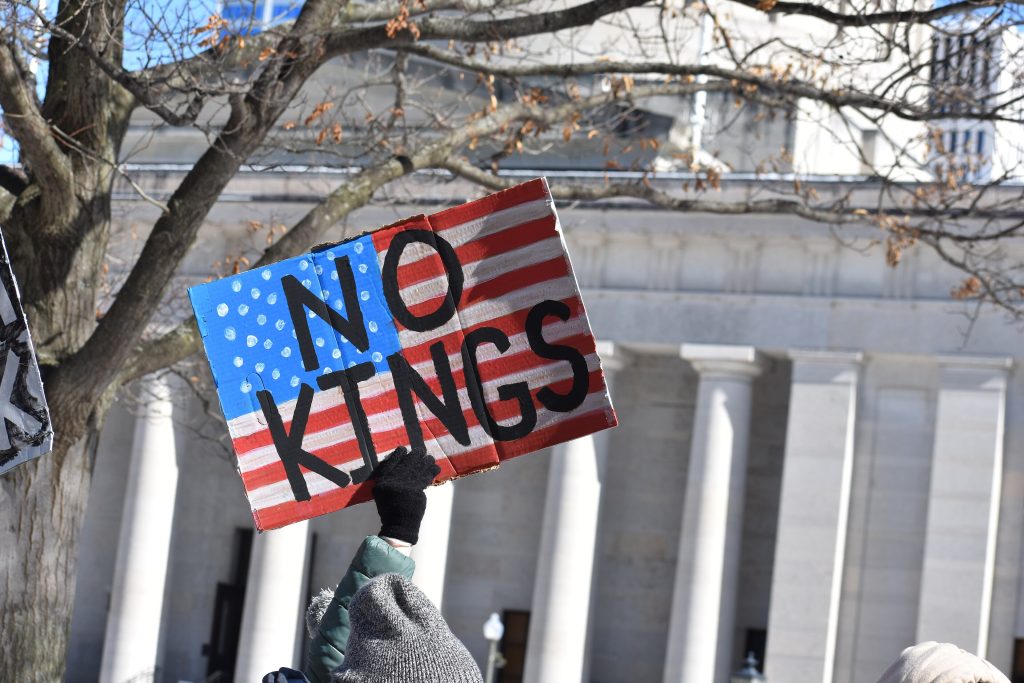
Trump opened his speech with the 250th anniversary of the Declaration of Independence, hailing America’s freedom. The fact is that Trump’s authoritarianism far outdoes that of King George III, against whom the colonies rebelled. Among the founders’ indictments of Mad King George was that “He has affected to render the Military independent of and superior to the Civil power.” Yet our own mad king has decided that the survival of a whole civilization is in his hands alone.
Trump is emboldened in his contempt for Congress because the Republican members of Congress have abdicated their constitutional responsibilities, terrified of their own president, and forsaking their constituents for campaign lucre from AIPAC and the military-industrial complex.
The Constitution is unambiguous regarding Congress’s responsibility. Article I, Section 8 assigns Congress, not the President, the sole power to declare war. That is not a choice or an option. The Constitution doesn’t say that Congress can play dead and let the President declare war. The Framers made this choice deliberately, because they were explicitly rejecting the power of a king to take the nation to war.
In Federalist 69, Hamilton assured the public that the President’s war powers would be far less than the British monarch’s. Madison stated the principle plainly in a letter to Jefferson in 1798: “The constitution supposes, what the History of all Govts demonstrates, that the Ex. is the branch of power most interested in war, & most prone to it. It has accordingly with studied care vested the question of war in the Legislature.”
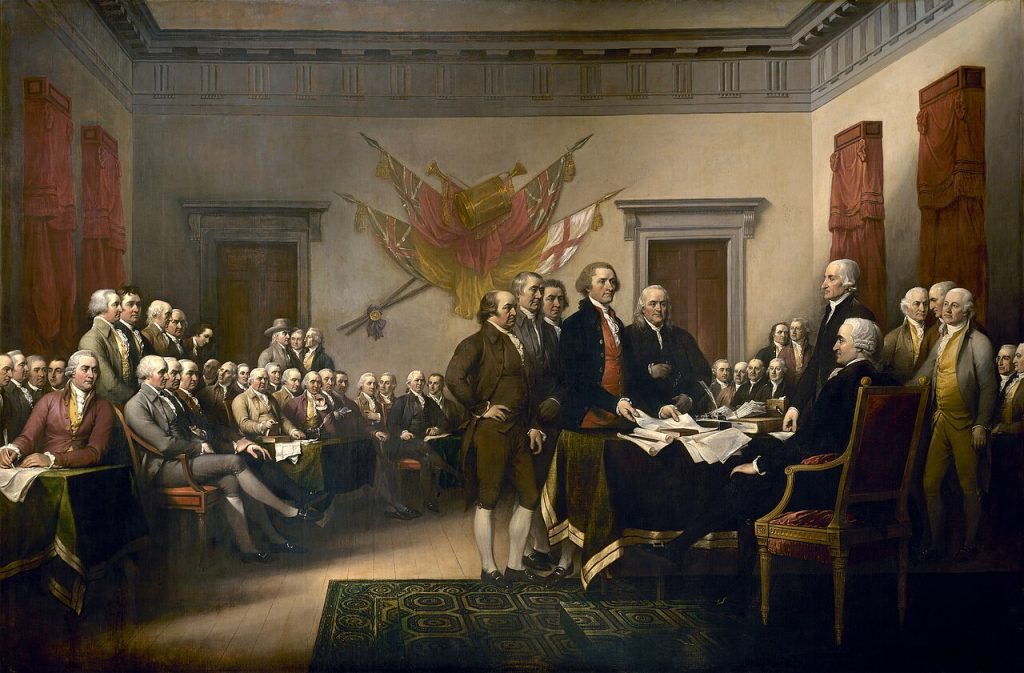
The founders’ careful design has been overturned because of the unconstitutional subservience of the Republican members of Congress to Trump and to the military-industrial-digital complex. And yes, under Democratic presidents, most Democratic members of Congress also looked the other way when those presidents chose to go to war.
The war with Iran is Trump’s folly but Congress’s disgrace for not stopping it. It is a war without a purpose that has created mass suffering in Iran, tens of billions of dollars of direct outlays, and staggering damage to American military bases in eight countries of the Middle East. The closure of the Strait of Hormuz has sent world and American prices soaring for oil, gas, fertilizers, and more. And the world has duly noted that Iran can hold its own against US aggression, albeit at great sacrifice to the people of Iran and the region.
America’s much vaunted AI battlefield has been exposed in the most horrifying way. On the first day of the war, an American missile struck the girls’ elementary school there, killing more than 150 people, most of them girls aged seven to twelve, and the military’s own inquiry reportedly found that overreliance on artificial intelligence contributed to the targeting. Trump blamed “Iran or somebody else,” and seven months later the administration has offered no findings, no apology and no compensation to the families.
The President’s threat to annihilate a member state of the United Nations, delivered from the General Assembly podium, disgraced Trump in front of the world. It also violated Article 2(4) of the UN Charter, which prohibits even the threat of force against another state. Nearly all the world stands aghast.
I write to you because you cannot simply walk away from Trump’s recklessness, shaking your heads silently. You have a job to do, so do it. The craven Republican Party has to find even a minimal level of guts to tell Trump, “No, you do not have the power to destroy Iran. Any war with Iran depends on us, and we don’t support you and our constituents want this war to stop.” A clear majority of Americans oppose this war, and poll after poll shows that the opposition to the war is growing. A few Republicans have found that courage. Last week three more Republicans broke ranks to support ending the war. Their colleagues should follow.
Many of you receive campaign contributions from military contractors and technology companies deeply involved in the war. Many of you take money from AIPAC, which champions the war that Netanyahu did so much to help launch. This has to stop, as it is a dereliction of your constitutional duty and a violation of your oath.
Congress holds the power of the purse. The fiscal year ends on September 30, and every bill that funds the Pentagon is your opportunity to prohibit funds for unauthorized offensive operations against Iran.
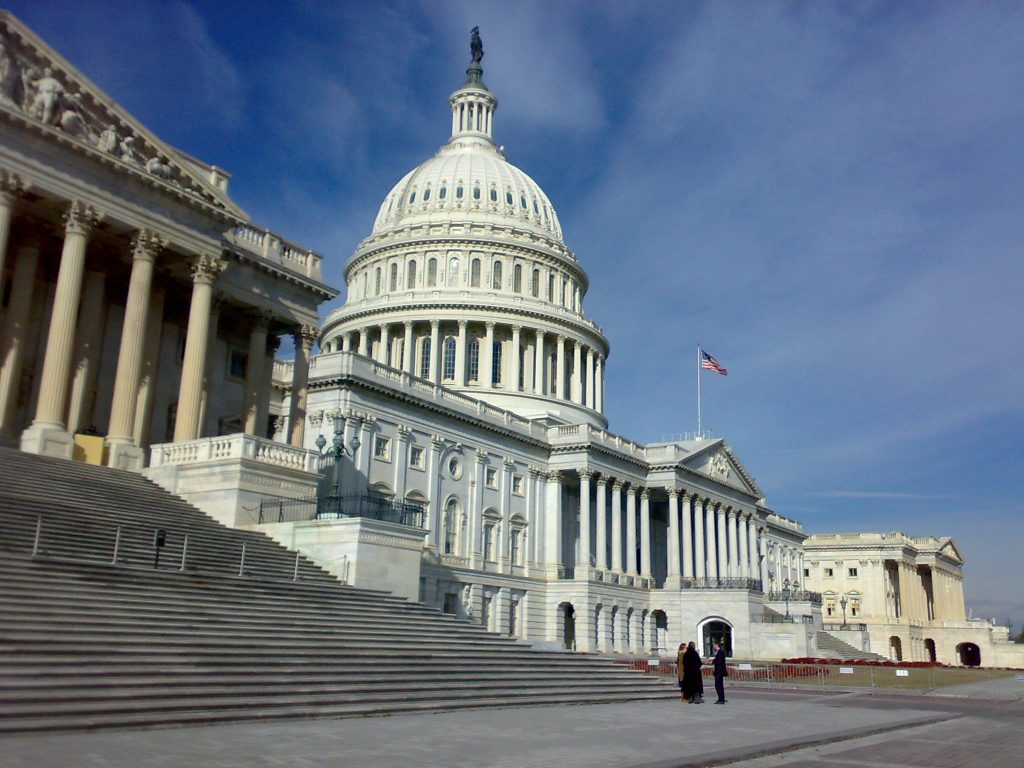
The right course for the US is simple. Congress should cut off funding, and the US should stop further attacks and go home. We need no agreement with Iran or anyone else to stop the war that we started. By ending the war you will immediately restore some sanity and safety to the world energy markets, food supplies, and prices faced by Americans and others around the world.
How America has declined from the glorious moment when John F. Kennedy stood at the same podium at the UN on September 20, 1963, after having negotiated the Partial Nuclear Test Ban Treaty with the Soviet Union. He told the assembled leaders that the treaty can be a lever, and Archimedes, in explaining the principles of the lever, was said to have declared to his friends: “Give me a place where I can stand—and I shall move the world.” My fellow inhabitants of this planet: Let us take our stand here in this Assembly of nations. And let us see if we, in our own time, can move the world to a just and lasting peace.
Members of Congress, to save our nation’s honor and our Constitution, you must do your duty to stop this war, and stop Trump’s brazen, destructive, and unconstitutional grab for power.
Respectfully,
Jeffrey D. Sachs
University Professor, Columbia University
(Source: www.commondreams.org)
As will be understood from the articles by Benjamin Creme’s Master reprinted below, political decisions taken in the USA inevitably have repercussions throughout the international community. This fact still holds true and its implications cannot be overstated.
As the United States approached important elections in 2004, Benjamin Creme dealt with reactions at the time; we reprint his ‘Letter from the Editor’ written before the election because, unfortunately, its message is now more relevant than ever, although the details and actors have changed.
Now, as the USA again faces a crucial decision in its political, social, economic and judicial life, one which will affect its standing within the community of nations, Share International takes this opportunity to make a further plea to its divided people for sanity and for a withdrawal from further extreme separative and destructive behaviour.
In October 2004 Benjamin Creme’s Master wrote ‘A call for sanity’ in which He pointed up the interdependence of nations:
He ends the article with this call:
Letter from the Editor, Benjamin Creme (Share International, November 2004)
It would seem that some readers are concerned by our degree of interest in, and the amount of space devoted to, the American presidential election in November. Surely, they seem to think, it is not the place of a spiritually based magazine to concern itself with politics, especially American politics, when everyone knows, do they not, that both parties are corrupt, with nothing to choose between them.
This is certainly not the case. I must confess to being puzzled by such a response to the events which have shaken the world for several years. Share International exists to make known the fact of Hierarchy, its return to the everyday world and its plans and concerns now and in the future. In relation to the coming US election, these concerns have been cogently expressed in recent articles by my Master. Let me quote from His article in the current issue. Nothing could be clearer or less ambivalent. Why should the voice of Share International be less honest and true?
“When American citizens go to the polls in November, they will have the opportunity to change the course of history … As the day of destiny approaches … We, your Elder Brothers, cannot stand aside and watch while the very future of the world is under threat … This election can be a great turning point in the affairs of men.”
The following articles written by Benjamin Creme’s Master in July 2003 and November 2004 provide further analysis and advice:
When American citizens go to the polls in November, they will have the opportunity to change the course of history. On their decision largely rests the style and structure of the immediate future. If they choose wisely, they will elect a President committed to fostering the well-being of all who long for peace and justice in our troubled world; who realize that peace and justice are the outcome of trust, and who are prepared to share the vast resources of their country to create that trust.
The alternative is too terrible to contemplate: a mounting programme of war and terror and counter-terror; a tightening grip on the traditional freedoms of the American people; a breakdown of relations with other countries; and a ‘pariah’ reputation among the nations for the proud United States. Who would knowingly make such a choice?
As the day of destiny approaches, the minds of many turn to the beleaguered people of America whom, now, so many despise and hate. They pray for the deliverance of its people from the cruel and crude exponents of illegal, usurped power. They call for every peace-loving American to raise their voice against the war-mongering of the present administration, and to cast their vote in like fashion.
Of course, America is not alone at fault for the inequalities of the world, the basic canker in our midst, the source of all our troubles. It shares the blame with all the developed countries who ride roughshod and cavalier over the poor and struggling, and must awaken to this main source of tension — and terror.
Therein lies the fault of the Western world: these ‘successful’ countries owe their wealth and dominance largely to history, and their ability to manipulate the world’s economy to their own advantage through aggressive ‘market forces’.
The world’s poor and destitute now demand their share. If this simple right of justice is not addressed and remedied, the world will know no peace. Terrorism will fester and grow into war, which will threaten the future of the people of Earth.
We, your Elder Brothers, cannot stand aside and watch while the very future of the world is under threat. America is a great nation with much of good to give the world. It must now awaken to its soul’s longing to serve, to live in peace and justice, and, together, in harmony and co-operation, to work with all nations to remake this world.
This election can be a great turning point in the affairs of men. Cast your vote, We beg you, for justice, sharing and peace.
(Share International, November 2004)
It is frequently the case that, in acting for what is seen by them as the good of the world, countries wreak havoc on a world scale. So dense are the fogs of glamour which surround their actions, so illusory is their thinking, that great harm may be done, and much pain and suffering caused, for the best of reasons.
Thus it is today. In recent times, the USA, under the banner of ‘the war against terrorism’, has invaded Afghanistan and Iraq, causing thousands of civilian deaths and great physical damage to their infrastructures. The Taliban, fanatical and rigid but, in the main, uninvolved in terrorism, are dispersed but are now regrouping, training in the skills of terror. In Iraq, Saddam Hussein is no more, but a terrible legacy of deprivation and suffering, lawlessness and chaos, has replaced his baleful regime.
Now the attention of the US administration has turned to Syria, Iran and North Korea; they are warned to change or face the wrath and might of the upholders of ‘peace’, and the champions of ‘liberty’ in the world.
Thus does America plunge the world into the atmosphere of stress and fear, and thus do these give fruit to epidemics and natural disasters, which, in turn, serve to increase the fear and stress.
What can be done to stabilize this dangerous situation? How can the nations keep America in check? By what means can ordinary people bring their weight to bear? These are large questions and have, indeed, no simple answers. They require wisdom of an exceptional order and a co-ordinated approach.
Firstly, the world must realize the true nature of the problem: the USA today is led by men responsive to a nefarious energy which prompts their actions and puts peace in jeopardy. It stimulates their glamour for power of an international extent, and threatens the peace of the world. It has outposts in Israel and Eastern Europe, Israel being the major focus. This destructive energy derives, though in diminished potency, from that which plunged the world into chaotic war during the twentieth century and which, men thought, was safely put to rest.
It can be seen, therefore, how necessary it is that there be peace in the Middle East; how necessary it is that the Palestinians have true justice and a viable homeland. This is the most important problem facing men today. Failure to solve it would be disastrous for the world.
It will take the combined resources of wisdom and will of both Hierarchy and men to overcome, finally, this malignant force. A clear understanding by men of the true nature of the threat is thus imperative. Men must organize and act in unison. They must call for an end of oppression of the Palestinian people and so end the fear which haunts the people of Israel. The United Nations must bring all possible pressure to bear on both America and Israel, standing up to the superpower and aid the cause of peace. The peoples of the world are already on the march. They must raise their voices and demand that peace be theirs. They are the inheritors of the future and must fashion it in peace.
We, the Masters, your Elder Brothers, will do Our part but We are hampered by your lack of understanding and will. Hence these words.
Act without fear. Be wise and diligent in your actions and all will be well.
(Share International, July/August 2003)
Q. Every day more evidence comes to light of the United States, through agencies such as the CIA, bullying other countries and manipulating their sovereign affairs (such as elections) to benefit the US. (1) Has this always gone on, and we are now seeing the corruption come to the surface, as Maitreya predicted? Or (2) has the present US administration taken political corruption to new depths?
A. The United States is a young country, dominated as a personality by the lower aspects of the 6th ray of Idealism or Devotion. It therefore suffers from all of the vices of the ray: devotion to its own interests, suspicion of others’ motives, combativeness and self-assertion, self-deception about its own motives, etc, etc. Thus its bullying tactics are endemic and long-standing. Its inhabitants and governments believe they are spreading Freedom and Justice around the world, while they are actually serving their own interests. This self-deception is one of the chief characteristics of the ray. This political corruption has, therefore, always gone on; this administration, led by fundamentalist extremists, is simply taking it to new depths. The world, as the Master Djwhal Khul has written through Alice Bailey, is waiting for the 2nd-ray soul of America to make its appearance felt, as it did through the Marshall Plan after World War II.
Q. (1) Does the “suffering in store for the United States” refer to remorse for the Iraqi War and/or (2) other military adventures, or (3) the effects of an economic crash?
A. (1) Not remorse but the effects of unilateral action and rejection of the rule of law of the United Nations. (2) Yes. (3) Yes. (Benjamin Creme, The Awakening Of Humanity)
It isn’t hard to work out that the present global economic system cannot work for everyone and never has. Its roots are deeply embedded in wealth extraction through competitive exploitation of people and planet, conveying a sense of self-satisfied entitlement for some, ever-deepening inequality and a sense of futility for most. We know it. We live it. But don’t know how to change it. A sense of ‘it is what it is’ pervades, along with ‘nothing I can do will change it’. But change it must if the planet is to survive.
A large group of young economists who are prepared to think differently see change as starting with irrefutable facts “to provide a platform to stimulate research, policymaking, and citizen engagement to shape a fairer, more democratic and sustainable 21st century”. To this end, as members of the World Inequality Lab, they published the ‘Global Justice Report: a plan for equality and prosperity within planetary boundaries’ on 4th June. It is so solidly researched that even academics who question its value as a solution have no problem commending its figures.
“It’s a fully quantified roadmap for getting from here to a habitable, equal planet by 2100, combining redistribution, decarbonization, and sufficiency in a single, internally consistent framework.” 1
Before we consider this ‘roadmap’, it would be helpful to have some context.
The World Inequality Lab (WIL) and the Global Justice Project
The WIL was formally launched in 2015 in order to host the open source database begun in 2011 by prominent economists such as Thomas Piketty, Facundo Alveredo, Emmanuel Saez, and Gabriel Zucman, and to promote and co-ordinate further research on the dynamics of global inequality. Its primary sources of funds are academic institutions, public research grants, and philanthropic organizations.
It is composed of more than 40 staff and more than 200 researchers in various institutions around the world, and is open to contributions from researchers anywhere. It has an unusually collaborative culture.
The Global Justice Project is just one of WIL’s many projects. Its report this year is described as a first-attempt proposal, aimed at starting a much-needed discussion on how to get to a safer, happier future for all.
So what is this ‘roadmap’ from 2026 to 2100?
The start point is that inequality and climate breakdown are mutually enforcing factors. We cannot change one without changing the other, otherwise we meet a dead end. Literally.
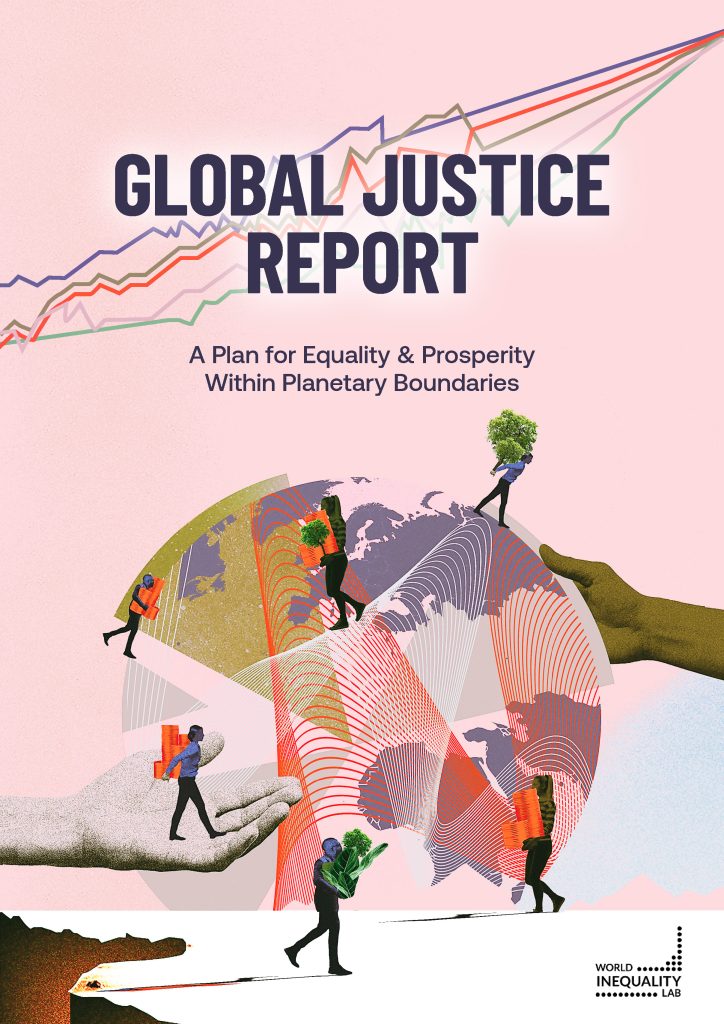
Sufficiency is its signpost whichever factor is being considered. The report’s authors insist the database shows that only through sufficiency can inequality be significantly reduced and living standards “converged” (ie the excessive impacts on the planet made possible by greater wealth between individuals and countries moderated), and global heating kept within 2°C, thus avoiding total climate breakdown and ever-greater social and economic tension. They claim that a maximum 1.8°C is possible where equality and fast decarbonization are achieved. Otherwise, we are heading for 4°C of planetary overheating by 2100!
In order to achieve sufficiency, this will require: “redistribution [of resources] at the world scale, a deep reform of the international financial and economic order, a radical transformation of energy systems, and substantial shifts in consumption patterns. Compared with most climate scenarios (including that of the IPCC2), the main novelty is that we model all four dimensions together and place inequality and sufficiency at the centre of the analysis.”
In more detail, this means striving for:
A global wealth tax and a global income tax aimed at the richest 1% of the world’s population and levying 90% at the very top. The rationale being that the lifestyle of the ultra-rich contributes most to the climate crisis. Curtailing their consumption habits would greatly reduce carbonization, but it will take even more than that to achieve the depth and speed of decarbonization identified as needed if we are to save our planet.
Applied to us all, ‘sufficiency’ requires substantial changes in labour hours, consumption patterns and materials extraction. Food habits will have to change, especially regarding red meat; land use and forest cover must be much better managed. All of which will need funding.
A Global Justice Fund is proposed as a solution — where those levies on the ultra-rich and the wealthier countries are pooled and managed by an international institution, thus creating a World Sovereign Fund which, through investments in sustainable infrastructure, would enable more equal wealth redistribution across all countries. This would raise the global wealth share for the bottom 50% of people from 2% to 30%; whilst for the top 0.001%, the billionaire class’s share of global wealth falls from 6.4% to 0.05%, bringing equality between countries and individuals closer to reality. Referring to the current regional gap in average per capita gross monthly income, the report says: “Today, it ranges from 290 Euros in Sub-Saharan Africa to 4,590 Euros in North America/Oceania (a 16-fold gap).”
Over time, such an approach would provide the necessary funds to support investments in health, education, climate action and infrastructure. But there would also need to be a complete change in lifestyles and expectations.
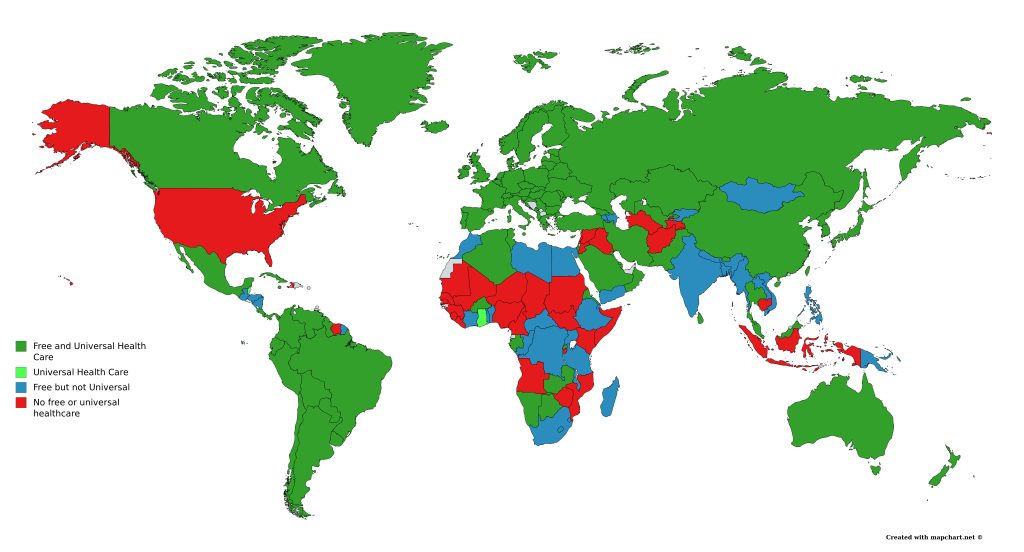
There is a strong emphasis on the need for far more spending on education and health for all, with similar annual expenditure per capita in both sectors in all countries, meaning steep rises by 2100 — even for the wealthiest countries — and the share of global working hours in these sectors rising from 11% today, to 43% in 2100.
“Less work, more emancipation” for both men and women: halving working hours for each person to 1,000 per year (about two and a half days a week), and both sexes taking equal shares of economic and domestic work, with equal average pay. “Less work” seems to contradict the previous reference to a higher share of global working hours, but, from what I understand, automatically follows on from balancing out work around the world and across all sectors.
As well as saving the planet, democracy will take on real meaning
The authors see the Global Justice Fund opening the door to global democracy and ending global plutocracy, as all will have an equal voice in how the fund is used. At present, the main drivers of global funding decisions are the IMF and the World Bank, where Europe & North America/Oceania have four times as many votes as their population numbers would justify, whilst Sub-Saharan Africa and South and South-East Asia have four times fewer votes than their population share.
The exorbitant privileges automatically assumed by rich countries can be addressed by the creation of an International Clearing Union and a new international currency, preventing the trade and debt imbalances that penalize poorer countries.
If all these mechanisms are implemented, then, say the report’s authors, a large majority of people will benefit in each region. “About 89% of the world will double their monetary income between 2026 and 2100; over 95% gain in the Global South, and between 85–95% in the Global North. Over 99% of the population is better off when the valuation of leisure and planetary habitability is included.”
In effect, there would be sufficient for all and a much healthier planet.
Is the plan too radical?
On 26 June, Jonny Dymond, presenter on BBC’s World at One, asked Thomas Piketty whether such radical change is needed. Piketty’s reply was: “Well, I think the challenges we have to face are pretty radical!
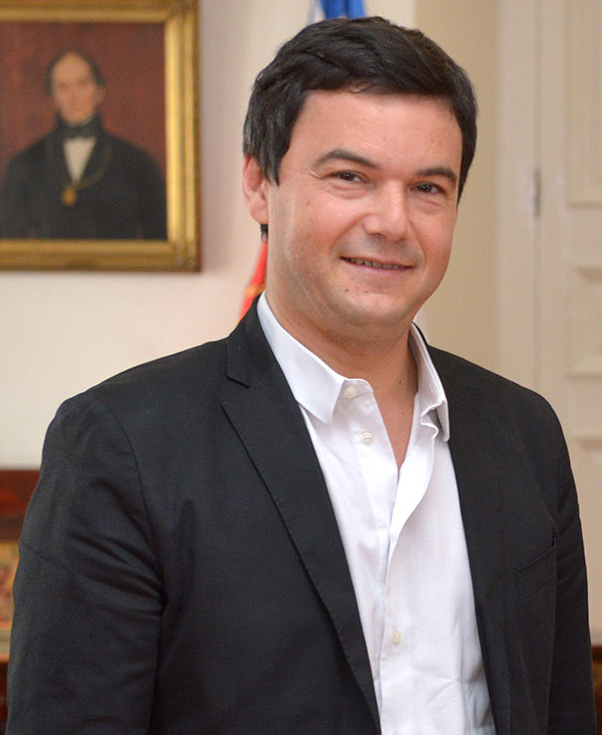
“We see right now the heat wave in Europe, and the challenge of global warming with the challenge of economic development is really a challenge of new proportions. Our report tries to take seriously the aspiration of the Global South to prosperity — India, Sub-Saharan Africa, Latin America, Indonesia — have an aspiration to economic development. This is not going to go away! The aspiration is very strong. The problem is if they see prosperity the way we did in the past, the planet is going to explode!
“So what do we do? It’s not so complicated to find a solution. …In the report, there are ways to redefine the notion of prosperity. We are at a time where we need to think about alternative economic futures. It’s time to put on the table clear alternatives, we believe, so that people can make up their own minds.”
It feels important to repeat here that the group do not suggest that the plan offers the full answer to our shared problems. Rather, they offer it for discussion as a fact-based model built on solid principles, with much room for exploration and development. But it is also yet another urgent warning. The discussion needs to happen and it needs to do so now!
Notes:
1 Duncan Green, Co-Director of the LSE’s Activism, Change and Influence programme and website and Professor in Practice in the LSE’s International Development department.
2 The Intergovernmental Panel on Climate Change.

Karma — the eastern name for the Law of Cause and Effect. The basic Law governing our existence in this solar system. Every thought, every action that we have and make sets into motion a cause. These causes have their effects, which make our lives, for good or ill. Expressed in biblical terms: "As you sow, so shall you reap." In scientific terms: "For every action there is an equal and opposite reaction."
Meanwhile, We patiently wait. We know the outcome of man’s present dilemma, and aid to the full extent of karmic law. We know, too, that man, of his own free will, must choose the path to future glory: the path of brotherhood and love, justice and sharing. (Benjamin Creme’s Master, from ‘The end of hunger’)
Perhaps the most succinct summary of the core message of End Times Fascism is this: They really don’t care! The rest of us must!
End Times Fascism, released September 2026, presents the authors’ claims that the oligarchs, the End Timers and the power-hungry really don’t care what happens to the planet and who or what suffers in the course of their self-serving behaviours. The greater the problems for the planet, the more vindicated they feel in their world view; the more determined they are to pursue their fantasies, using every political and economic device at their disposal to achieve their goals, escape accountability, and avoid redistribution of their wealth. Those behaviours, say the authors, are essentially fascist: racist, ultra-nationalist, supremacist, and powered by the money that is granted to them by our economic system. “Fascism,” they write, “is capitalism with bared teeth.”
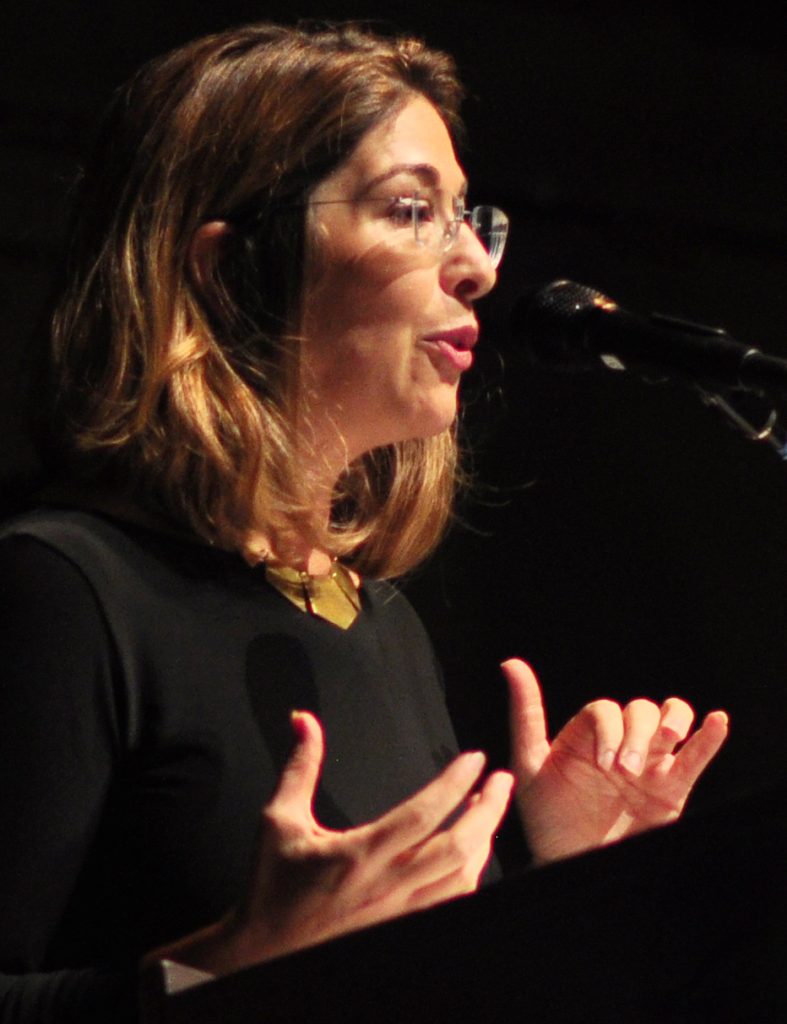
However, Klein and Taylor, both well-known for their activism and straight talking, are well rehearsed in challenging the status quo and know that facts matter. And this book and an accompanying video, How to Profit off the Apocalypse, provide this in almost unwelcome, but well-argued, abundance.
The video starts with Alex Karp, CEO of Palantir, gloating that “Bad Times are very good for Palantir” — a company that supplies data operations, artificial intelligence platforms and targeting software to armed forces.
It shows Elon Musk playing the fear game: “Whether you choose violence or not, violence is coming to you. You either fight back or you die.” Interpretation will depend on your personal world view.
It reports Jeffrey Epstein writing to billionaire venture capitalist Peter Thiel: “Brexit. Just the beginning, return to tribalism” and Steve Bannon, American media executive, former Republican political strategist, writing to Epstein seeking ways to turn that tribalism into a global, far-right, counter-revolution.
Still more plainly: Stephen Miller, Trump ally and US Homeland Security Adviser: “You can talk all you want about international niceties, but we live in … the real world … that is governed by strength, that is governed by force, that is governed by power.”
This is fascism, yet again fuelled by systemic crisis, but, this time, both the crisis and the fascism are bigger and more dangerous to all of us and to our very existence. “Its weapons deadlier. Its technologies vastly more potent. Its media more concentrated — and its climate more unstable. … If we are waiting for soldiers goose stepping in formation, we’ll miss the messianic venture capitalists, the army-controlling theocrats, and the grifting manosphere influencers.” (Klein)
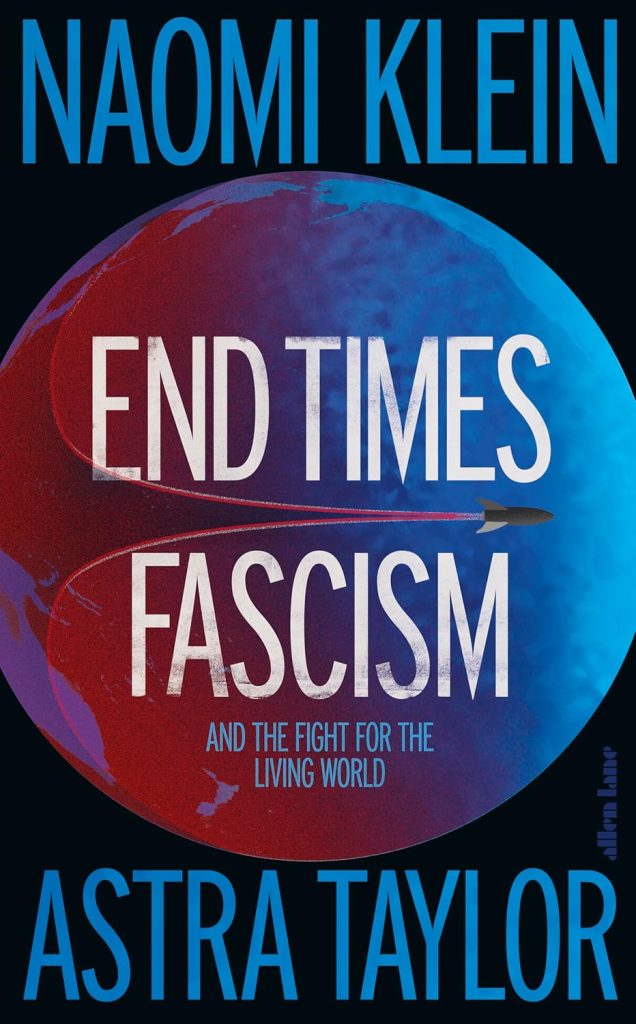
Taylor: “End Times fascism is not a monolith. It’s a dangerous, fractious alliance of three main groups”: religious ‘end timers’ with their eyes on God’s ‘special plan’ for Israel and their own determination to be among the few ‘saved’; the big tech ‘end timers’ driven by their relish of the prospect of creating “great companies” while contributing massively to the planet’s destruction; and the nationalistic ‘end timers’ intent on closing the gates to those whom they see as not belonging. All of them see themselves as special and worthy, as they have the power; a dominant factor in the present-day fascist mindset. As is their strategy of directing popular frustration and anger at the weakest and most vulnerable as scapegoats, rather than at themselves.
However, there is hope and it lies in the rest of us refusing to be divided!
In his review of the book, Guardian reporter Daniel Trilling says that Klein and Taylor draw particular inspiration from Zohran Mamdani’s win in New York; becoming its Mayor despite the political and financial establishment’s active opposition; that the win shows “it was possible to build a winning coalition by focusing on people’s material concerns — and by celebrating difference rather than trying to deny or apologize for it. …[The book’s authors] also point to other forms of creative resistance in the US and elsewhere as the seeds of new politics ‘rooted in an expansive, open-armed sense of neighbourliness’ that can counter the right’s dystopian visions of the future.”
At last, thanks to British MP Jeremy Corbyn, we have a book based on an investigation into the facts of Britain’s role in the genocide in Gaza. Simply and candidly called The Gaza Tribunal: Britain’s Complicity in Genocide, the new book was authored by MP Jeremy Corbyn, professor of Human Rights Law Neve Gordon, and Shahd Hammouri, a Lecturer in Law. The Gaza Tribunal chronicles testimony given at The Gaza Tribunal hearings — held over two days in September 2025 in London — with 29 witnesses, including medics, journalists, academics, lawyers, researchers, campaigners, trade unionists and political figures.
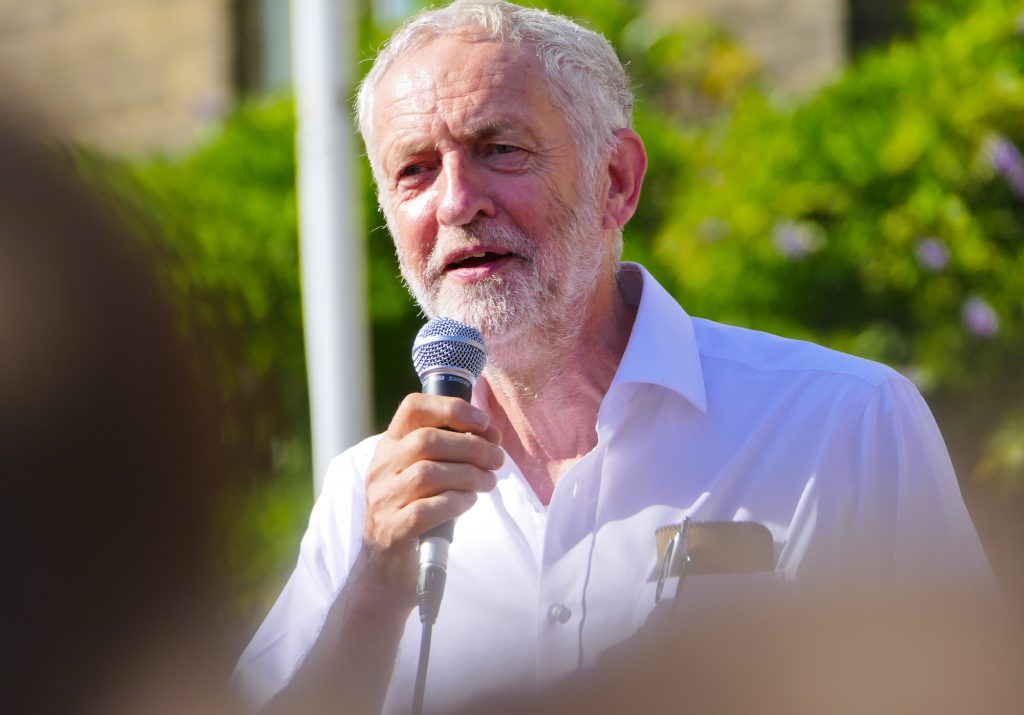
A few months earlier, Corbyn had introduced a bill to UK Parliament, calling on the Government to “establish an independent inquiry into UK involvement in Israeli military operations in Gaza, including the supply of weapons, surveillance aircraft and use of Royal Air Force bases”.
Unsurprisingly, the Government rejected the bill and refused to hold an inquiry. So Corbyn announced that he and colleagues would launch their own: “We will uncover the full scale of British complicity in genocide — and we will bring about justice for the people of Palestine”.
The Tribunal asked four questions which were addressed by experts in the various fields, including UN Special Rapporteur on the occupied Palestinian territories Francesca Albanese, and Palestinian journalist Abubaker Abed:
- What has happened in Gaza? — The scale of human suffering, destruction, and devastation.
- What are Britain’s legal responsibilities? — In domestic and international law.
- What has Britain’s role been in Gaza? — The extent of its military involvement, including weapon sales and surveillance aircraft.
- Has Britain fulfilled its legal obligations?
The testimony, as compiled from the Tribunal, is damning and devastating. In his foreword to the report, Corbyn writes: “Words cannot begin to describe the level of suffering that Palestinians have endured. We have all seen the images. Human beings torn to pieces. People getting shot as they queue for a bag of flour. Entire neighbourhoods flattened. Mothers screaming for their children buried under the rubble. This was no war aiming at defeating a military opponent. This was a genocide aimed at destroying an entire people — aided and abetted by the British Government.”
The tribunal also laments the degradation of international law and how “the much-vaunted rules-based order is being buried under the rubble along with the Palestinian lives it has failed to protect.” (Corbyn).
The authors see the Tribunal as simply a contribution to the campaign for justice and accountability for the Palestinians, not a substitute for a full independent enquiry, for which they continue to campaign.
The Tribunal is available to watch on thegazatribunal.uk. Book signing and discussion events around the country have been timed to coincide with the book launch.
With a new prime minister in power, Corbyn has now re-introduced the bill, which is expected to receive its second reading in December 2026.
The Gaza Tribunal: Britain’s Complicity in Genocide, published by Pluto Press, July 2026.
Recent climate-related disasters this year — two being the glacial collapse and flooding in Nepal and three extreme heat waves in Europe — have begun to change the way knowledgeable experts and media are seeing and writing about climate change. Ingmar Rentzhog, CEO and founder of the world’s largest media platform for climate action, We Don’t Have Time, leads the pack. He describes the global response to climate challenges up to the present as the biggest lie ever told — and it’s only four words long: “We have more time.”
He says the lie and most of those who repeat it are not necessarily evil, but that they gravitate to the message because it’s comfortable, it protects institutions adopting it, and it’s not extreme. He exposes the truth the lie hides, though, which is: it’s already too late. Too late to avoid catastrophe, because the catastrophe has already begun. The only question left is how big it will become, and whether or not it breaks our societies.
Rentzhog presents some very uncomfortable facts to back up his thesis. To begin, 2024 was the first full calendar year where global average temperatures exceeded 1.5⁰C above pre-industrial levels, and the UN’s Emissions Gap Report shows that current policies put us on a path of up to 2.8⁰C of warming. The Paris Agreement commits nations to keep global average temperatures well below 2⁰C above pre-industrial levels, and ideally capped at 1.5⁰C. But even 1.5⁰C was never considered “safe.”
Secondly, this lie affects every human being alive and everyone who will ever be born, and it isn’t static. Every year these four words “we have more time” are in play, locks in heat that can never be unlocked. And, he says “its genius is that it recruits honest people. You never needed to be corrupt to say ‘we have more time.’ You only needed to prefer a bearable sentence to an unbearable one.”
Perhaps the most sobering facts, though, are related to deaths. The Intergovernmental Panel on Climate Change’s deliberately conservative floor projects more than 250,000 heat-related deaths per year by 2050, with high confidence. However, it counts only four causes of death, omitting storms, floods, wildfires, conflict and migration entirely. A different estimate comes from actuaries, who measure risk. The Institute and Faculty of Actuaries and the University of Exeter classify 2⁰C or more of warming by 2050 as a risk of more than two billion deaths. At 3⁰C or more, they classify the risk as extreme, with more than four billion deaths — about half of everyone alive. The future the actuaries assessed is the path we’re on, unless we change course.
BUT, Rentzhog says, “None of this is determined. Not one of those deaths has happened yet. The gap between the road we are on and the road we could take is not fate. It is decisions, made by people with names, offices and elections to lose. The biggest lie ever told is the one we are living inside right now, and it can still be called out in time.” We must call it out, he says, and we must also refuse to accept the second lie that follows the first: “It’s too late, so nothing matters.” The truth lies somewhere between “we have more time” and “it’s too late,” and tens of millions of lives can be saved if we act rapidly now. Every fraction of warming we avoid means fewer people dying. We simply can’t afford to wait.
What’s true is that climate progress is real, and it isn’t small. But the part that gets downplayed in solutions-oriented media is that we’re solving the problem too slowly for it to matter enough. The gap between the speed we have and the speed we need is the lie’s work, defended in rooms where climate policy reversals are decided (he documented 45 in the past year, across 15 jurisdictions). To create the speed we need, he suggests that we carry this question everywhere decisions are made: “We keep saying we have more time. Time until what, exactly? And how do we know?” Like the biggest lie, he says, the truth is also four words long: We don’t have time.
The UN’s prescription for global temperature overshoot
A new United Nations Environment Programme (UNEP) report, Limiting Overshoot, acknowledges that global average temperature rise is expected to cross 1.5⁰C and stay there within the next few years, creating dangerous climate impacts. However, it identifies a pathway to minimize the impacts of the overshoot, calling it ‘overshoot, peak, and decline.’
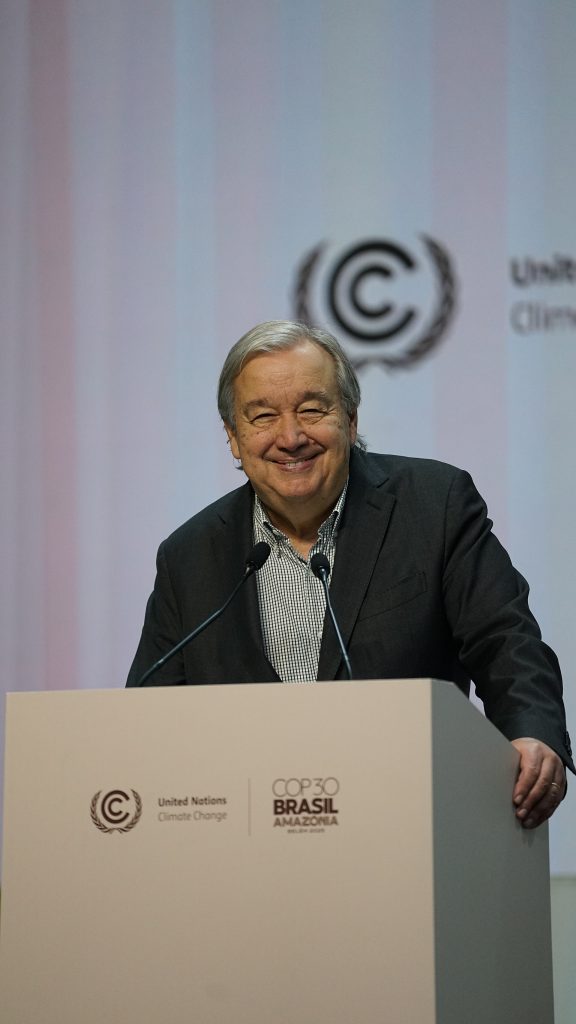
UN Secretary-General António Guterres says “This summer’s scorching heat, raging wildfires and deadly floods are a warning of what lies ahead. We must make the overshoot above 1.5 degrees as small and short as possible. That demands an overshoot of ambition.”
The report states that the most optimistic scenario sees temperature rise peaking at 1.8⁰C above pre-industrial levels, but most other scenarios predict higher peaks. It emphasizes that above the 1.5⁰C level set by the Paris Agreement, risks and impacts will intensify with every fraction of a degree and every year. These include extreme weather, ecosystem loss, submersion of Small Island Developing States and low-lying coastal cities. On a human level, impacts expected are severe damage to health, food security, water supplies, nature, cities, infrastructure and economies.
Furthermore, the likelihood of crossing irreversible tipping points increases with the magnitude and duration of higher temperatures — for example, degradation of the Amazon rainforest, destabilization of major ice sheets, and disruption of the Atlantic Meridional Overturning Circulation, which plays a key role in regulating the climate.
Considering the risks, the report urges rapid, collective, global action. It also lists several important conditions for success: strong political will, multilateralism, effective policies, inclusive governance and finance, with equity and justice underpinning all actions. It charges countries with greater responsibility for climate change to act the fastest and with the greatest ambition.
The UN reports ‘essentially irreversible’ sea level rise
In addition to reporting on dangerously rising global temperatures, the United Nations Secretary-General also commissioned a special report on sea-level rise. Bill Hare, CEO of Climate Analytics and a member of the expert panel studying the topic, presented a briefing to media summarizing the findings. The study concluded that sea-level rise is accelerating due to humanity’s greenhouse gas emissions and that the rise to date is ‘essentially irreversible’ on human timescales. However, a fast and timely move away from fossil fuel use could slow the rate of sea-level rise, which would moderate threats to an estimated 1.2 billion people at risk of flooding and other impacts.

Mr. Hare presented evidence that 1) the annual rate of sea-level rise has more than doubled in recent decades, 2) greenhouse gas emissions have made extreme sea level events four times more common since 1900, 3) most atolls are likely to become uninhabitable by mid-century due to flooding from waves, and 4) stabilizing global warming at 1.5⁰C would not be enough to prevent sea-level rise of several meters from Antarctic ice melt by the end of the century.
Two major responses recommended for the global community are stepping up finance for adaptation and Loss and Damage, and aligning emissions reductions with the 1.5⁰C limit specified in the Paris Agreement.
Mr. Hare said the report should be a wake-up call for leaders of the most emitting nations that their failure to act is creating major risks for the future in addition to impacts already observable. He added, “But when those impacts are as tangible as they have been recently—many hundreds if not thousands dead from flooding in Nepal, tens of thousands from heatwaves across Europe, economic damages already estimated in hundreds of billions of dollars — the wake-up call is deafening.”
Amazon Defenders declare a state of emergency
While governments push oil and mining expansion in the Amazon, thousands of Amazon Defenders — Indigenous leaders, Afro-descendent communities, women, youth, and other social movement members — recently met in Puyo, Ecuador for the 12th Pan-Amazonian Social Forum (FOSPA) to discuss how to protect the region from the forces trying to reshape it.
The Amazon is the world’s largest tropical rainforest, containing extraordinary biodiversity and acting as a buffer against global warming, but about one-fifth of it has already been deforested. Scientists at FOSPA warned that, combined with global warming, “the forest is nearing an irreversible tipping point where tree loss dries out the region, triggering a self-reinforcing collapse that could turn the rainforest into a savannah and further accelerate climate change.”
Despite these dire warnings, governments across the region continue to expand their extractivist push for oil drilling, mining, and industrial agriculture, and have cracked down on activists seeking to protect the land. In 2024, at least 120 environmental defenders were killed in Latin America. Others have faced terrorism charges and frozen bank accounts. And the communities are suffering from health problems associated with extraction, including cancer, plus gender-based violence against women activists.
At the close of FOSPA’s conference, the 2,500 participants declared the Amazon to be in a state of emergency near a point of no return, and released a series of proposals to reverse the trajectory. These include:
- Create more extraction-free zones where mining and oil production are banned.
- Expand the recognition and enforcement of the rights of nature, to legally protect ecosystems’ and species’ ability to survive and thrive.
- Increase women’s political participation.
- Launch a pan-Amazonian observatory to map organized crime and aid affected communities.
- Support economies based on agroecology, agroforestry, and other community practices.
- Create networks to protect environmental defenders from violence and provide land rights to Indigenous communities.
The proposed plan of action is designed not to be implemented by governments, but by communities and organizations at the grassroots level. The next FOSPA conference will be held in two years, in another Amazonian country.
In a significant move to correct what some have referred to as “cartological racism,” the United Nations General Assembly has voted to adopt the Equal Earth world map to replace the Mercator map, which has been used internationally since 1569. The Mercator map distorts the size of continents, because it is impossible to accurately represent the surface of a globe in a two-dimensional image.
The Mercator map accommodates for the Earth’s curvature by making countries near the equator seem smaller than they are, with countries nearer the poles appearing larger. In the Mercator map, for example, Africa appears to be the same size as Greenland, when in fact it’s 14 times larger. The Equal Earth projection was created by a team of cartographers in 2018 to address the distortion.
Togo sponsored the “Correct the Map” resolution, which was backed by African Union members, and it was passed with 164 nations in support, and six abstentions. The U.S. cast the only vote against it. Ahead of the vote, Togolese Foreign Minister Robert Dussey explained, “A fair world begins with a fair map.”
The UN vote is non-binding, but changes to the maps used by institutions around the world are expected. French Foreign Minister Jean-Noël Barrot, for instance, said his ministry is going to stop using the Mercator map. “Changing the map obviously doesn’t change the world,” he said. “But correcting a representation that distorts it is already an act of truth.”
Prominent Israelis demand their government stop “Jewish terrorism”
A letter was signed in June by more than 200 prominent Israelis, demanding that the government stop the attacks by Israeli settlers against Palestinian civilians in the West Bank.
Signatories included over three dozen retired Army and Air Force generals, two former prime ministers, former heads of Israel’s foreign and domestic intelligence services, and a Nobel laureate. The letter called for an end to “Jewish terrorism” and “ethnic cleansing” in the West Bank, and accused Mr Netanyahu’s government of negligence in failing to stop it, and also pursuing “a deliberate government policy in which the entire security establishment — including the military, Shin Bet and the police — is knowingly complicit.”
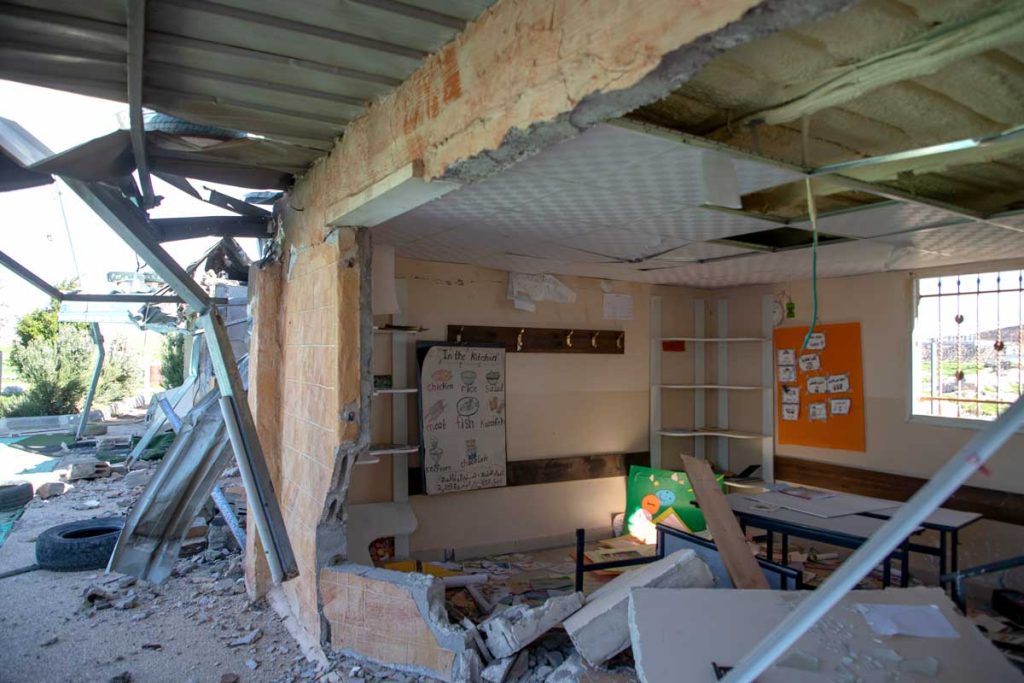
Although many of these Israeli critics took part in extreme violence during their own military careers, they say they were acting in the interest of Israeli security, under a chain of command and with legal oversight. The difference now is that the violence is unchecked, indiscriminate and targets innocent civilians.
In the shadow of the Israeli government’s attacks against Gaza, Iran and Lebanon, armed Israeli settlers — emboldened by the nation’s most right-wing government in history — have continued to raid and destroy Palestinian homes, mosques and villages in the West Bank, with the intent of driving them out of the territory. More than 3,200 Palestinians have been displaced by settler attacks in 2026 already — double the previous year’s rate.
(Source: New York Times)
Indian college student singlehandedly cleans up his local river from plastic waste
Surendra Singh Choudhary, a 20 year old college student living in Madhya Pradesh was so appalled by the heavily polluted Ajnar river in his town, he decided to take matters literally in his own hands. Accompanied by a few friends, he launched his cleanup campaign on Indian Republic Day, January 26th, 2026.

Soon, while unable to swim and armed only with basic tools, he was on a solo mission. By hand, piece by piece, he extracted tons of garbage from the river, spending his own savings on cleaning supplies.
Over time, the grueling work caused him health issues, as he was exposed to dangerous waste. He also encountered poisonous snakes. Going by the name Bittu Tabahi, he began posting before and after photos, on Instagram and other social media platforms, which drew the attention of local government officials, who eventually brought in machine support for the effort.

His actions have inspired regular people around the world, showing how much one determined individual can achieve. With now 1.9 million followers on Instagram, his posts on social media have also generated questions of accountability: who is responsible for keeping public water bodies clean? If visible waste can be removed from a polluted stretch through individual effort, what could be achieved through a sustained, properly funded municipal programme?
Choudhary continues his daily work of river clean up. Recently, Boyan Slat, founder and CEO of Netherlands-based non-profit The Ocean Cleanup, responded to a post about his work, encouraging Choudhary to “come work for us.”
(Sources: www.ndtv.com; www.instagram.com)
Pope Leo introduces new Catholic Mass “for the care of creation”
Pope Leo XIV delivered his new formulary for the Mass to mark the church’s celebration of the World Day of Prayer for the Care of Creation on September 1 in the papal gardens at Castel Gandolfo, outside Rome. During the observance, he urged Catholics to contemplate nature, and also to “recognize with humility the ways in which we have been unfaithful in safekeeping creation and caring for the dignity of each person.”
The new formulary is to be used during the Season of Creation, which is a month-long period devoted to prayer and action for the care of creation, running from September 1 — the World Day of Prayer for the Care of Creation — through October 4, the feast of St. Francis of Assisi. This year’s celebration ends during the 800th anniversary of the death of St. Francis, the founder of the Franciscan order and central inspiration for the late Pope Francis’ encyclical, Laudato Si, on Care for Our Common Home.

Leo has continued the environmental advocacy begun by his predecessor Francis, the latest offering being his recent encyclical, Magnifica Humanitas, warning of the far-reaching environmental consequences of the Artificial Intelligence (AI) revolution. He prayed during the Mass that those working in the field of AI be increasingly oriented toward the common good, in the service of fraternity and peace. He also prayed “for the conversion of many people, inside and outside of the church, who still do not recognize the urgency of caring for our common home.”
“Ultimately,” concluded Bishop Allwyn D’Silva, chair of the Office for Human Development at the Federation of Asian Bishops’ Conferences, “the purpose of the Eucharistic celebration of Creation Day is an opportunity to celebrate God as Creator and renew our appreciation of the sacred gift of creation, while inspiring us to care for it more fervently.”
(Source: ncronline.org)
With the upcoming mid-term elections looming, we focus in this issue on the implications and importance of the choice before the US voter. And that is precisely the problem: as a citizen of the US are you sure that you will be able to vote? And does it matter if you don’t? Can all of your fellow citizens vote?
Why are midterm elections important?
- Midterm elections give you, the voter, the opportunity to decide which party controls both the House of Representatives and the Senate.
- Midterms take place in the middle of a Presidential term: the midterms empower you to voice your approval or dismay at how the current administration is governing.
- Midterms are a face-off between the two major parties — Democratic and Republican. These elections can be just as heated as a presidential race, because of what is to be won. That winning party will gain control of the legislature, which holds the power to enact laws, declare war, and much more.
- The party represented by the President hopes to gain majorities in both the Senate and the House of Representatives in the midterms. This will smooth the way for the President’s legislative agenda to be approved by Congress. (Source: usvotefoundation.org)
Greg Palast has been investigating the shenanigans that have erased hundreds of thousands of US citizens’ names off the electoral roll. Palast is an award-winning old-style ‘gum-shoe journalist’ and best-selling author of The Best Democracy Money Can Buy (See a review Share International, July/Aug 2002) The findings, based on tireless sleuthing, were the focus of an interview in Share International December 2004 — ‘Perfecting the art of cheating’.
Now his work has uncovered new layers and depths of blatant corruption and deception being perpetrated against the American people and were featured in the documentary film Vigilante Inc: Georgia’s Vote Suppression Hitman, and in a new series of video reels called: Jim Crow Reloaded — a very loaded title and well worth watching.
Well-known US journalist Thom Hartmann interviewed Greg Palast on his show The Hartmann Report. Their interview is titled: Are You Ready To Show Your Papers To Vote?
Hartmann and Palast discussed the US Supreme Court’s interim ruling in a case involving Donald Trump’s effort to have the Federal Government take control of mail-in voting in a scheme to manipulate the outcome of the midterm election that will determine which party controls Congress. Trump’s Executive Order 14399 requires Americans to “show me your citizenship papers” to vote. “Are You Ready To Show Your Papers To Vote?” — an idea that harks back to World War II times when the Gestapo challenged and harassed people at any time and anywhere demanding to see their documents. Greg Palast explained how people can fight what is being described as the ‘Nazi-fication’ of US elections.
Here are some key statements from that interview:
But this new obstruction to mail-in voting remains a real threat in the form of individual Red states that are adopting their own ‘show-me-your-papers laws’.
Now, here’s the problem with giving ballots only to those on the US citizenship list. THERE IS NO CITIZENSHIP LIST. America is not Russia, North Korea nor Nazi Germany (not yet, knock on wood!)
Trump knows there’s no citizenship list: he wants the power to create the list from selected databases. How? There are only three proofs of citizenship: a passport, an original birth certificate or naturalization papers. And he knows (or Stephen Miller knows for him) who doesn’t have a passport. (Hint: 80% of Americans who earn less than $50,000 per year don’t have a passport.)
They’re lying to us, creating a hysteria over outsiders invading our democracy. They’re holding our freedoms hostage with a ransom note that says, ‘Show me your papers.’”
Palast urges everyone who cares about democracy in America to take the following steps immediately.
- Get your passport or get your certified birth certificate — NOW!
- Watch the video series Jim Crow Reloaded.
- Sign up to stay informed at SaveYourVote.org, and share the link with everyone you know!”
Palast and his team have unearthed disturbing data:
- 4,776,706 voters were wrongly purged from voter rolls according to US Elections Assistance Commission data.
- By August of 2024, for the first time since 1946, self-proclaimed “vigilante” voter-fraud hunters had challenged the rights of 317,886 voters. The National Association for the Advancement of Colored People (NAACP) of Georgia estimates that, by Election Day, the challenges exceeded 200,000 in Georgia alone.
- No fewer than 2,121,000 mail-in ballots were disqualified for minor clerical errors (eg postage due).
- At least 585,000 ballots cast in-precinct were also disqualified.
- 1,216,000 “provisional” ballots were rejected, not counted.
- 3.24 million new registrations were rejected or not entered on the rolls in time to vote.
“If the purges, challenges and ballot rejections were random, it wouldn’t matter. It’s anything but random. For example, an audit by the State of Washington found that a Black voter was 400% more likely than a white voter to have their mail-in ballot rejected. Rejection of Black in-person votes, according to a US Civil Rights Commission study in Florida, ran at 14.3% or one in seven ballots cast.
“The nasty little secret of American democracy is that we don’t count all the votes. Nor let every citizen vote.
“In 2024, especially, after an avalanche of new not-going-to-let-you-vote laws passed in almost every red state, the number of citizens Jim Crow’d out of their vote soared into the millions. According to the Brennan Center for Justice, since the 2020 election, “At least 30 states enacted 78 restrictive laws” to blockade voting. The race-targeted laws ran the gamut from shuttering drop boxes in Black-majority cities to, for the first time, allowing non-Government self-appointed “vote fraud vigilantes” to challenge voters by the hundreds of thousands.
For the purpose of this treatise, the description of the hierarchical complex will be reduced to a simple form, providing only sufficient detail to obtain an insight into the relationship between the three main groupings encountered on the human being’s evolutionary path, namely humanity, the Hierarchy, and Shamballa. Even so, most students find it difficult to conceive and accept even such a simple account, because of the abstract nature of these concepts, and because the subjective Entities described remain invisible and intangible to human senses. Once a fair picture of this spiritual structure has been gained, however, then these basic ideas can progressively be amplified as wider knowledge and deeper understanding are achieved.
It has already been described how man, in the course of numerous incarnations, is step by step expanding his consciousness; how he attains the first initiation by gaining control over his physical desires, followed by the second initiation when the emotions have been reasonably curbed. Then comes that important stage of the third initiation, when, after the three lower bodies (the physical, the astral and the mental) have been integrated and are jointly functioning as the ‘personality’, they are brought under the complete direction of the soul. This is the time when the real spiritual man takes over — when he is no longer held on leash by the attractions and urges of the flesh, and when new vistas of the spiritual worlds are opening up to the inner eye. This deeper consciousness and contact with reality makes the disciple aware of new and ever greater sources of love and energy which he can now use in serving his fellow man — he is becoming ‘transfigured’.
Up till the third initiation the disciple has been constructing, mainly unconsciously, the ‘Bridge of Light’, uniting the lower bodies with the soul. From now on, this bridging work will be proceeded with consciously, aiming at closing the gap between the personality and the Spiritual Triad or Monad. With the completion of this final stage of the bridge, the disciple is ready for the fourth initiation — the ‘Great Renunciation’. The Monad is now in direct command of the personality which will merely mirror its threefold reflection in the physical world. The soul has thus become redundant as a mediator between Spirit and matter, and is ‘renounced’ after aeons of service in that capacity. Although the Monad may temporarily retain the triple bodies, these are no longer required for physical experience, but only serve as bodies of expression for the Monad, and will therefore be used solely as instruments of service in either the human or any of the three lower kingdoms of nature.
After attaining the third initiation, the disciple may be regarded as a junior member of the Hierarchy of Masters, and as such he will be incorporated into the group of one of the senior Masters. He will then participate in and function as part of the Hierarchy, whether incarnated in the physical world or active on subjective levels. At this stage, the evolving entity is, however, not yet equal to the full responsibilities of an adept or Master — the initiate only becomes an acknowledged Master of Wisdom after reaching the fifth initiation.
The existence of a Hierarchy of Masters as an intrinsic part of the subjective hegemony, under the leadership of the Christ, was only publicly revealed by Madame Blavatsky during the last quarter of the 19th century, or just about 100 years ago. As was to be expected, the revelation of this hidden knowledge to the world at large was met by violent opposition from religious circles, and often by ridicule from a large section of the general public. Today hundreds of thousands are accepting these principles as logical, when the evidence at man’s disposal is considered without prejudice. The obstinate resistance from the orthodox is also crumbling before the persistent onslaught of reason. But there is much more to it than logic; today there are many persons of integrity who, through practical experience and conscious co-operation with higher Entities, have come to know about the existence of the Masters and of the help which they can afford the struggling aspirant. The intelligent seeker for Truth is no longer satisfied by the stereotyped answers provided by orthodox theologians, and he prefers direct spiritual experience to doctrinal authority.
It is to be expected that time will be needed for these ‘new’ concepts to be generally accepted, and for the principles to be established throughout the world. But there is a steady, irrepressible movement in that direction, which will inevitably result in one single world religion. Those sensitive to the incoming spiritual impacts are still very much in the minority, but that is normal in the course of evolution — that which is new has to face the task of superseding what is deeply rooted and established. But that which has served its purpose in time and space, and has become irrelevant, must make way for that which is vigorous, strong, healthy and the product of the times. The religion of the future will be based on love, goodwill, sharing and good human relations, not only between individuals, but also between groups, communities, and the nations and races of the world. This time is rapidly approaching — do not let yourself be blinded by outward discord, hate and struggle — look below the surface and see those strong and vital currents of tolerance, goodwill and consideration, which are everywhere becoming noticeable, often from the most unexpected quarters. In the not too distant future, these awakening forces will build up to such an extent that the dark and evil powers will be submerged, and will largely disappear from the scene of action.
The Christ with His adherents and disciples in the Hierarchy have already made considerable progress with their spiritual onslaught during recent decades — the walls of opposition, built and supported by the Dark Forces, whose influence has for ages been dominating human activities, are rapidly crumbling. Now is the important time, however, when the initial success must be followed up, allowing them no respite for rallying their forces.
For this purpose the Hierarchy relies upon the support of both their conscious and unconscious disciples in the world of men. On all enlightened men in the churches, political parties and the many organizations — social, economic, educational and scientific — rests the responsibility of presenting a united front based on the fundamental principles of love, goodwill and service. Thus will the path for the spiritual freedom of mankind be paved — a freedom which as yet is but a faint dream, but which must and will be materialized if every capable individual fulfils his indicated role.
This spiritual inspiration which is making itself felt comes through the Hierarchy, whose function it is to provide humanity with these energies. Humanity may therefore always rest assured of this support, which can be invoked at all times. The Hierarchy does not, however, concern itself with the petty daily problems and activities of the individual — these remain the responsibility of the personality with its free will; the interest of the Hierarchy lies with the evolution of humanity as a whole, and is merely concerned with the individual when he may serve as a useful instrument to promote the general advantage. The man who, however, displays the disposition and qualifications for altruistic service may depend upon it that these attributes will be readily utilized for the common benefit, since an urgent need exists for every suitable channel for transmitting hierarchical energies to the world of men.
As at present constituted, the Hierarchy is the product of human activity and aspiration of past ages — in other words they represent redeemed humanity. All its members are liberated human beings, who have endured worldly experience in all its diversity and phases; who have lived, suffered, failed and achieved; who have numberless times sustained the cyclic processes of death, resurrection and subsequent rebirth. Basically these Great Ones are of a similar nature to those still struggling in the flesh with all the temptations, urges, pleasures and adversities of the world of emotion and desire; they are aware of all the states of consciousness which they were able to master during the course of aeons; they overcame these conditions while participating in life in the physical worlds, thus guaranteeing to humanity the same ultimate achievement. The Hierarchy therefore wears the emblem of men sanctified by the purifying fires of daily living — they therefore know life with all its challenges, and for that reason they exhibit such unending understanding, patience and sympathy with those who are still treading the mill of life. And the Leader of this community of Spiritual Entities is the Christ, who actually was the first of earth-born humans to attain divinity; it was the Christ who embodied for man the great cosmic principle of Love, and who for the first time revealed to man the nature of the Heart of God.
Historians Barbara Walter in the United States and David Betz in Britain studied civil wars, not within each individual country but rather across countries, over a period of 20 years, to see whether meaningful patterns could be found that would reveal how and why civil wars start. They studied dictatorships, democracies, and countries that were somewhere in between with some authoritarian and some democratic features. One puzzle involved observing that, after World War II, many countries became independent, yet, at the same time, many had to cope with developing civil wars whereas there had been few previously. They discovered some important features in common.
Although there has been a trend towards political polarization, on its own it does not increase the possibility of civil war. What does represent a danger is the loss of some types of social cohesion such as ethnic, religious or geographical distinctions. Also, if a political party gains and favours its own constituents and itself by creating specific situations or establishing policies that exclude other groups, then this can create conditions for civil war.
An important aggravating factor exists when two different groups both feel they are the only true heirs of the nation. One example is Northern Ireland, and another is South Africa, both cited by Barbara Walter. It took 30 years of war for the Protestants and Catholics of Northern Ireland to establish peace. The divide was religious, the schools and neighbourhoods were separate, and the distrust between the two groups was real and deep. After many failed efforts, genuine dialogue took place, because both sides finally accepted there could be no other way, and peace was finally restored.
In the 1980s when still a student, Walters was asked which country was most likely to have a civil war. She thought it was South Africa due to the Apartheid regime installed by the white minority Government to separate black and white populations. Not unexpectedly, there was prolonged protest and violence by the black majority population, and terrible repression and violence by the Government. Many countries showed their disapproval of Apartheid not only by protesting but by boycotting South African products, and businessmen in South Africa itself also approached the Government and made their views known about the deleterious effects on business and more generally about the negative image of South Africa abroad. They had begun to realize the situation was untenable.
It seemed to be a hopeless situation yet, as Barbara Walter points out, President De Klerk finally did an unexpected thing: he released the Black Leader Nelson Mandela from a prolonged, 26-year imprisonment, and instead of revenge and the veritable bloodbath so many people expected, a meaningful dialogue ensued between De Klerk and Mandela. Peace came to South Africa because both leaders agreed that getting rid of Apartheid, and finally giving black people a way forward, was the only way.
A rather surprising find is that, in any given year, less than 4 percent of countries meet the conditions for civil war, but, if grievances are not addressed, they tend to repeat themselves. Barbara Walter was commissioned by the World Bank to study this “conflict trap”. Interestingly, countries that had avoided a second civil war had managed to improve the quality of their governance. They had developed more democracy. As an example, when Mozambique’s civil war ended in 1992, it moved from one-party rule to multiparty elections. Liberia, after a conflict that ended in 2003, augmented restraints on presidential power and favoured greater independence for the judiciary. The author thinks that when countries become more transparent, limit the power of the executive branch and extend political participation, they are less vulnerable to outbreaks of violence. Research by the author showed that “the quality of the country’s governance was significantly more important than improving the economy”.
Professor David Betz has worked for many years in the Department of War Studies at Kings College, London. He began to focus more recently on the issue of civil war, and wrote two articles on it in Military Strategy Magazine (see volumes 9 and 10), which were primarily directed, he says, to the military as well as statesmen, although they also have begun to attract the attention of journalists and the general public. In the last few years, he has increasingly addressed the general public via interviews at cultural events or similar occasions, and interviews by other academics and journalists. Many of these can be found now on YouTube. The main subject is the likelihood of civil war and the conditions that make it likely.
Professor Betz has concentrated mainly on Britain, but also notes that many such conditions are also present in other European countries. Among these, is what scholars now refer to as downgrading, meaning a loss of status, perhaps permanent, by one group or section of society, and its replacement on the social ladder by another group, who then gain preferential access to opportunities which were not previously available to them.
Another important issue is a government’s loss of legitimacy. This manifests as a loss of confidence by the citizens, who feel the social contract that brings trust and cohesion to a society is absent. It is likely that too many undertakings and promises have not been fulfilled. People in this situation do not feel seen or heard, and this creates a divide between elites and ordinary people which seems to have widened in the last few years. The effects of such situations have been routinely underestimated.
Professor Betz points out in various interviews that some elites feel they have failed in terms of guardianship. Those who could speak out don’t, because they think they will be punished, not protected.
A further issue is a reluctance to vote, especially, it seems, among young people. This is a clear sign of disaffection.
Currently, the perception is that there is two-tier policing, meaning that one group is treated more fairly than other groups. This contributes, in particular, to ethnic tensions. News generally refers to various episodes which have caused controversy but I have not seen or read yet a detailed analysis of this issue in Britain, which, one would hope, could be detailed, impartial, and available to the public.
Professor Betz was asked in an interview with Andrew Gold whether there would be a civil war between Muslims and Christians. He said no, not in that way. He sees something complex, messy, something that has been growing gradually; that there are two vectors, both of which are present, and must be understood and taken into account. One is ethnic tensions, which can be of various types. The other is the growing divide between the elites (meaning those in positions of power) and the rest of the population; that it is necessary to identify the causes of tensions and also how they interact.
I would add that one of the greatest dangers is for people in position of power is to remain disconnected from the people they serve.
Inspector Roy Teague serving in the UK’s West Midlands elite firearms operations unit, has recently had his book Close Encounters of the Police Kind published, the first ever anthology of British police officers’ own encounters with UFOs. He has meticulously collected evidence from over 250 officers who have had experiences of UAPs (Unidentified Aerial Phenomena) whilst serving in the police force. Of those, all but nine agreed to be named in the book, many speaking for the first time, with Teague suggesting the ridicule and stigma attached to this subject has deterred many officers in the past from coming forward with their stories. In early September 2026, as a result of this new publication, Ross Coulthart, of American cable news network NewsNation, interviewed Teague for his series Reality Check.
The inspector, a former army soldier who has over 25 years experience as a tactical firearm commander, began his interest in UAPs around 2016 after watching the documentary, well known amongst ufologists, UFOs and Nukes: The Secret Link Revealed by Robert Hastings. It showed evidence of UFOs carrying out long-term surveillance of America’s nuclear weapons facilities, and provided declassified documents and military witness testimonies to back it up. In fact, during the NewsNation interview Teague stated that he believed UFO sightings had become much more common since 1945 as a result of the Hiroshima and Nagasaki nuclear bombs, showing ETs’ increasing concern with humanity’s use of such weaponry. According to Coulthart, Apollo 14 astronaut Edgar Mitchell similarly thought these sightings had become more frequent since that time because, as Mitchell put it, “The kids have been playing with the matches. They’ve been playing with nuclear weapons”.
After watching the documentary Teague asked himself which witnesses would the public find hardest to dismiss, with regard to UAP sightings? To which he concluded, police officers by virtue of their training, and so set about collecting as many first-hand accounts as he could, from former or serving officers who were willing to share their experiences.
There are a number of standout examples from the book, which Coulthart asked the inspector to recount for the sake of the audience, showing how remarkable some of these sightings have been. There was the case involving a police helicopter hovering over central London on 5 July 1997, which was surveilling a huge parade that was taking place that day. Whilst up in the sky, PC (Police Constable) Paul Hammond and Military Warrant Officer David Frampton (this was a joint operation between the police and army) saw what looked like “a paper plane”, similar to those made by school children in classrooms, though this one was solid and about 30 to 40 metres long. They radioed the nearest airports to ask if there were any other aircraft in that restricted airspace, covering for example Downing Street and the MI6 building?
Air traffic controllers got back to them, saying there was no one else up there, only their helicopter! The two pilots then decided to circle the UFO and using their FLIR (Forward-looking Infrared) camera detected a heat signature at the back of the craft. The UFO then shot forward at incredible speed and about 100 meters onwards, a hole appeared to open up in the sky and the craft passed through it, after which the hole “zipped up” and closed behind it. Teague said he applauded the two officers for having brought their story into the public eye for the first time and allowing him to include them in the book, “Otherwise none of us would ever have heard about this sighting”. Hammond and Frampton, as previously stated, had asked Heathrow and Gatwick airport if they could see the object on their radars when the incident took place, but they both confirmed only the helicopter was showing up as an image. Unfortunately, no footage of the spacecraft, taken from the helicopter, was retained after this event, as the two pilots were concerned they could lose their jobs and were afraid of being ridiculed.
Another unusual sighting took place in August 1989 and involved a Sergeant Nick Spinks. He was travelling on his motorcycle along a main road headed towards the village of Vigo in Kent, where he lived, after finishing a late shift. The road was tree-lined on both sides and as he was going along, out the corner of his eye he saw a classic-shaped, massive ‘flying saucer’ over to his left above the trees. He then turned towards it and saw it clearly as it moved about 50 to 60 metres up. He managed to look at this craft for about 15 to 20 seconds before the road veered off in a different direction and he lost sight of it. He turned around to try and relocate it but it was gone. When recounting this story to Roy Teague he said this experience had represented a big moment in his life as he realised, “We are not alone in this universe”. Spinks said, “There is no way we could build something so huge, that could glide effortlessly over the trees; did not make a noise; no signs of any propulsion and no afterburners, nothing”. Apparently, he is not the only one to have had such an encounter. Inspector Adrian Lars in 1976 similarly saw this type of UFO. Again, he was on his motorcycle in Thornbury, Gloucestershire when he saw, for a brief period of time, a massive flying saucer at a similar height effortlessly flying over his field of view, as in the Spinks case. In both situations, they had good, clear, unobstructed views of the spacecraft.
Lastly, Teague presented the case of PC Ian Steven’s experience whilst on a helicopter flight in 2006, not far from Cardiff in Wales. He was returning from a call and about to land in Cardiff airport when Steven and the pilot saw a huge triangular black UFO above the hills of Cefn Mabley, a district of Wales. They both said afterwards this UFO had a sort of greenish tinge to it, almost like frost glistening in the morning, albeit green in colour. They could see how big it was because it was to scale next to the hills of Cefn Mabley. Stunningly, it was about a mile long on all three sides and despite its colossal size disappeared in the blink of an eye. Within about 3 seconds they then saw it again about 19 miles away from the original location, an extraordinary distance to cover in such a short space of time. Again, when they checked with Cardiff airport as to whether they had picked up this craft on their radar, they communicated that there was no sign of it.
There are of course many extraordinary sightings recounted in Teague’s book, but these are a small sample of the more significant ones. By the end of the interview, both Coulthart and Teague agree that the increasing presence of UAPs does not represent a threat to humanity, as what Dr Steven Greer, Director of the Disclosure Project, has always maintained. Teague suggested that if there had been a threat then he and Coulthart would not even be doing that interview, as NHI (Non-Human Intelligence) is of a higher order than ours, and their UFO technology is light years ahead in terms of sophistication and power. If they had harboured malintent towards humanity, it would have been to devastating effect and would have happened a long time ago. In fact, as Dr Greer has previously stated, ETs have shown the most remarkable level of self-restraint, seeing as a shadow, secret, military programme has shot many of their craft down, with the intention of misusing their technology.
Roy Teague has used his skills as a master police interviewer to good effect in putting together this book, albeit this time with fellow police officers rather than the criminals he is usually confronted with; and has assiduously catalogued the many cases that have come before him, thanks to the brave former and serving officers who have been willing to speak out. This all goes towards the growing pressure for full disclosure across the planet and to finally accept as a race that, as Sergeant Nick Spinks put it, “we are not alone in this universe”. The so-called ‘extraterrestrial threat’ narrative currently being pushed by the powers-that-be is but a way of corrupting the sense of that reality. The weight of evidence though is overwhelming and hard to dismiss when for example, as in this case, it comes from a British police officer who has served with distinction for the last 25 years.
Richard Layard began his pioneering work on happiness, or wellbeing, over 20 years ago, and in 2005 he published this book on his work, updated in 2012. There have been others from him since. A professor at the London School of Economics, he has been very active in various ways in public and academic life, and he was made a Labour life peer in 2000. The following review also draws on a recent podcast for the BBC series Radical.
Although he is an economist, Layard rejects the usual economist’s measure of a country’s wellbeing in terms of its purchasing power, the Gross Domestic Product (GDP). Instead, he has relied on surveys, individual interviews, and categorising types and degrees of happiness — for what he calls the ‘new science of happiness’. He was a founding editor (along with Geoffrey Sachs and others) of a survey of peoples’ self-perceived happiness, the ‘World Happiness Report’, now published annually. He was also instrumental in introducing ‘talking therapy’ within the English National Health Service (NHS), to which 1.8 million people are referred annually. A more recent project with which he is associated is the Happiness in Action on-line tutorial.
In the introduction to his book, Layard expresses his hope that society — and government — will shift to take more account of people’s feelings, notably their sense of wellbeing, or as he calls it: “human flourishing”. He asks, why, despite overall material improvement, we are not happier?
What is meant by ‘wellbeing’ or ‘happiness’? (It would be worth the reader thinking about this question asked to millions, from their own point of view: how happy on a scale of 1-10 do you feel about your life? Not everyone is able to say.)
Layard says that the attributes for ‘happiness’ are unsurprising — they encompass people’s economic security, work satisfaction, relationships, a happy childhood, good health — but also a sense of something beyond, be it religion, or something meaningful ‘inside’; a sense, too, of being able to contribute to society — to promote others’ happiness. Seeing education as important, Layard is critical of the current continuous testing in UK schools — the “exam factories” — and he strongly advocates for more emphasis on pupils’ creativity and their sense of self. He also urges for more emphasis on training for technical work — apprenticeships — as a possible solution for the many young people in the UK and elsewhere who are not in work or education. As he says, though, it is very difficult to be happy without the basic material essentials of life, especially in the face of rampant inequality — although we do know that some people manage to be happy despite straitened circumstances.
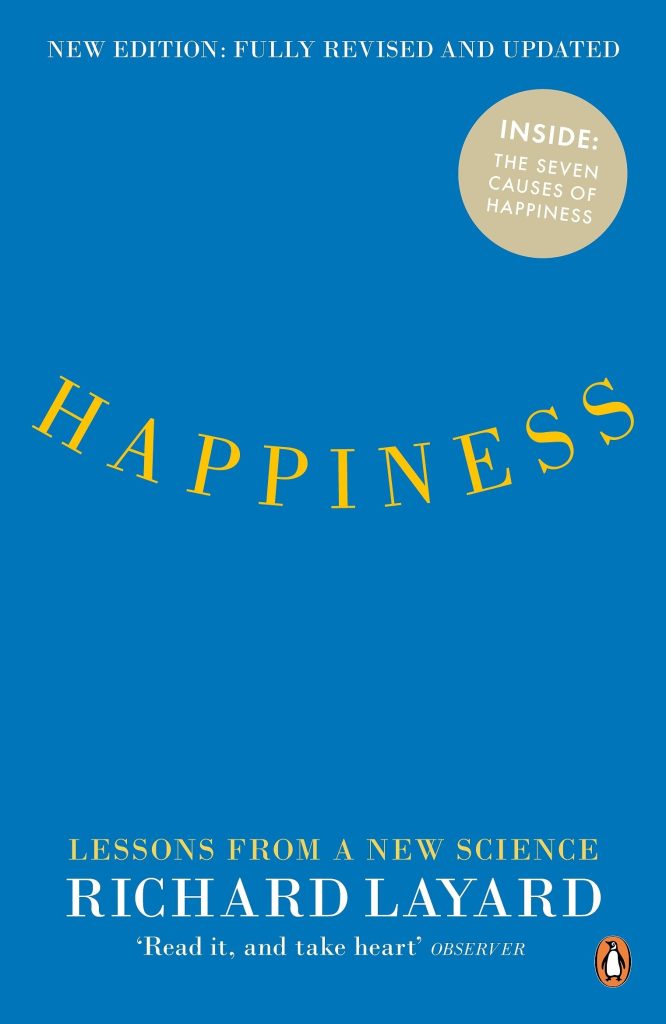
Readers of Share International are familiar with the idea that the most fundamental requirement for world happiness, or wellbeing, is sharing the world’s resources, aiming for greater equality both within countries and internationally; and that, at present, we are seeing the opposite — for example, the dire results of international cuts to aid. The world economic and political order is not at present conducive to promoting true happiness in its citizens.
‘The World Happiness Report’, March 2026 (www.worldhappiness.report) cites Finland as the ‘happiest’ country, closely followed by Denmark, Iceland and Sweden. These are countries that tend to combine “strong social support systems, higher income levels, longer life expectancy, and greater personal freedom”, whereas low ranked countries tend to “face political instability, weaker social support, reduced access to health care and basic services”.
In the podcast, Layard (aged 92) is asked about his own experience of happiness; he says he has been ‘lucky’ — privileged — and would assess his own happiness on a scale of 1-10 at ‘8’; definitely not higher. (It might be difficult to proclaim one’s own happiness as ‘10’ if one has any vestige of empathy, given the current world situation, when so many people are suffering. It might sound like self-centred complacency, an excuse to carry on as usual.)
Layard talks about a practice he was taught, which he cannot reveal, but which helps him find a source deep within himself of an inner strength and contact. He also writes of the importance of meditation for a person’s physical as well as their psychic health. In the end, though, in the chapter ‘Education of the Spirit’, Layard writes of one common strand in what can make us happy: fundamentally, it is love, that takes us out of ourselves and encourages a loving and grateful approach to all aspects of our life.
The Ageless Wisdom Teaching
How does Layard’s account of happiness tally with the Ageless Wisdom, esoteric teaching? A good deal of his work is devoted to the relative significance of people’s genetic make-up and environmental influences, such as parenting, and the situations people find themselves in. These are personal, social, economic, political factors, which, according to the Ageless Wisdom, are all deemed to be spiritual; so, seeking greater happiness, wellbeing, for society, is clearly a spiritual concern. But, as Benjamin Creme pointed out, society is increasingly dominated by ‘commercialization’, a culture of competition, of winners and losers.
According to the Ageless Wisdom, there are factors that are far more significant than the day to day ones that Layard cites: for example, the effects of reincarnation, a process through which we evolve, life after life; we are souls in incarnation. As we evolve, our focus moves away from the physical plane to a more mental and spiritual one — and so does our capacity for impersonal love.
A person’s point of evolution, that is their level and scope of consciousness, is relevant to where they may find happiness: in everyday material satisfaction, intellectual absorption, ‘good deeds’, contributing to society. The question of finding ‘happiness’, or not, in a sense, gradually becomes less relevant as we evolve. Or as Layard notes, we might redefine it.
For example, might we say that Jesus was ‘happy’? Soul contact suffuses the person with joy. As a person evolves, they have greater and greater contact with their soul; it is the soul that dominates. And those who have encountered the Master Jesus, as chronicled in Share International magazine, have found him to be full of joy and humour. Far from seeking happiness, he was simply doing the work he was sent to do, which ended in his sacrifice on the Cross and his resurrection and led to the founding of a new religion that has lasted for centuries. Impersonal love and true joy might seem a more apt description of his state of being.
Esotericism teaches that we are all souls in incarnation and that the greater our contact with our soul, whose nature is love, the more profoundly happy, despite struggle, we can be, and this advances from life to life. We then must find ways of enacting this through service — contributing in the world, which for Layard, too, is the ‘highest’ experience of happiness.
As co-workers of Benjamin Creme experience it, Transmission Meditation is a form of service, enabling spiritual energies from the Masters of Wisdom to be more readily accessible to the world. It also brings us into closer contact with our soul, to the divine in all aspects of life; and so to a happiness founded on love.
Richard Layard: Happiness: Lessons from a New Science, Allen Lane (2005).
Benjamin Creme: The Ageless Wisdom Teaching: an introduction to humanity’s spiritual legacy, Share International Foundation (2017), and Transmission: A Meditation for the New Age, Share International Foundation (2006)
In Benjamin Creme’s book, Maitreya’s Mission Volume Three, chapter one is devoted to Maitreya’s Priorities. Among these priorities is “the beautification of our cities”, which states in particular: “Parts of New York, London, Detroit, Düsseldorf, Osaka… — dozens of huge cities — sprawl for miles with hardly a decent building to be seen. They make life in our cities one long stressful grind and transportation a nightmare. Our cities certainly need beautification and reorganizing […] Architecture is always the art which defines a particular era and culture. It sets the tone for all other arts — painting, music, and so on. […] A well-planned city is ritualized architecture […]. The beautification of our cities must also allow the city access to nature, not necessarily ‘in the raw’, but nature.”
Is it possible today to design a city that is in line with this priority? Yes, and Bhutan, a small Himalayan kingdom nestled between India and China, is proving it!
Project history
On 17 December 2023, during the national holiday, the King of Bhutan, Jigme Khesar Namgyel Wangchuck, announced the Gelephu Mindfulness City (GMC) project: a city that prioritizes personal well-being, spiritual fulfilment and harmony with nature, alongside economic progress and technological innovation.

Gelephu will be a city located on the border with India. Due to its strategic location, it aims to become a hub for economic, cultural and spiritual exchange between South Asia and Southeast Asia. It will be nestled between a wildlife sanctuary and a national park, and will cover more than 1,000 square kilometres (perhaps up to 2,500 square kilometres in the future). The master plan for GMC was designed by Danish architectural firm Bjarke Ingels Group (BIG), which envisioned a city shaped by its waterways: 35 rivers and streams run through it, connected by ‘habitable bridges’ each representing one of the nine domains of Gross National Happiness (GNH). This project has received support from two winners of the 2001 Nobel Prize in Economics: Joseph Stiglitz and Michael Spence.
What is GNH?
Above all, it is a vision of society rooted in the country’s traditions, values and culture. It was established in 1972 by King Jigme Khesar Namgyel Wangchuck, who was 16 years old at the time! Its nine key areas are: psychological well-being; health; use of time; education; standard of living; ecological diversity and resilience; cultural diversity and resilience; good governance, and community vitality. In Dzongkha, the language of Bhutan, GNH is called ‘Happiness Together’. Indeed, in Buddhism, seeking to build one’s own happiness while ignoring the suffering of others is not only immoral, but also completely illusory, because, due to the interdependence of phenomena, everything that happens in the world has repercussions on each and every one of us. True happiness is “a state of lasting fulfilment that arises when one is free from mental blindness and conflicting emotions. It is also the wisdom that allows us to perceive the world as it is, without veils or distortions. Finally, it is the joy of journeying towards inner freedom and loving kindness that radiates towards others.” 1
At the end of the 1990s, this concept was transformed into an indicator to serve as a tool for planning government action, and in 2008, it was incorporated into the Constitution to provide direction for policies, in line with the values defined in the GNH. The reference to psychological well-being may be seen as referring solely to Buddhist spirituality. In reality, this concept is not linked to any particular religion.
About the project itself
These ‘habitable bridges’ are designed in the style of Bhutan’s typical dzongs (monastery-fortresses). They will be multifunctional. They include:
- A hydroelectric dam temple on the Sankosh River, designed as a cascading structure that combines renewable energy production, meditation spaces and panoramic views.
- A Vajrayana spiritual centre offering an insight into Buddhist practices in Bhutan.
- A healthcare centre combining Eastern and Western medical traditions.
- A university with a particular focus on academic innovation.
- A hydroponic and aquaponic greenhouse integrating ancestral agricultural techniques and modern agroscience.
- A cultural centre that will immerse visitors in the heritage and traditions of Bhutan.
This city-region has special legal status under Bhutanese law. It will have its own regulations and systems, particularly in economic matters, and will be divided into eleven interconnected districts inspired by the mandala principle, stretching from the sparsely populated rural areas of the highlands to the more densely populated urban areas of the plains. The infrastructure has been very carefully designed to reflect the country’s deep respect for nature: a ban on the use of plastics; low-rise buildings with a negative carbon footprint; zero-waste systems; and biodiversity corridors to protect wildlife migration routes, particularly those of elephants. Flood-resistant rice fields will be developed along rivers and streams, enabling the soil to better withstand monsoons. Smaller roads will be reserved for pedestrians, bicycles and electric vehicles. All food consumed will be organic.
The initial development of this project will be financed by foreign investors. To this end, in 2025, the GMC announced the launch of its first national bond issue and the integration of cryptocurrencies into its strategic financial reserves. This project has the support of India (improvements to border roads and railways), and an international airport is under construction (scheduled to open in 2029). The city is expected to be fully completed by 2035. Without overly idealizing this project, it could become a model for urban design with a human face.
1 Plaidoyer pour le bonheur (A Plea for Happiness), by French Buddhist monk Matthieu Ricard, Pocket Editions, 2004
(Sources: gmc.bt; wikipedia; youtube.com; VisitBhutan.com)
At every lecture he gave around the world, and virtually every day of his life, Benjamin Creme was asked numerous questions covering a vast range of topics. We present here a selection of answers on the subjects of karma and the practical problems confronting humanity.
Benjamin Creme outlines some solutions to practical challenges
No nation, no country is superior or inferior to another
No nation, no country is superior or inferior to another. It is the duty of the government to protect and promote the welfare of the nation, and it is the duty of every individual to be who he is.
Life in America — “If you analyze American life you will find that the Self does not experience freedom. The Self is imprisoned, conditioned in the cell of egoism. Because of this, in America, the slightest quickening of the tempo of argument makes a man explode. This is why, in America, people live with guns and pistols.” Doctors and psychologists should “investigate this”.
The American way of life, having not realized freedom, becomes a very destructive force. The Self is trapped, conditioned to such a degree that there is no freedom in mind, spirit and body.
This is why the younger generations, having failed to achieve freedom, having failed to realize the purpose of life, easily fall prey to drugs, alcoholism, etc, in order to escape from the doldrums they experience in life. American culture at present holds many dangers because there is no equilibrium.
One must be very careful not to allow oneself to be tarnished. “Be what you are. Do not try to be what you are not.”
