July 2026
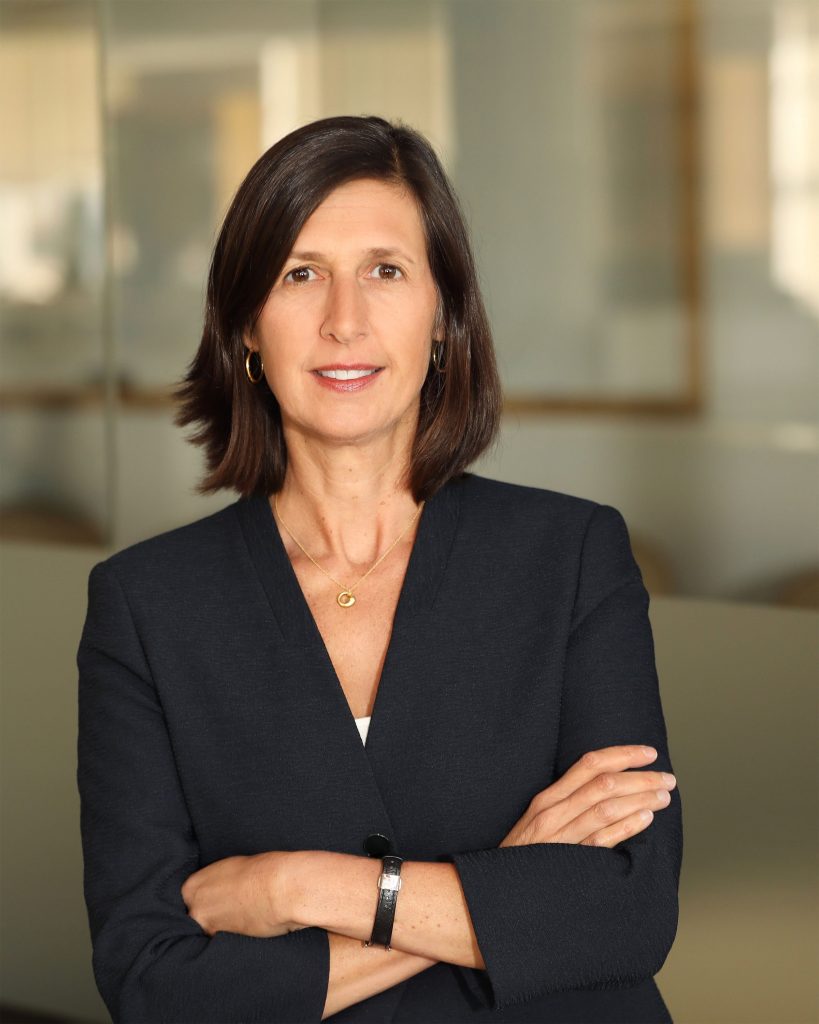
Abby Maxman is the President and CEO of Oxfam America. Her work has taken her to more than 70 countries and spans critical global challenges from the apartheid era in South Africa, to the HIV AIDS and Ebola epidemics in Sub Saharan Africa, and chronic food insecurity in Ethiopia. She has been involved in post-genocide relief and recovery efforts in Rwanda, and has led large-scale humanitarian responses in Haiti and Ethiopia. She has been instrumental in advancing gender and climate justice, fighting inequality and driving Oxfam America’s ambitious 2030 strategy.
She was interviewed for Share International magazine by McNair Ezzard.
Share International: Can you share a bit of history about Oxfam?
Abby Maxman: We were founded originally in 1942 by a group of Quakers, social activists and academics in Oxford, England, as the Oxford Committee for Famine Relief. It was in response to the plight of refugees in Greece. Then a couple of decades later, here in the United States, we had a similar group of activists and intellectuals, academics, Quakers, and Unitarians that founded Oxfam in America on the backdrop of the war in Bangladesh. Both were founded looking at the plight of a humanitarian crisis in the context of war, but also looking at respective governments’ roles in those contexts.
In the United States, when we were founded, there were some key decisions at the time that really influenced who we were and who we’ve become. Our founders decided that we would not accept US Government funding. Instead, the focus was on building a broad base of grassroots support to remain both independent of Government influence, and an independent voice to influence government and action. We also had some other key points in our founding about small scale work, about dignified imaging, and making sure we were educating the US public with fact and evidence-based information. A lot of that has held true.
SI: I would think the early decision not to accept Government funding turned out to be the right decision in light of what’s happening in the Government today.
AM: Absolutely. It’s something we held on to. We believe in overseas development assistance. We are big advocates of responsible foreign assistance. We always tried to use our voice as an organization that did not accept US Government funding, to be a good partner to the US Government, to influence good practice and positive reforms of how foreign assistance works. So what has happened has positioned us to use our voice and experience differently than some of our amazing international and national partners who have been hit hardest and most immediately by the cuts.
SI: What has been the effect of US aid cuts on the roles of other governments in terms of their funding?
AM: The actions of the US Government have impacted how other governments are showing up. We’ve seen a domino effect from the US administration’s actions. It has forced retreats, or even shifting of funding, since the US Government is no longer a reliable actor in global development, diplomacy and humanitarian and development action.
SI: One would have thought that other countries would have wanted to pick up the slack. But you’re saying that’s not what’s happened.
AM: I think other countries would have, would want to, but there’s a confluence of factors going on. One is that US investment, as the richest country in the world, was significant. Forty-two percent of the entire international, multilateral aid and development system was underpinned by the US Government funding, 50% of humanitarian funding in many countries. So already, in a world that was struggling with conflict, with climate change, the aftermath of COVID and public health issues, where there was a lot of sliding back on some of the Sustainable Development Goals, where progress had previously been made, there was already a stretched system. The fact that the US Government pulled out so abruptly left a huge gap that no government could fill. For those that were trying to protect foreign assistance, it’s been hard to backfill enough to meet the gap created by the US Government.
In a time of global insecurity with this upending of the norms that have underpinned the post-World War Two architecture; there’s a lot of stock-taking. Even those governments who are trying to maintain aid are looking at some shifting of what they have invested in aid to other places. Aid has always represented a tiny percentage of foreign assistance. In the case of the United States, it was less than 1% of the United States budget. Pulling down aid that helps people around the world is being done to basically create tax breaks for the ultra wealthy. It is a cruel reversal of the Robin Hood idea.
SI: Do you see the level of hunger and poverty increasing because of the slashing of US aid?
AM: There’s real risks of that. Before this administration came in, there was the latest report on global hunger that reflected the previous year. It showed slight progress in reducing hunger, but it also warned that over half a billion people could be chronically hungry by 2030, nearly 60% of them in Africa. I was in the Democratic Republic of Congo a year ago and saw the harmful impacts of the US Government pull out, on hunger, on food security, on access to all the things that go into helping people live in dignity and security. With humanitarian and peace investments, but also development, we anticipate huge backsliding.
SI: There was a statistic on the website for the Sudanese American Physicians Association that said nine million people in the world die from hunger and hunger-related diseases every year, which equates to almost 25,000 people dying from hunger every day. Over the last decade or so it seems like that number has stayed pretty stable.
AM: It’s a tough issue of our times. Those of us in the humanitarian and development system who have been working to save lives have seen this confluence of climate-related crises. The frequency and ferocity of climate-related disasters have pushed people who might be chronically food insecure to the cusp. At a time when investment in local farmers in Sub-Saharan Africa, for instance, so they could farm and withstand some of these shocks, are now being pulled back.
Some of the main suite of issues that push people into hunger, or famine, are a lack of support for small-scale farmers, the climate crises, and conflict. Wars affect food security. Then there’s the global food system. The power and influence of large food companies and global trade create an export-driven approach to agriculture that harms poor countries. These countries must then import food. So there’s been an upending of the global food system as well, that has pushed communities further into poverty.
SI: There was a report from the World Bank that said there are nearly 700 million people worldwide living in poverty. That means people are living on less than $2.25 a day. It doesn’t seem like we are anywhere near achieving the UN development goal to eradicate extreme poverty by 2030.
AM: That is true. At the same time, as we look back at the past five years or so, there were a lot of indicators showing real progress across many of the Sustainable Development Goals — poverty, hunger, inequality, gender, climate, water. But there was a setback during COVID. Now we’ve seen this rollback that has been supercharged by this administration in particular.
I hear stories from colleagues everywhere around the world of health facilities being shuttered. Even worse are reports that not only was aid stopped that was already agreed upon, but some of it was kept so long in places of transit, that it went beyond the expiration dates. Aid was being incinerated — food that could have provided meals, high energy biscuits and healthcare support to people who needed it. I’m out of adjectives some days to describe what has happened. If you’re anyone who has had the terrible experience of being with a child who is starving and knowing that these low cost, affordable, high protein peanut pastes can save lives, can turn a child on the verge of starvation back into a healthy, vibrant child, to know that kind of aid is withheld from mothers and children is just beyond one’s conscience.
SI: One of the issues in the news, and has been for some time, is the situation in Gaza. Can you talk about what the situation is for the citizens of Gaza at this time?
AM: First I want to emphasize — the humanitarian crisis is not over. More than six months into the ceasefire, humanitarian conditions for Palestinians in Gaza remain catastrophic and the promise of President Trump’s 20-point peace plan is not being kept. Despite the drop in Israel’s bombardment and some aid being allowed in, the chokehold on Palestinians in Gaza remains.
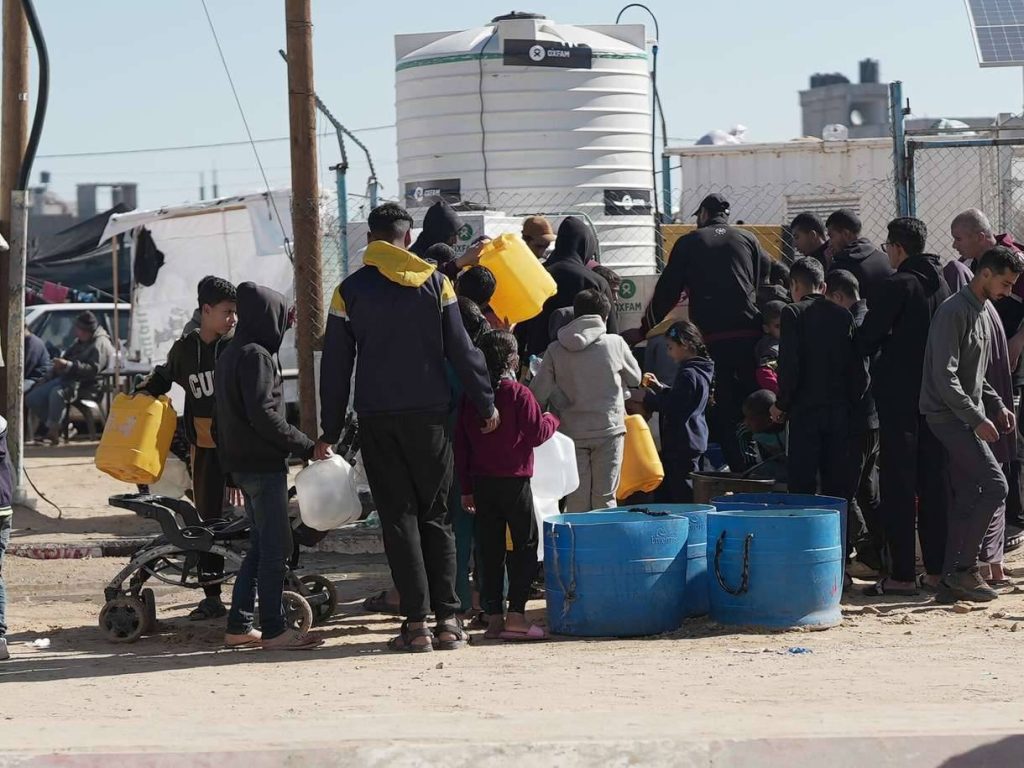
Israel’s attacks continue while food, clean water, sanitation materials, and medical supplies are in short supply. Organizations like Oxfam and other humanitarian organizations are still largely blocked from bringing in humanitarian materials and personnel into Gaza. Still, we continue as much as we can to carry out life-saving work. We continue to hear accounts from our colleagues — of loved ones and community members going to bed hungry; of havig to queue for hours in hope of filling a jerrycan with clean water; of continued fear of Israeli strikes killing loved ones; of families with young children still living in makeshift shelter among rodents and other threats.
Oxfam has been working in the occupied Palestinian territories in Israel since the 1950s. We have a lot of experience, and our staff, our Palestinian colleagues, are doing tremendous work. We work with a range of local partners, Palestinian and Israeli human rights organizations and operational partners who are operating in the Gaza Strip, the West Bank and across the occupied territory. Now our own staff are suffering through the same trauma and crisis as the people we’re trying to support. While attention has been redirected to the regional conflict, the situation for Palestinians in Gaza, and the West Bank continue to be just horrific.
SI: How is Oxfam able to do anything in such conditions?
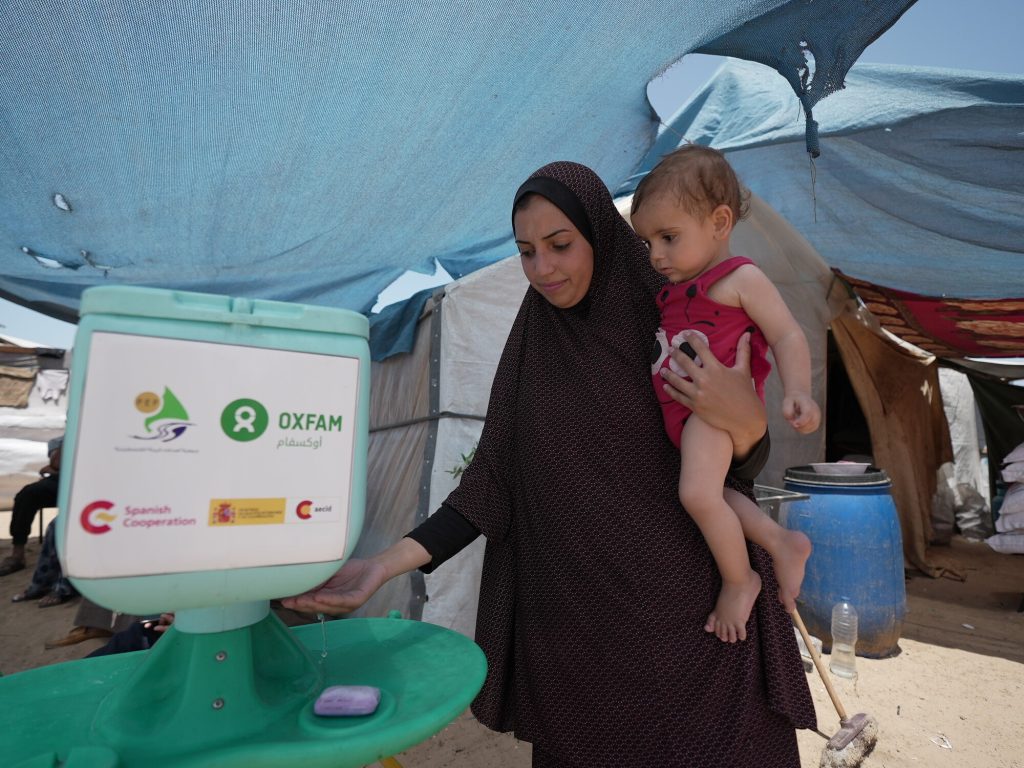
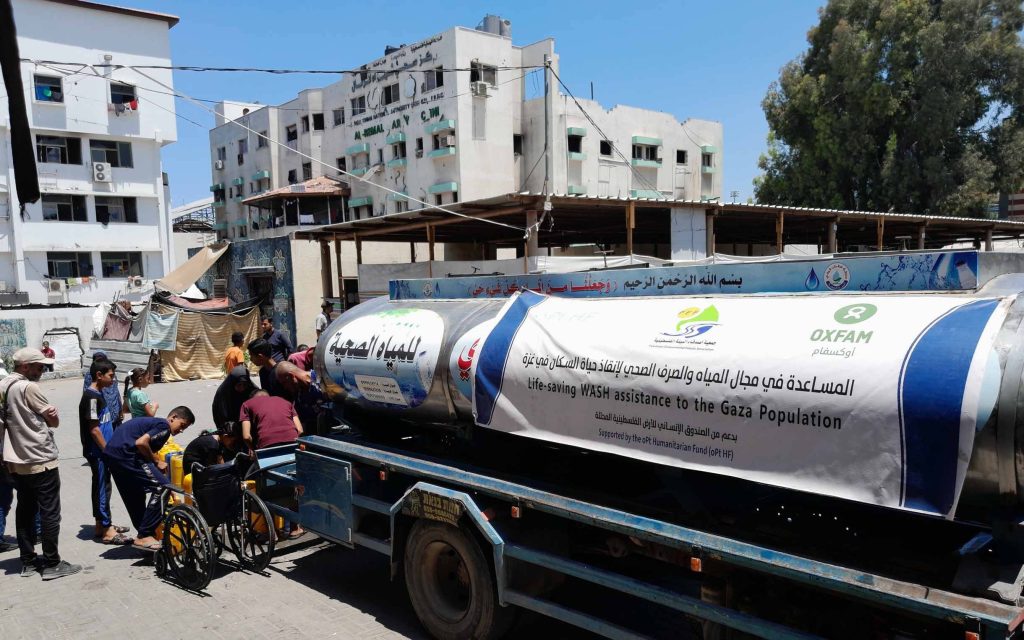
AM: Our teams there are nothing short of heroic. Despite the dangers and operational hurdles, Oxfam staff and partners continue to respond in Gaza and the West Bank. Since October 2023, we have reached more than 1.1 million people in Gaza with lifesaving assistance — food, clean water, sanitation systems and hygiene support. Oxfam is a water and sanitation leader — distributing water in trucks and also rehabilitating water systems. We educate people on the importance of hygiene, even as it’s so difficult to maintain it in overcrowded, often flooded tents and informal settlements. We are working with more than twenty partners in Gaza, distributing food and supporting farmers seeking to re-establish agricultural production. We are helping women and girls survive sexual and psychological violence.
Israeli authorities are rejecting our requests to bring aid into Gaza, but we are procuring locally and working with partners to source basic life-saving items. This continues to be a drop in the ocean of need. But we are committed to doing all we can to save lives, to provide security and dignity to people caught in impossible circumstances, while ensuring the safety of our staff.
